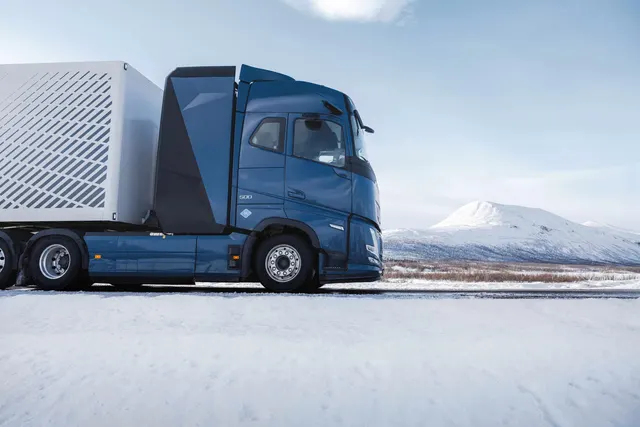
Volvo Trucks sees growing interest in gas as an alternative to diesel for heavy-duty trucking in Europe
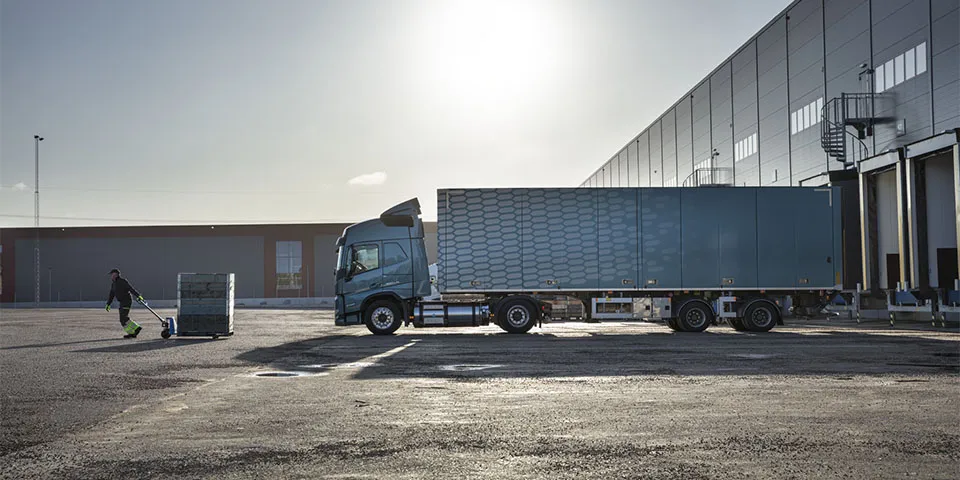
Hauliers and transport buyers are increasingly interested in reducing their CO2 emissions and costs by using cooled liquefied gas (LNG) as a fuel. The new Volvo FH and Volvo FM trucks will therefore be available with engines running on liquefied natural gas and biogas, delivering the same high performance as diesel engines. Using biogas can enable climate-neutral transport and reduce CO2 emissions by up to 100%.
The European Green Deal clearly sets the direction in which the transport sector must evolve towards a cleaner future, which means there must be an end date for fossil fuels. As a result, hauliers and transport buyers are increasingly looking for alternatives to diesel.
“Today, LNG vehicles are commercially the most viable alternative to conventional diesel for heavy international transport. The fuel is readily available and competitively priced. Using more gas-powered vehicles creates favourable conditions for switching to a higher proportion of liquefied biogas over time,” says Lars Mårtensson, Director Environment and Innovation at Volvo Trucks.
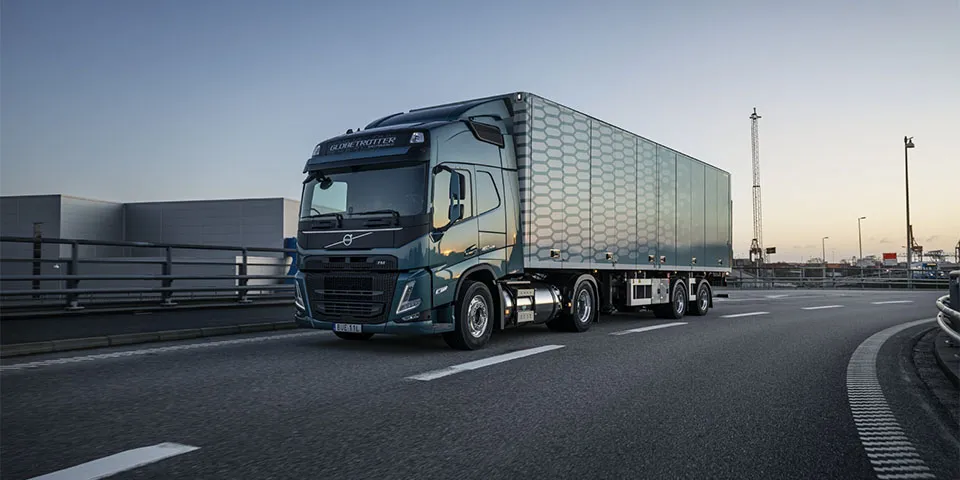
Volvo Trucks’ powertrain for liquefied biogas and natural gas has energy efficiency comparable to that of its diesel counterparts, but produces significantly lower CO2 emissions. Using liquefied biogas, also known as bio-LNG, reduces net tank-to-wheel (TTW) emissions by up to 100%, while using natural gas reduces emissions (TTW) by around 20% compared with conventional European standard diesel.
Reducing dependence on diesel requires significant investment
Producing fossil-free biogas requires more production facilities for the anaerobic digestion of waste, with the capacity to cool the gas into liquid form. Several studies have calculated that just over 20% of diesel in Europe could be replaced by renewable gas in the form of bio-LNG by 2030. The number of liquefied gas filling stations is steadily increasing, and they are already an alternative to diesel on many routes. However, the number of filling stations must continue to grow rapidly, in line with the corresponding increase in gas-powered vehicles.
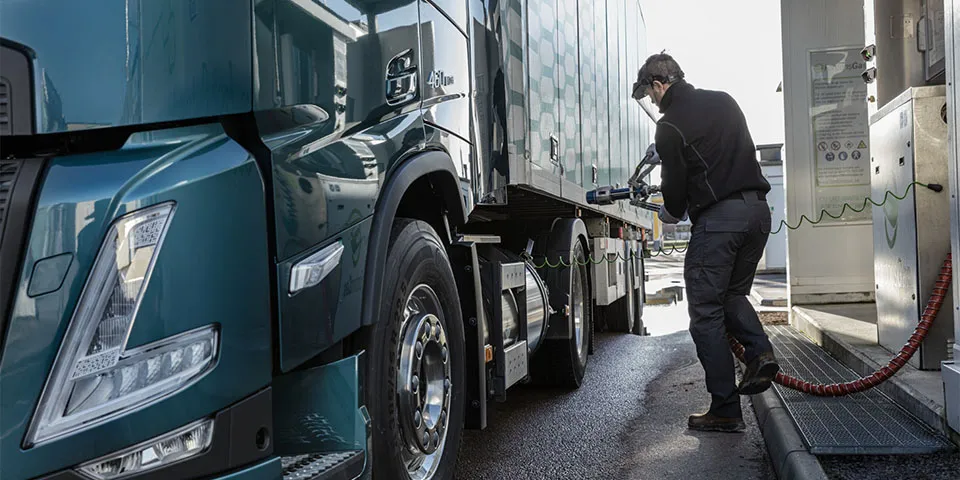
“By investing in LNG vehicles, we are showing that bio-LNG is an important alternative for reducing dependence on fossil diesel. To accelerate the transition to climate-neutral transport, we must continue investing in liquefied gas filling stations and take measures to make it easier for hauliers to invest heavily in heavy-duty gas vehicles,” stresses Lars Mårtensson.
A mix of fuels will be needed in the future
Since no single energy carrier can address all the challenges of climate change, different types of fuel and powertrain will continue to coexist in the near future.
“Embracing new technology will be essential to achieving climate neutrality. The share of LNG vehicles in Europe will gradually increase. But gas vehicles cannot meet every transport need. Electromobility will play an important role both locally and regionally, and battery development and charging infrastructure will be key factors in its expansion,” explains Lars Mårtensson.

Hydrogen fuel cell electromobility has the potential to reduce the need for batteries in international transport over the long term.
“Although there have been promising developments in hydrogen-based fuel cell technology, practical and financial obstacles still need to be overcome before it can deliver significant climate benefits in heavy transport,” says Lars Mårtensson.
Despite all the technological advances in electromobility, continued improvements in the efficiency of internal combustion engines will remain important in reducing environmental impact for many years to come.
“A great deal can already be done to reduce the environmental impact of today’s engines. For example, both new and older Volvo diesel vehicles can run on HVO, a biofuel that produces very low net CO2 emissions. The challenge is that the availability of biofuels remains very limited,” concludes Lars Mårtensson.
Question about this story? Ask your question
Keep following this
Get an email when a new story is published. No account needed.
- ThemeConstruction transport on road and site
- SubjectTransport & off-road