Volvo launches powerful biogas truck to cut CO2 emissions on longer journeys
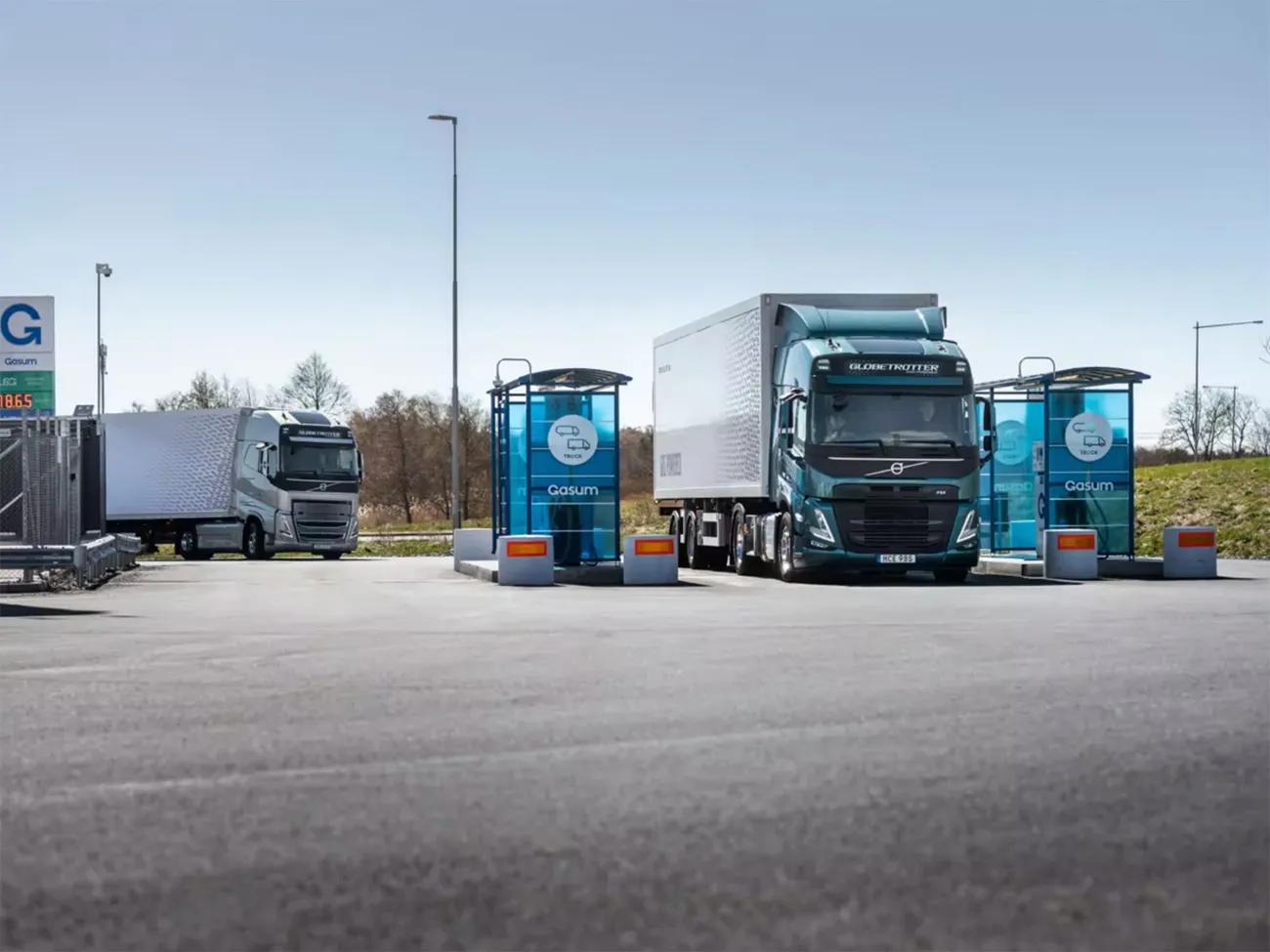
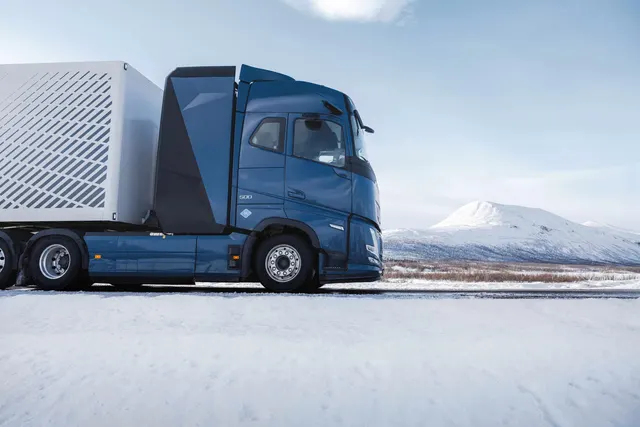
Volvo Trucks is launching a new, more powerful truck that can run on liquefied biogas. The new truck can handle demanding long-haul transport operations while reducing overall CO2 emissions.
Five years ago, Volvo Trucks launched its trucks powered by liquefied biogas, often known as bio-LNG. This renewable fuel can be produced from various types of organic waste, including food waste. It can reduce CO2 emissions by 100%.
“Biogas is a fantastic complement to electric transport. It helps hauliers achieve their sustainability ambitions and deliver climate-neutral transport,” says Daniel Bergstrand, Product Manager for Gas-Powered Trucks at Volvo Trucks.
The Volvo FH and FM gas-powered trucks are gaining a new 500 hp power level, alongside the existing 420 hp and 460 hp engines. The gas engines are also receiving significant technical upgrades that make them up to 4% more fuel-efficient**, while a new gas tank with 10% greater capacity helps extend their range.
“Our efficient gas-powered trucks offer performance comparable to their diesel counterparts. Refuelling takes almost as little time as it does for a diesel truck, and Europe’s growing network of more than 600 refuelling stations for both bio-LNG and LNG makes them ideal for long-haul transport,” explains Daniel Bergstrand.
Climate change calls for more than one solution
The expanded gas-powered range fits well with Volvo Trucks’ three-pronged strategic roadmap for reducing emissions: battery-electric trucks, fuel cell trucks and internal combustion engines running on renewable fuels such as biogas, HVO or even green hydrogen.
“Different technical solutions are needed because the availability of energy and fuel infrastructure varies considerably between countries and regions, and because the requirements of each transport operation can vary too,” says Daniel Bergstrand.
Ambitious plans to replace fossil LNG with bio-LNG in Europe
European bio-LNG production is expected to rise rapidly as the continent moves away from using fossil LNG. The European Commission has put forward a plan called REPower EU, which focuses on significantly increasing domestic production capacity for different forms of energy. The aim is to increase annual biogas production tenfold by 2030*. The sector has already embarked on a rapid growth phase. Biogas’s potential is also attracting interest beyond Europe.
Facts about Volvo’s gas-powered trucks:
· Product models: Volvo FH, FM and FMX (on request).
· Power levels: 420, 460 and 500 hp.
· Fuel: bio-LNG (liquefied biogas) or LNG. A small amount of diesel or HVO is used to ignite the gas.
· Range: up to 1,000 km**.
· Engine technology: By harnessing the high efficiency of the diesel engine, the trucks deliver the same driving characteristics as a diesel truck. This makes it possible to carry heavy loads and cover long distances.
· The new Euro6 step E gas engines are up to 4% more fuel-efficient** than the D gas engines.
· The gas engines have been fully updated, with improved efficiency achieved through new injectors and pistons that reduce friction, together with a new turbocharger, variable oil pump and crankcase ventilation system that can handle unfiltered oil.
Facts about liquefied gas:
· Bio-LNG (also known as LBG) is a renewable fuel consisting of liquefied biogas (biomethane). Any organic waste can be processed into biogas, including sewage sludge, food waste, manure and other residues.
· LNG (Liquefied Natural Gas) is a fossil gas (methane) extracted from underground or undersea reserves.
· Biogas is liquefied in the same way as LNG: the gas is cooled to -162 °C. It then takes up considerably less space. This makes it possible to carry much more energy on board the truck, significantly increasing its range.
· The European Commission’s aim under REPower EU is to increase annual biogas production tenfold to 35 billion cubic metres by 2030*. More than 78 bio-LNG plants are expected to be ready in Europe by 2024. In the coming years, Germany and Italy, together with the Netherlands, are expected to become the leading bio-LNG countries.
Een zakelijke vraag aan Volvo Trucks Belux? Get in touch
Companies in this story
Keep following this
Get an email when a new story is published. No account needed.
- ThemeConstruction transport on road and site
- SubjectTransport & off-road
- CompanyVolvo Trucks Belux