Volvo launches hydrogen-powered trucks
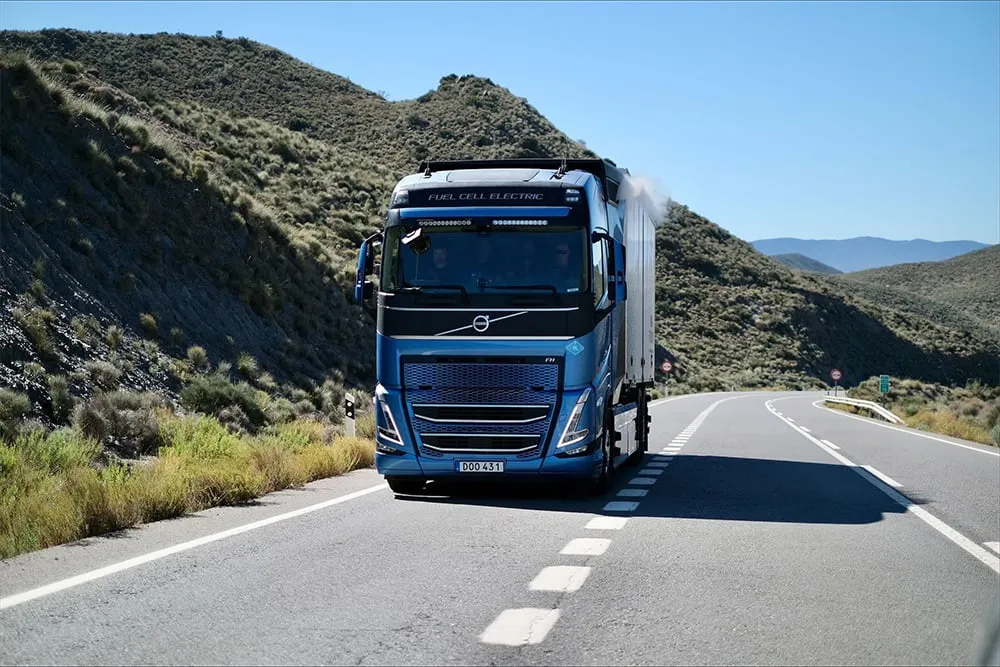
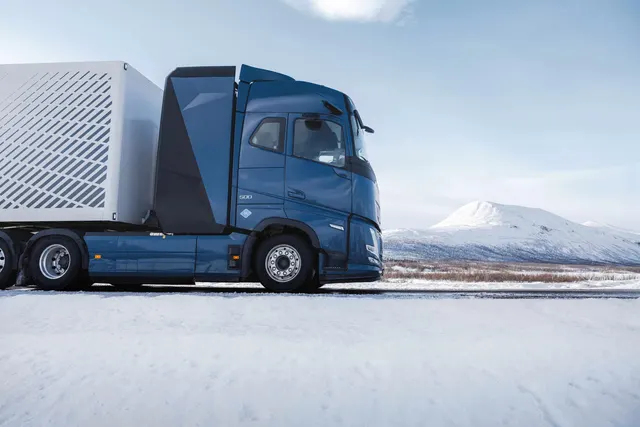
Volvo Trucks is developing trucks with hydrogen-powered internal combustion engines. Road testing of trucks using hydrogen in internal combustion engines will begin in 2026, with commercial launch planned for the end of this decade. Trucks running on green hydrogen are an important step for Volvo towards achieving its net-zero target and supporting customers in meeting their decarbonisation targets.
Trucks running on green hydrogen instead of fossil fuels offer a way to decarbonise transport. Hydrogen trucks will be particularly suitable for longer distances and in regions with limited charging infrastructure or limited time for recharging batteries.
Volvo will begin customer trials of trucks using hydrogen in internal combustion engines in 2026, with the trucks set to be commercially available by the end of this decade. Testing is already under way in laboratories and vehicles. Trucks equipped with hydrogen internal combustion engines will complement Volvo’s range of other alternatives, including battery-electric trucks, fuel-cell electric trucks and trucks running on renewable fuels such as biogas and HVO (Hydrotreated Vegetable Oil).
“Trucks that retain the traditional internal combustion engine but run on hydrogen will deliver the same performance and reliability as our diesel trucks, with the added benefit of potentially net-zero CO2 emissions from well to wheel. They will be a valuable addition to our battery-electric trucks, which have already been on the market for several years,” says Jan Hjelmgren, Head of Product Management and Quality at Volvo Trucks.
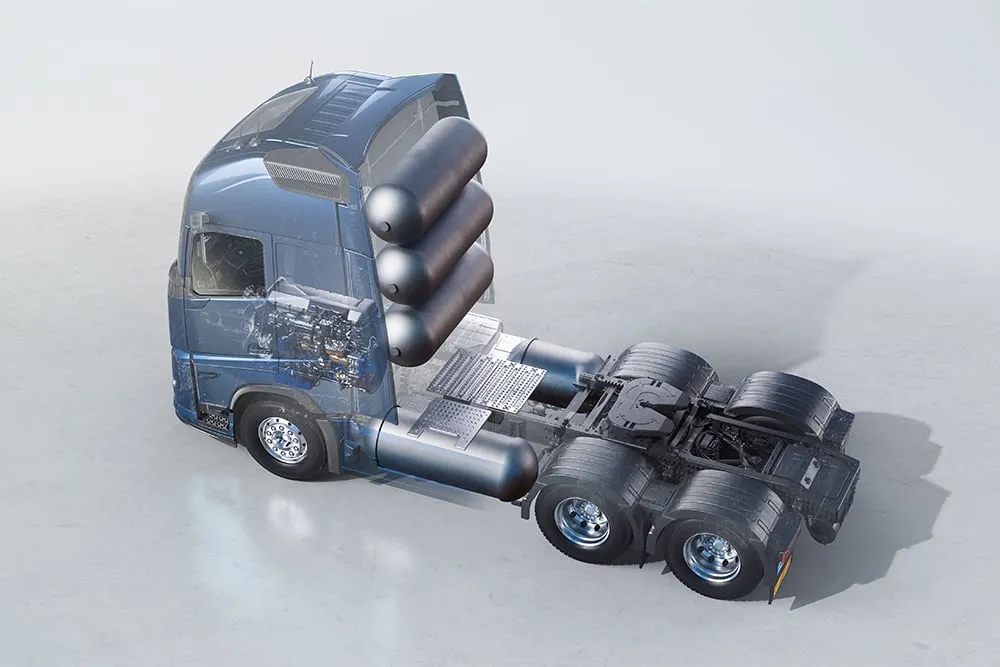
Volvo trucks with internal combustion engines running on green hydrogen have the potential to achieve net-zero CO2 emissions when renewable HVO is used as an ignition fuel. They will be classified as a “Zero Emission Vehicle” (ZEV) under the newly agreed EU CO2 emission standards.
“It is clear that several technologies are needed to decarbonise heavy transport. As a global truck manufacturer, we need to support our customers by offering a range of decarbonisation solutions, allowing them to choose an alternative based on their transport application, available infrastructure and green energy prices,” says Jan Hjelmgren.
Volvo trucks with hydrogen-powered internal combustion engines will feature High Pressure Direct Injection (HPDI), a technology in which a small amount of ignition fuel is injected at high pressure to enable compression ignition before hydrogen is added. The benefits of this technology include higher energy efficiency, lower fuel consumption and increased engine power.
Volvo Group has signed an agreement with Westport Fuel Systems to establish a joint venture using HPDI technology. The joint venture is expected to become operational in the second quarter of 2024, following formal completion.
Facts
- Volvo hydrogen-powered trucks will have an operating range comparable to that of many diesel trucks, depending on the type of transport.
- Because hydrogen combustion produces low CO2 emissions, these trucks will be classified as “Zero Emission Vehicles” under the newly agreed EU CO2 emission standards.
- Hydrogen internal combustion engines will also emit very small quantities of nitrogen oxides
- and particulates.
- Hydrogen can also be used to power fuel-cell electric trucks, which generate electricity on board. Fuel-cell electric trucks produce no tailpipe emissions, only water vapour.
Een zakelijke vraag aan Volvo Trucks Belux? Get in touch
Companies in this story
Keep following this
Get an email when a new story is published. No account needed.
- ThemeConstruction transport on road and site
- SubjectTransport & off-road
- CompanyVolvo Trucks Belux