The transport sector is powering ahead with larger, more powerful e-trucks
Text and images Scania
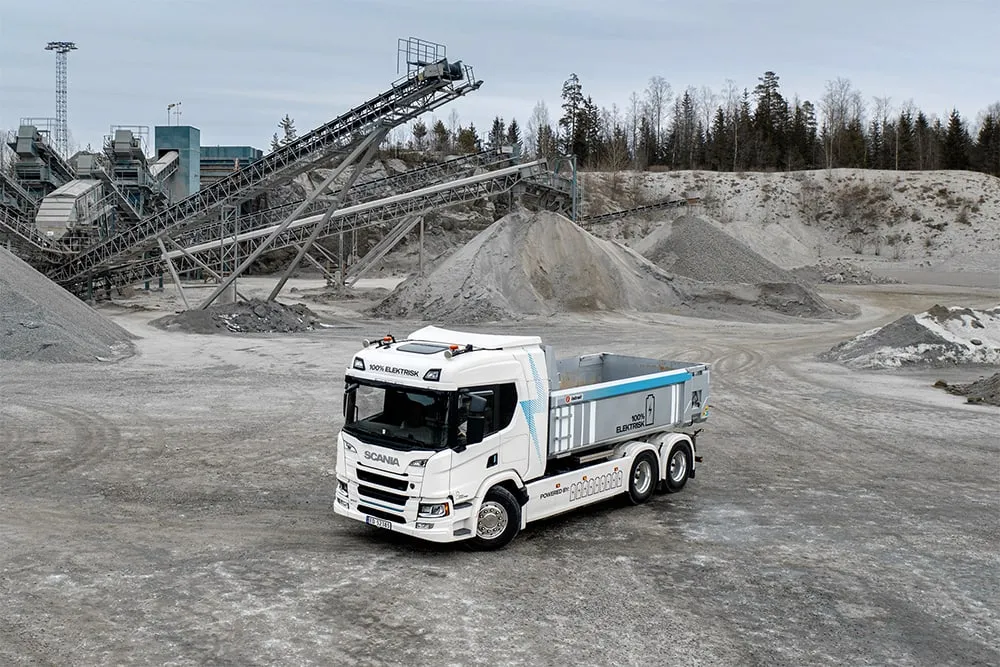
Scania recently opened a new battery factory and a new assembly line for electric trucks. The Swedish brand is now ready for an emissions-free future and can produce a BEV (Battery Electric Vehicle) for almost any application. With a 6×4 chassis, the range of electric trucks for the construction sector now offers more choice.
With its updated, fully electric vehicles, featuring new green batteries and an e-adapted chassis, as well as services such as Scania Charging Access, Scania’s offering has now reached a level that makes it attractive and relevant to a broad group of customers, whatever their transport requirements.
Scania’s current range of fully electric trucks boasts impressive figures: gross train weights of up to 64 tonnes, a range of more than 500 kilometres, charging at up to 375 kW/500 A DC, and a peak output of 450 kW (around 610 hp), considerably more than the most powerful 13-litre engine. Customers can choose from three electric machines, with outputs ranging from 210 kW (around 280 hp) to 450 kW, in 8 different steps. This gives customers plenty of choice, making Scania BEVs suitable for a wide range of applications.
“Apart from genuine long-haul operators and the heaviest applications, there are now very few buyers who cannot find an electric solution for their operations,” says Bas van der Zanden, Director e-Mobility Scania Benelux. “Of course, there are still certain applications that are less likely to go electric in the near future, but many buyers will be surprised to see what these trucks can do and how efficient they are when combined with our digital services.”
Scania’s latest electric trucks for urban and regional distribution and construction applications are available as both rigids and tractor units. The new, modern battery packs, with an installed capacity of 416 or 624 kWh, offer plenty of flexibility, and customers can now also choose R- and S-series cabs. As usual, range will vary depending on weight, operation, weather, driving style … But a 27-tonne tipper with six batteries, for example, can cover around 350 km between charges. An hour of charging can add another 270 km of range. And achieving reasonable charging times does not require 350 kW charging points: a 130 kW charger adds 100 km of range in one hour for a truck consuming 1.3 kWh/km.
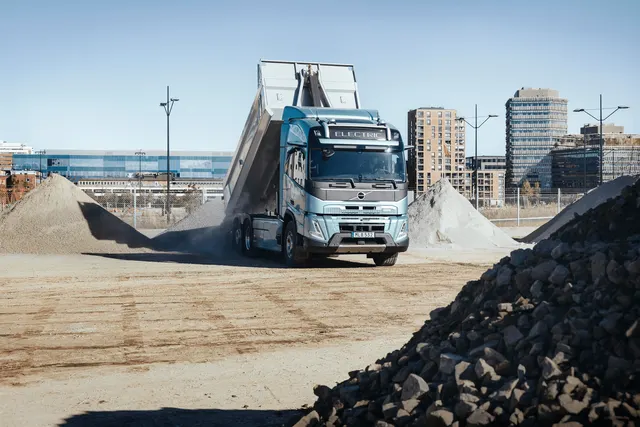
Tender specifications increasingly include requirements for CO2 emissions at a construction site or project. These requirements can extend to completely emissions-free operation of machinery and equipment, including logistics, on site. Often, this means that the site can only be reached by electric trucks. Scania offers a complete range of electric vehicles suitable for many different applications. The chassis are modular, allowing for great flexibility. An e-PTO can be used to power additional equipment with zero emissions. In addition, many bodybuilders have now been trained to work with a Scania e-truck.
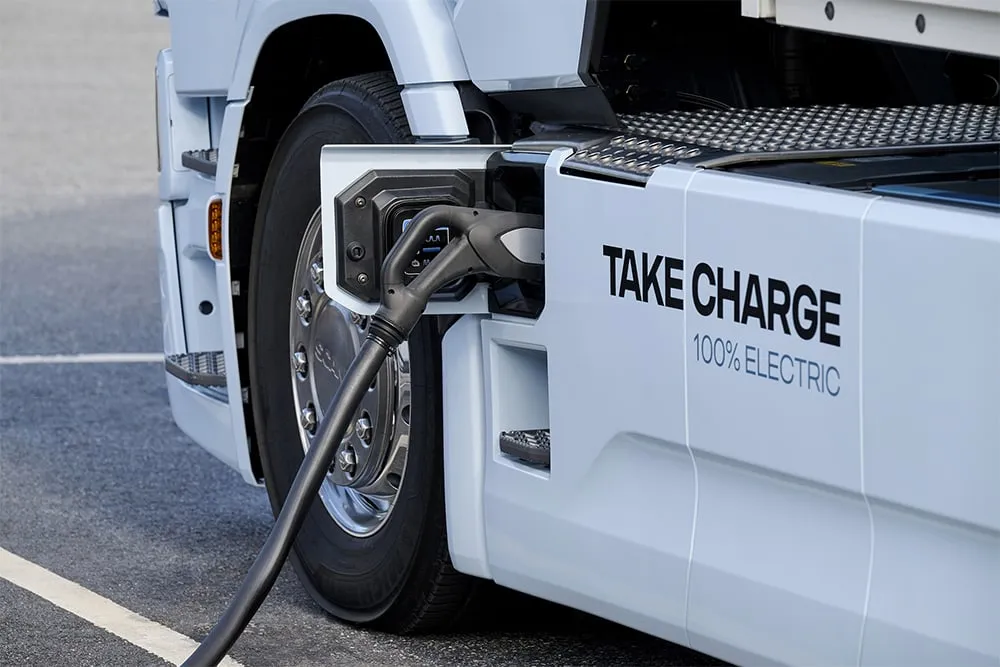
Scania uses battery cells from Swedish manufacturer Northvolt, which have a service life of 1.5 million kilometres when used to power trucks. Their carbon footprint is around one third of that of a comparable industry benchmark.
One of the main advantages of Scania’s batteries is their charging characteristics. Unlike many other battery packs, Scania’s can be repeatedly charged to 100% without affecting their service life. They also have a flat charging curve, which means they charge at the same rate whether nearly full or nearly empty. The flat charging curve makes charging times predictable, while the long battery life helps keep TCO low.
A business enquiry for Scania Belgium? Get in touch
Companies in this story

Keep following this
Get an email when a new story is published. No account needed.
- ThemeTowards low-emission equipment and transport
- SubjectTransport & off-road
- CompanyScania Belgium