Even more efficient, even at full power
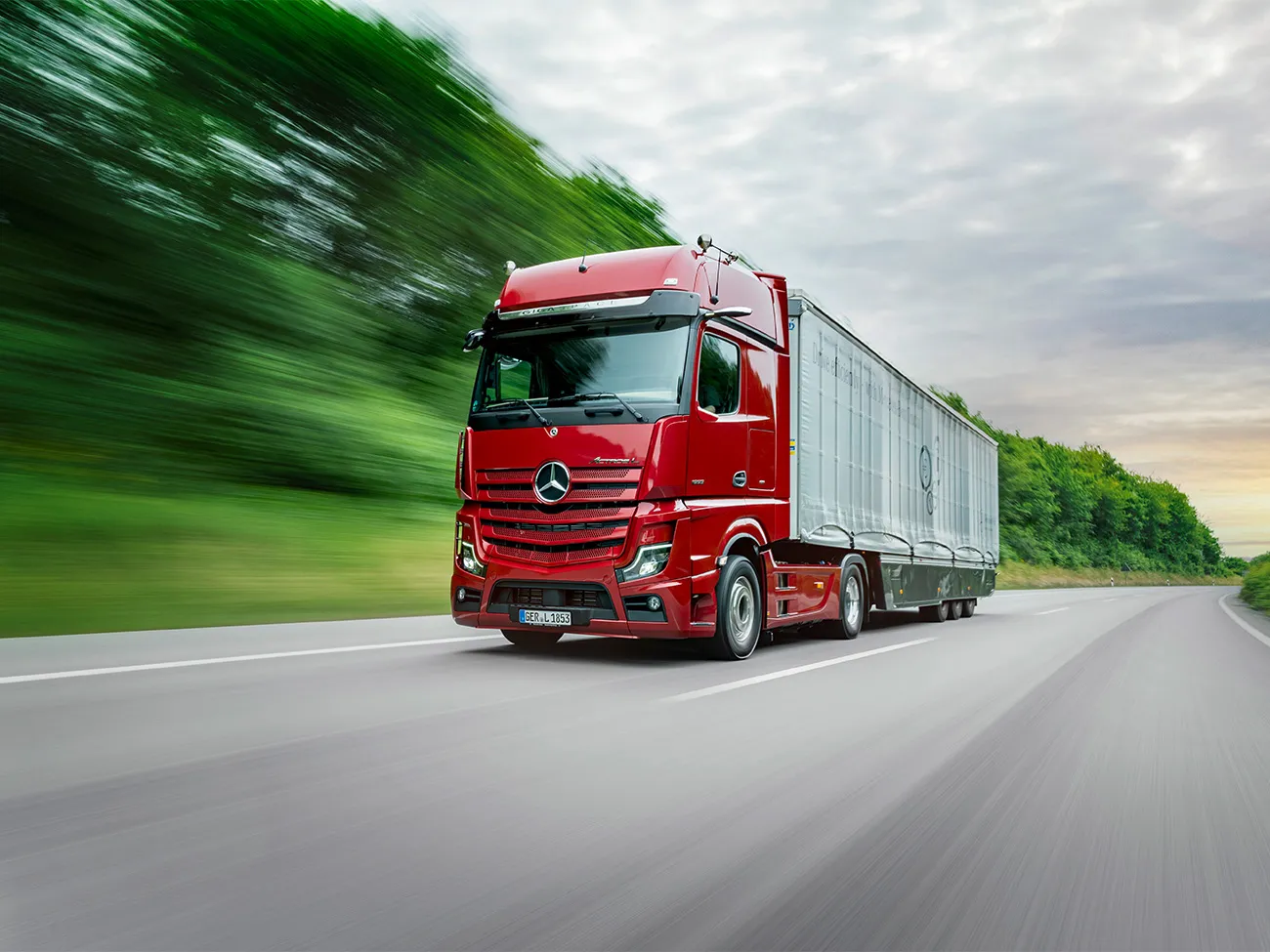
In 2022, Mercedes-Benz Trucks is launching the third generation of its OM 471 heavy-duty engine.
- Powertrain optimisation
- Fuel consumption reduced by up to a further 4%
- A newly developed exhaust aftertreatment system
- Improved fuel efficiency; meets the strictest emissions standards, such as Euro VIe
- Two specially developed turbocharger variants that reduce fuel consumption or improve power delivery
- Powershift Advanced for faster gear changes and significantly shorter torque interruptions
- The Top Torque range has been extended to provide more torque in the highest gears (7 to 12)
- Built at the Mannheim engine plant
- Karin Rådström, CEO Mercedes-Benz Trucks: “In developing the third generation of the OM 471, we consistently focused on our customers’ needs. Our aim was to reduce TCO (total cost of ownership) and fuel consumption. This benefits not only our customers, but also the environment. “
Powerful, extremely reliable, economical to run, fuel-efficient yet dynamic: transport companies have a wide range of requirements for their trucks, because that is how they earn their living. With drivers in short supply, it is also important to have a strong selling point: trucks that drivers enjoy driving. The powertrain accounts for around 50% of the truck’s added value, the largest share, and plays a key role.
With each of the two previous generations of its OM 471 heavy-duty engine, Mercedes-Benz Trucks set a new benchmark. The engine, transmission and axles in the OM 471’s integrated powertrain are optimally matched and built to the highest quality standards at the company’s own engine plants. Mercedes-Benz’s Mannheim plant leads the way in this respect, as Daimler Truck’s centre of expertise for engines for heavy-duty commercial vehicles and as part of its global production network for powertrain components.
Technology pays off
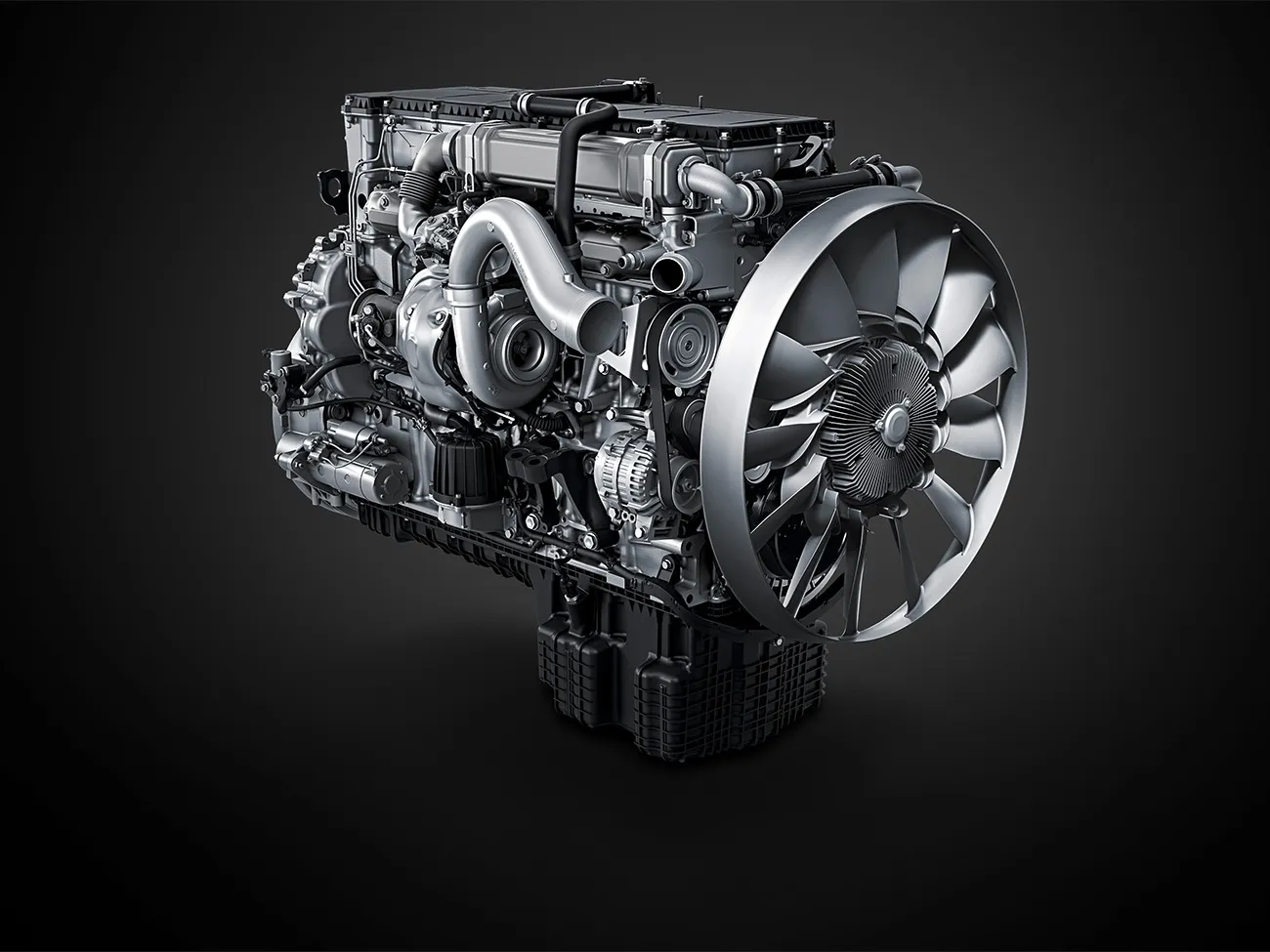
The third generation, which can now be ordered and will be delivered from October 2022, marks another step forward for Mercedes-Benz Trucks. The company has equipped its best-selling heavy-duty engine with a host of innovations to make it even more efficient. Each improvement helps meet the exacting requirements of fleet operators and professional truck drivers.
Karin Rådström, member of the Board of Management of Daimler Truck Holding AG and responsible for Europe and Latin America and the Mercedes-Benz Trucks brand: “In developing the third generation of the OM 471, we consistently focused on our customers’ needs. Our aim was to reduce TCO (total cost of ownership) and fuel consumption. This benefits not only our customers, but also the environment.”
The third-generation OM 471, which is fitted in the Mercedes-Benz Actros and Mercedes-Benz Arocs, features a range of technical innovations. “Every innovation has been developed with the clear aim of reducing TCO (total cost of ownership), in particular by cutting fuel consumption and operating costs and increasing efficiency, without compromising performance, driving dynamics or comfort,” explains Christoph Mertens, project manager for the new engine at Daimler Truck. As with the engine’s second generation, Mercedes-Benz Trucks’ engineers have made remarkable progress with the third generation. In other words, technology pays off, benefits the environment and makes driving enjoyable.
Greater fuel efficiency through improved combustion, application-specific turbochargers and reduced friction
The efficiency gains delivered by the third-generation OM 471 are the result of a number of engine innovations. The piston bowl shape, fuel injector design and cylinder head parameters that affect gas exchange, for example, have all been thoroughly improved. This has made it possible to increase the compression ratio of the inline six-cylinder engine from 18.3:1 to 20.3:1, resulting in more efficient combustion with a maximum ignition pressure of 250 bar.
One of the most important ways to improve the fuel efficiency of modern diesel engines is to optimise the turbocharger. With the third-generation OM 471, Mercedes-Benz Trucks is introducing two new turbocharger variants, developed and built in-house and precisely tailored to customers’ differing needs. The fuel-optimised variant focuses on achieving the lowest possible fuel consumption. This turbocharger is designed for long-haul transport, with power outputs of up to 350 kW (476 hp).
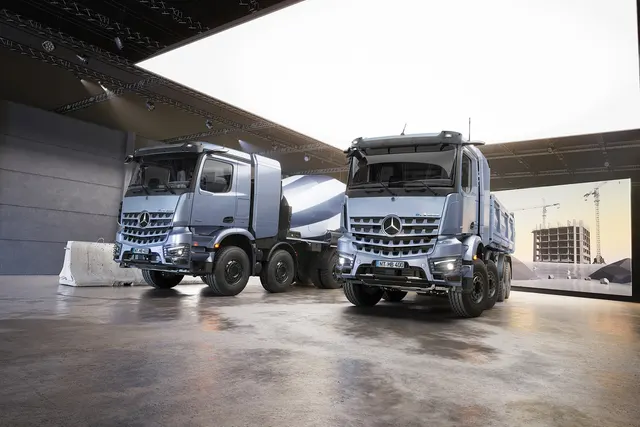
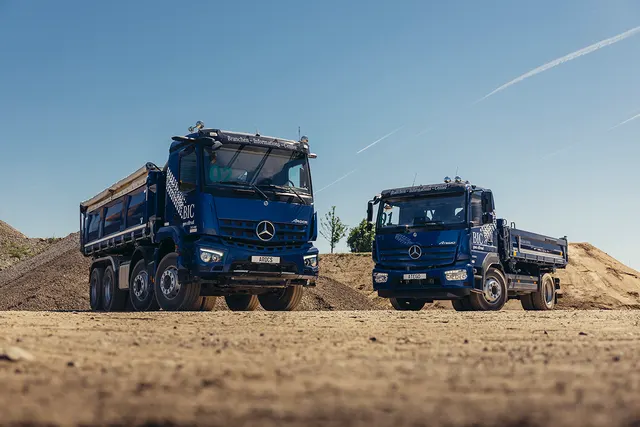
The second turbocharger variant has been developed to deliver high engine output and powerful engine braking, making it ideal for heavy haulage or construction applications, with power outputs of up to 390 kW (530 hp). Compared with the previous generation, the maximum fuel saving is up to 4% in low- and medium-output OM 471 versions, and up to 3.5% in high-output versions. Lower fuel consumption reduces both operating costs and CO2 emissions. The high-output turbocharger variant is also used in the lower-output versions of the Arocs, the truck designed for the construction sector.
Reduced friction losses and oil pressure control (low-viscosity oil)
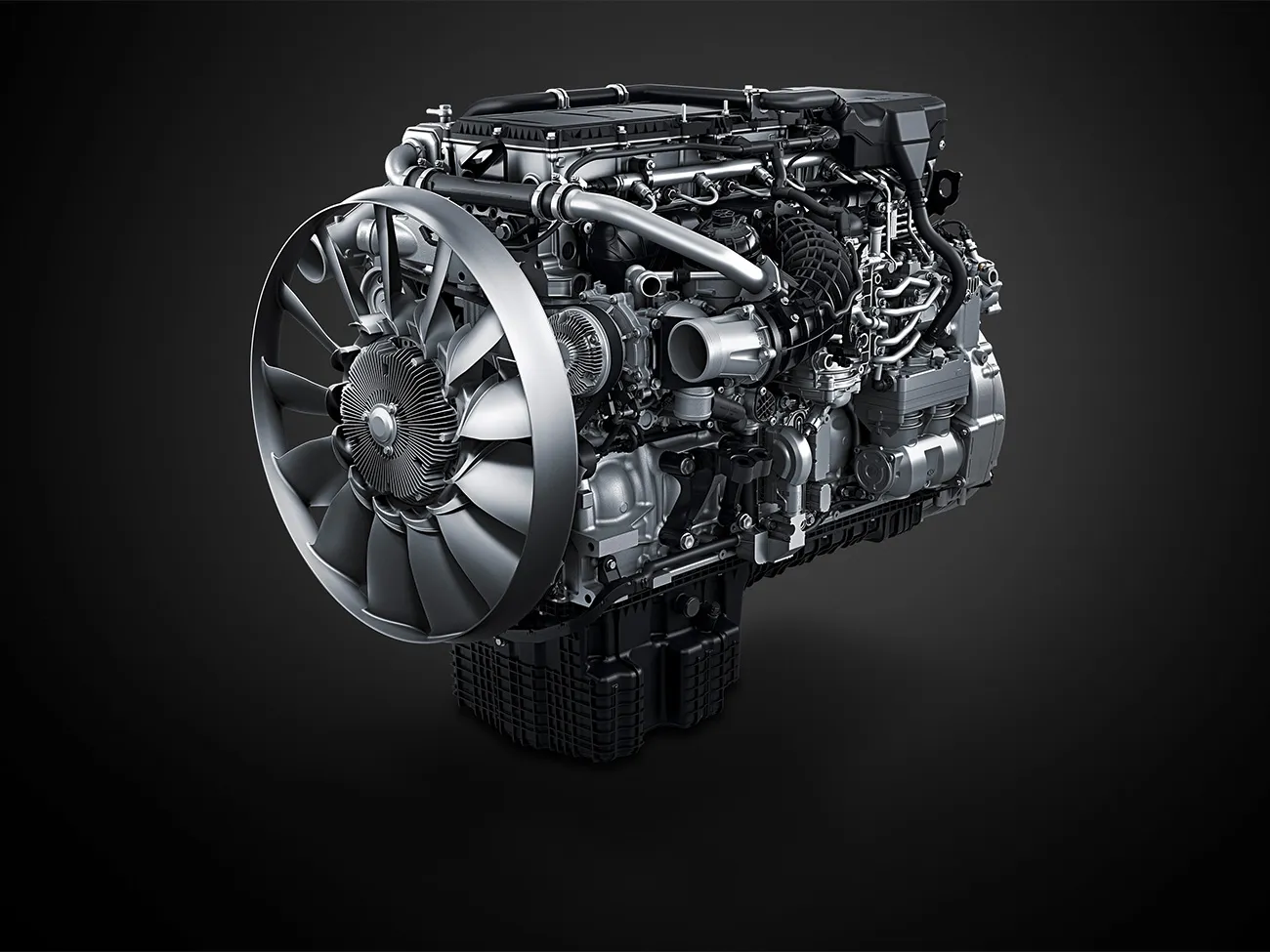
Alongside combustion and turbocharging, reducing friction losses is the third key way to improve fuel efficiency. To this end, the third-generation OM 471 is equipped with a newly developed valve that controls engine oil pressure. The valve is installed downstream of the oil pump and upstream of the oil thermostat. An electric actuator controls the valve according to a characteristic map to reduce pressure. The extent to which oil pressure can be lowered is calculated using a complex matrix that takes account of all engine components and their specific requirements, such as lubrication or cooling. A newly developed low-viscosity engine oil allows more precise oil pressure control. It improves fuel efficiency without shortening oil change intervals or increasing wear on engine components.
A newly developed exhaust aftertreatment system
The exhaust aftertreatment system has been completely redesigned and adapted to the OM 471’s new combustion and control system. This in turn helps improve fuel efficiency. The system limits back pressure and also increases the AdBlue uniformity index, resulting in better NOx conversion and lower fuel consumption. Together with the closed-loop, adaptive NOx control circuit and the predictive SCR temperature model, the NOx sensors help keep emissions even more stable. The system meets even the strictest emissions standards, such as Euro VIe, which require effective control of exhaust emissions under normal operating conditions throughout a vehicle’s normal service life.
High driving dynamics thanks to Powershift Advanced and Top Torque
With the third-generation OM 471, Mercedes-Benz Trucks has focused not only on engine efficiency, durability and reliability, but also on driving dynamics, another aspect that matters to customers. The engineers have therefore worked on the powertrain with this in mind. The new PowerShift Advanced automated transmission control system enables faster, smoother pull-away and acceleration in many situations, thanks to highly precise gear selection. Faster gear changes in the highest gears reduce the duration of torque interruption by up to 40%. The accelerator pedal settings have also been further improved: greater sensitivity at the start of pedal travel enables the driver to manoeuvre more precisely, while a quicker response when the pedal is pressed further improves dynamics under heavy loads. These accelerator pedal settings also make it easier to negotiate roundabouts and accelerate afterwards.
Another highlight is the extended Top Torque range. The system is available for 300 kW (450 hp) and 350 kW (476 hp) engines in combination with the G281 transmission. When one of the highest gears (7 to 12) is engaged and ‘A Standard’ mode is activated, it delivers an extra 200 Nm of torque to the crankshaft. At the touch of a button, extra power is available when you really need it, for example on a motorway slip road or when overtaking. And you save fuel at the same time. Added value that pays off for both drivers and fleet operators.
Question about this story? Ask your question
Keep following this
Get an email when a new story is published. No account needed.
- ThemeConstruction transport on road and site
- SubjectTransport & off-road