Development milestone: Daimler Truck tests liquid hydrogen fuel cell truck
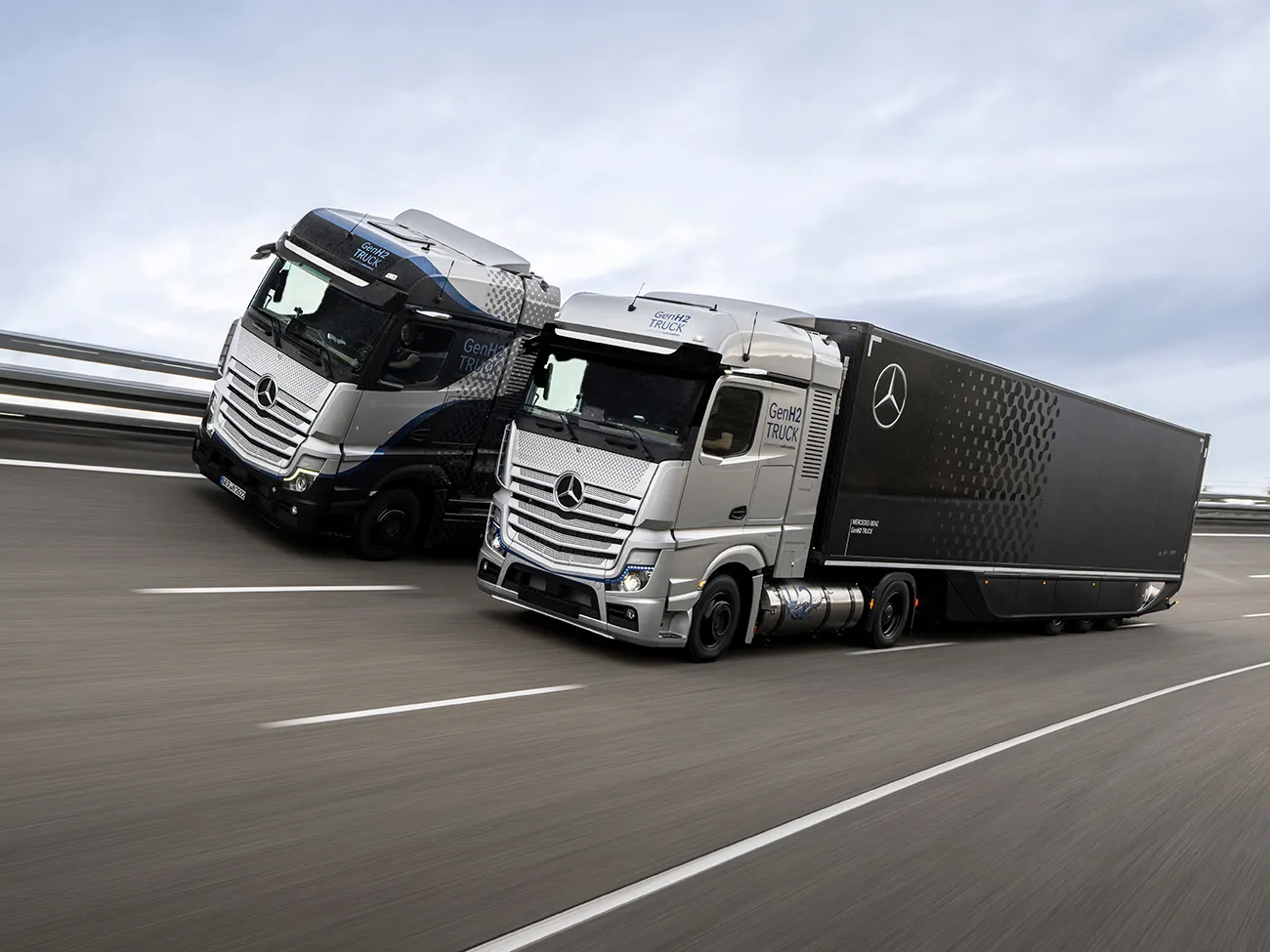
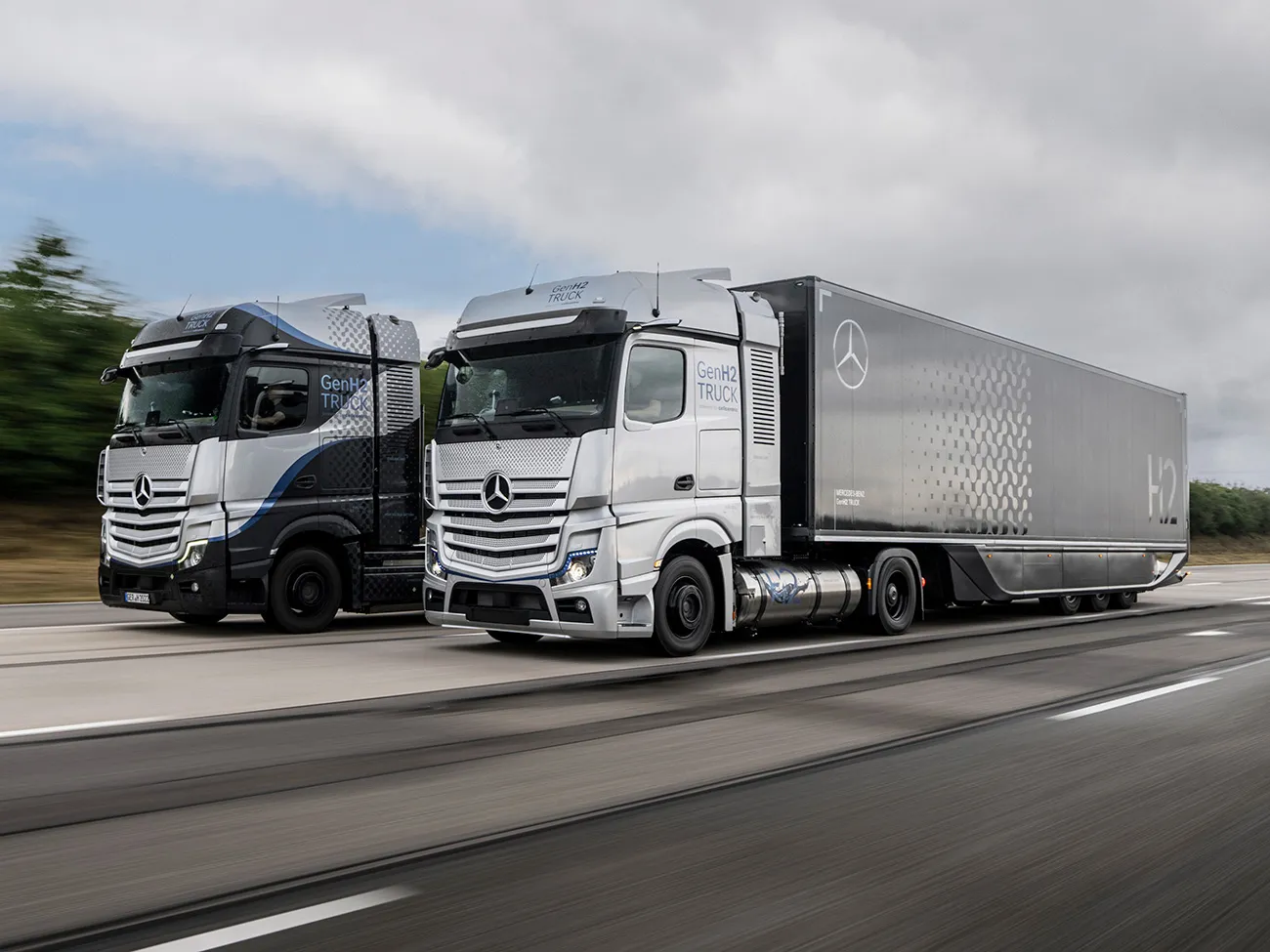
Daimler Truck has reached the next milestone on its path towards sustainable transport with hydrogen-based drive systems. Since last year, the Mercedes-Benz GenH2 Truck fuel cell prototype has been undergoing intensive testing, both on the company’s own test track and on public roads. Daimler Truck is now bringing an additional prototype into operation to test liquid hydrogen. Political support for the development programme comes from Daniela Schmitt, Minister for Economic Affairs of Rhineland-Palatinate, who today opened the regional hydrogen week ‘WOCHE DES WASSERSTOFFS SÜD’ (#wdws2022) with a test drive in Wörth am Rhein (Germany).
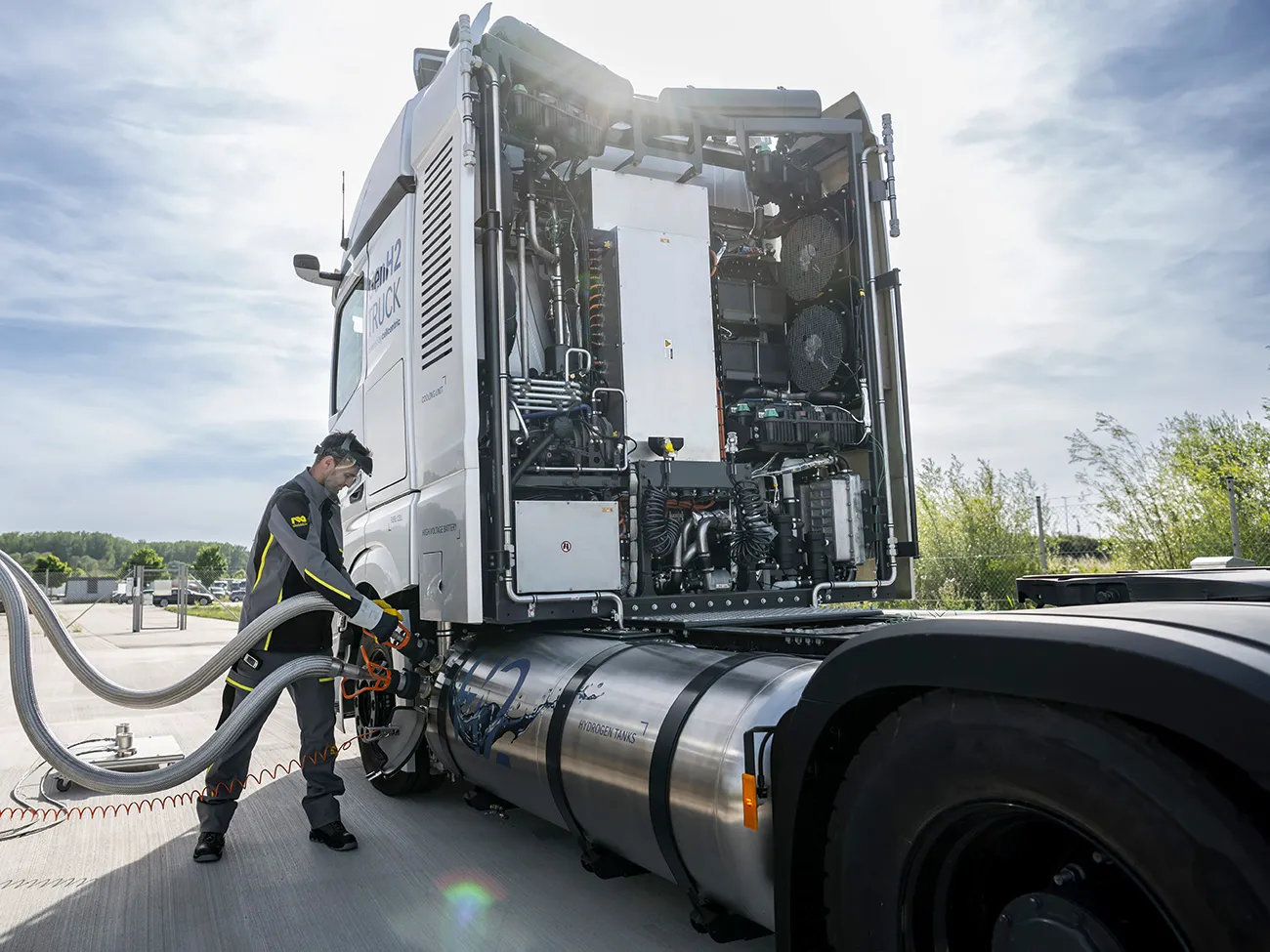
A newly installed prototype filling station at the Wörth development and testing centre makes it possible to refuel with hydrogen. Daimler Truck and Air Liquide recently celebrated the first successful refuelling of the truck with liquid hydrogen (LH2). During the process, cryogenic liquid hydrogen at a temperature of -253 degrees Celsius is filled into two 40-kilogram tanks on either side of the chassis. Thanks to the excellent insulation of the hydrogen tanks, the hydrogen can be kept at temperature for long enough without active cooling.
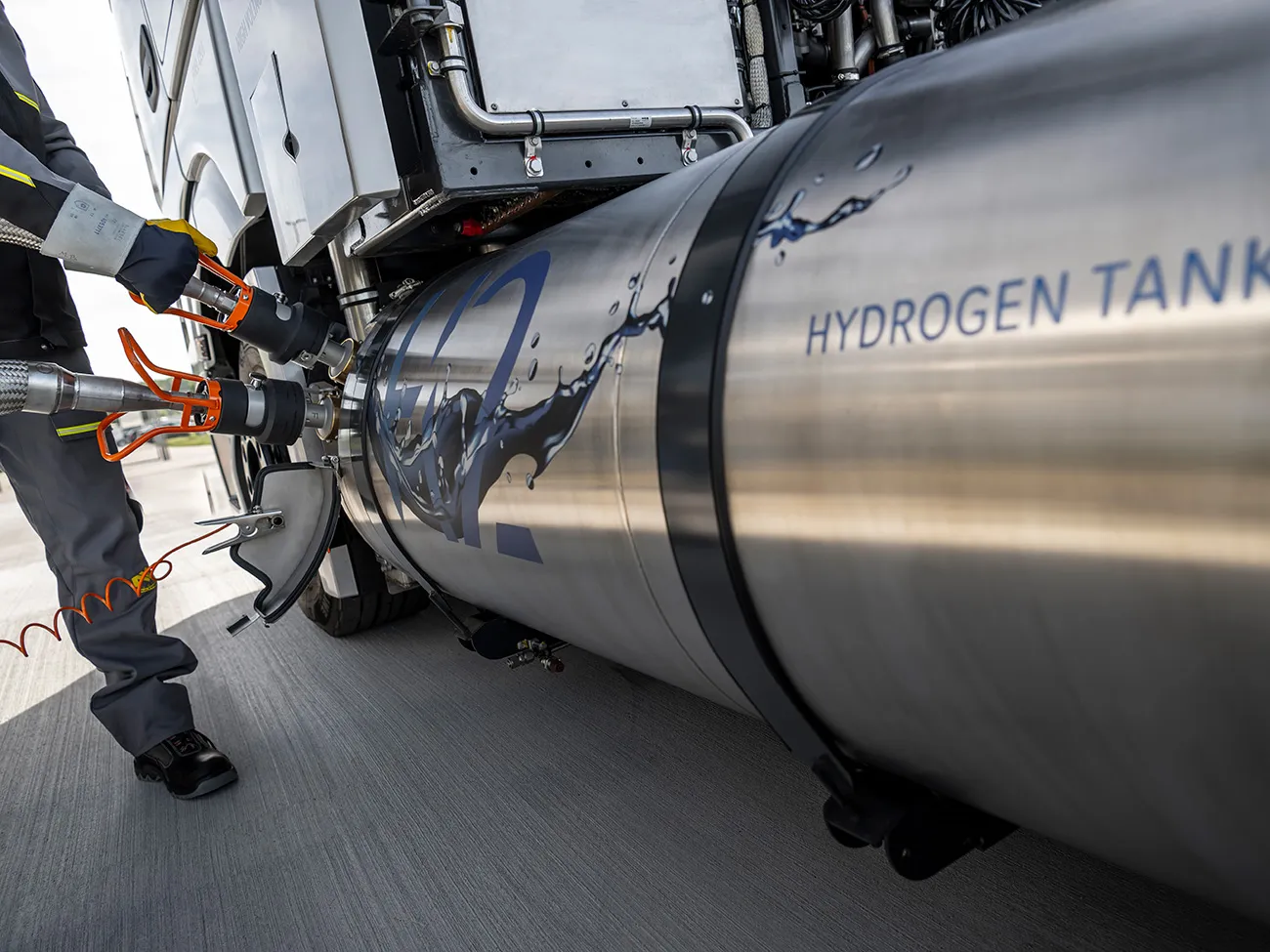
Daimler Truck favours liquid hydrogen in the development of hydrogen drive systems. In this aggregated state, the energy carrier has a significantly higher energy density than gaseous hydrogen. This means more hydrogen can be refuelled, considerably increasing the vehicle’s range and matching the performance of conventional diesel trucks. The development target for the production-ready GenH2 Truck is a range of 1,000 kilometres or more. This makes the truck ideally suited to flexible, demanding applications, particularly in heavy-duty long-haul transport. Series production of hydrogen trucks is expected to begin in the second half of this decade.
Comprehensive commitment to hydrogen
At the same time, Daimler Truck and Linde are developing a new process for handling liquid hydrogen, known as sLH2 technology (‘subcooled liquid hydrogen’). This innovative approach offers even higher storage density and a simpler refuelling process than LH2. The companies aim to refuel the first prototype vehicle at a pilot station in Germany by 2023. Daimler Truck and its partners are also committed to a high degree of transparency and openness regarding the relevant interfaces for the technologies they are developing together. The aim is to work with other companies and associations so they can develop their own refuelling and vehicle technologies using the new standard for liquid hydrogen, thereby creating a global mass market for the new process.
Daimler Truck intends to work with Shell, BP and TotalEnergies on hydrogen refuelling infrastructure along major European transport routes. Daimler Truck is also a shareholder in hydrogen refuelling station operator H2 MOBILITY Deutschland. In addition, Daimler Truck, IVECO, Linde, OMV, Shell, TotalEnergies and Volvo Group have committed to working together to facilitate the large-scale deployment of hydrogen trucks in Europe through the H2Accelerate (H2A) interest group.
On its path towards a CO₂-neutral future, Daimler Truck has clearly defined its strategic direction and is consistently pursuing a dual strategy for electrifying its range, with battery-electric drive systems on the one hand and hydrogen on the other. Its goal is to offer only new vehicles that are carbon-neutral in use by 2039.
Question about this story? Ask your question
Keep following this
Get an email when a new story is published. No account needed.
- ThemeConstruction transport on road and site
- SubjectTransport & off-road