Daimler Truck presents Mercedes-Benz NextGenH2 Truck, small-scale series production planned from late 2026
Text and images Daimler Truck
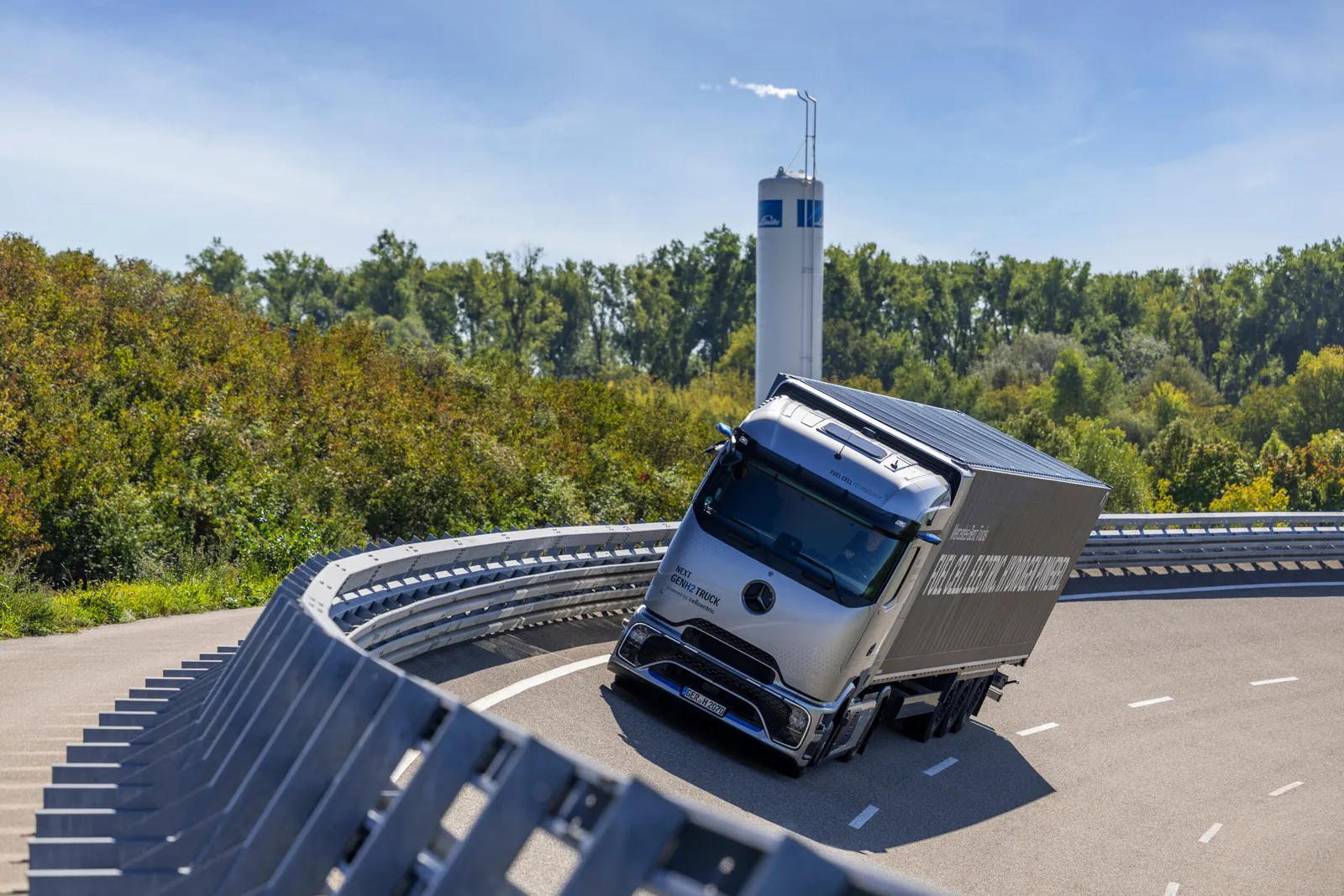
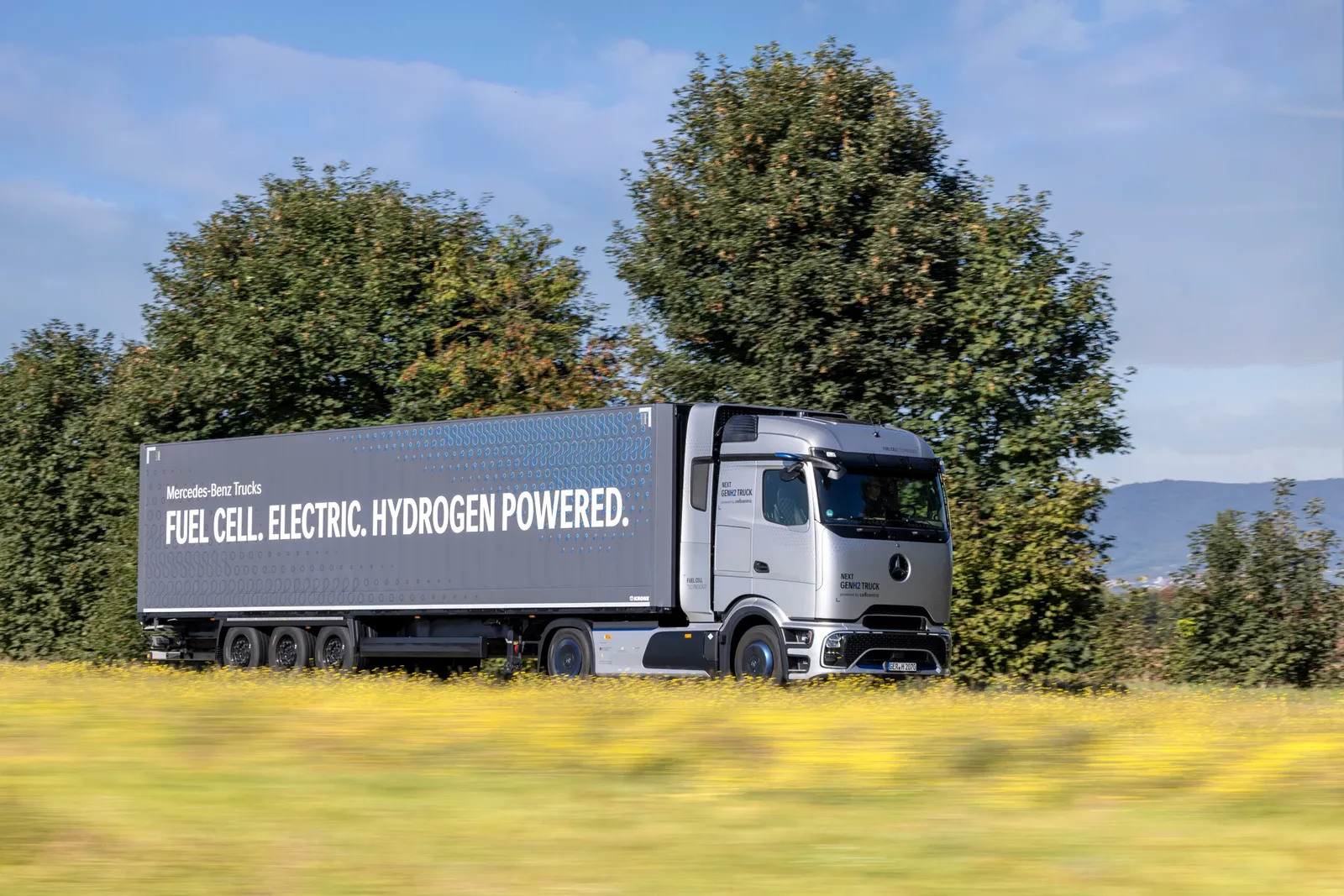
Hydrogen trucks are moving closer to everyday use in long-haul transport. With the Mercedes-Benz NextGenH2 Truck, Daimler Truck is presenting the next stage in the development of zero-emission freight transport. Small-scale series production of 100 vehicles will start in late 2026, with trucks deployed by customers in real-world transport conditions. The new truck builds on the first-generation GenH2 prototypes and combines proven fuel-cell technology with components from the battery-electric eActros 600.
Achim Puchert, CEO of Mercedes-Benz Trucks: “Alongside battery-electric solutions, hydrogen powertrains are crucial to the sustainable transformation of our industry. With the NextGenH2 Truck, we are taking the next technological step in fuel-cell trucks. Together with our customers, from late 2026 we aim to deploy a small series featuring a long range and technology close to series production in everyday transport.”
Liquid hydrogen, key to long-distance transport
One of the NextGenH2 Truck’s key features is its use of liquid hydrogen. This choice significantly increases the fuel’s energy density compared with gaseous hydrogen. At a temperature of –253 degrees Celsius, more hydrogen can be stored. This provides a much longer range and performance comparable to that of diesel trucks.
The truck can travel well over 1,000 kilometres on a single fill, even at full payload. The two tanks can store up to 85 kilograms of liquid hydrogen in total. As the tanks are interconnected, the vehicle can be refuelled from either side. A new refuelling standard, called sLH2, enables rapid refuelling. The system was developed in collaboration with technology partner Linde. Refuelling takes around ten to fifteen minutes, comparable to filling a diesel truck.
As well as extending the range, liquid hydrogen offers other benefits. It requires less logistical effort to transport, and the tanks weigh less than high-pressure systems for gaseous hydrogen. These advantages enable higher payloads, making the truck’s operational capability comparable to that of current diesel trucks.
Fuel cell and electric powertrain work together
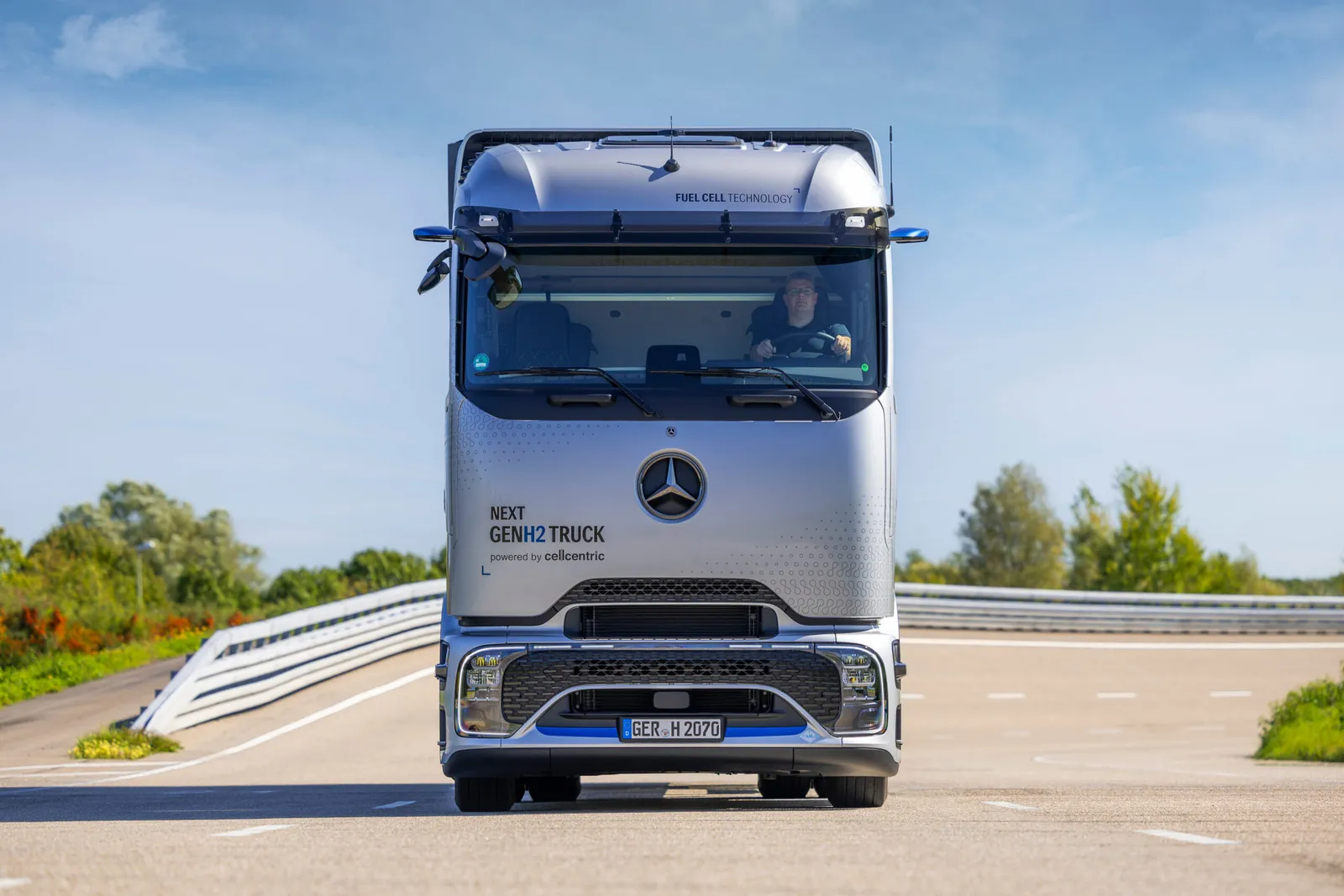
At the heart of the powertrain is the cellcentric BZA150 fuel cell, developed by the joint venture between Daimler Truck and Volvo Group. Two fuel-cell modules work together in a so-called twin system, delivering a total output of 300 kW. The modules are mounted compactly beneath the cab.
When driving, the fuel cell converts hydrogen and oxygen into electricity. This energy powers the electric motors in the e-axle. The only emission from this process is water vapour. A high-voltage battery supports the system. This lithium iron phosphate battery has a capacity of 101 kWh [1] and acts as a buffer for the fuel cell. It stores energy during recuperation, for example when braking or travelling downhill.
The truck uses the same integrated e-axle as the battery-electric eActros 600. The four-speed gearbox ensures efficient power transmission in a range of conditions. In Economy mode, the vehicle delivers up to 340 kW. In Power mode, this rises to 370 kW. This ensures sufficient power, even with heavy loads or on steep gradients.
Production components boost efficiency and safety
The NextGenH2 Truck benefits from several components already in series production. For the first time, the aerodynamically optimised ProCabin is being used in a fuel-cell truck. The cab is also featured on the Mercedes-Benz Actros L and the eActros 600. Its improved aerodynamics reduce air resistance by nine per cent [2] compared with the previous cab. This directly contributes to lower energy consumption and a longer range.
The electronic architecture and various safety systems have also been adopted from the eActros 600. These include Active Brake Assist 6, Front Guard Assist and Active Sideguard Assist 2. The vehicle also meets the latest cybersecurity standards.
Compact design expands operational flexibility
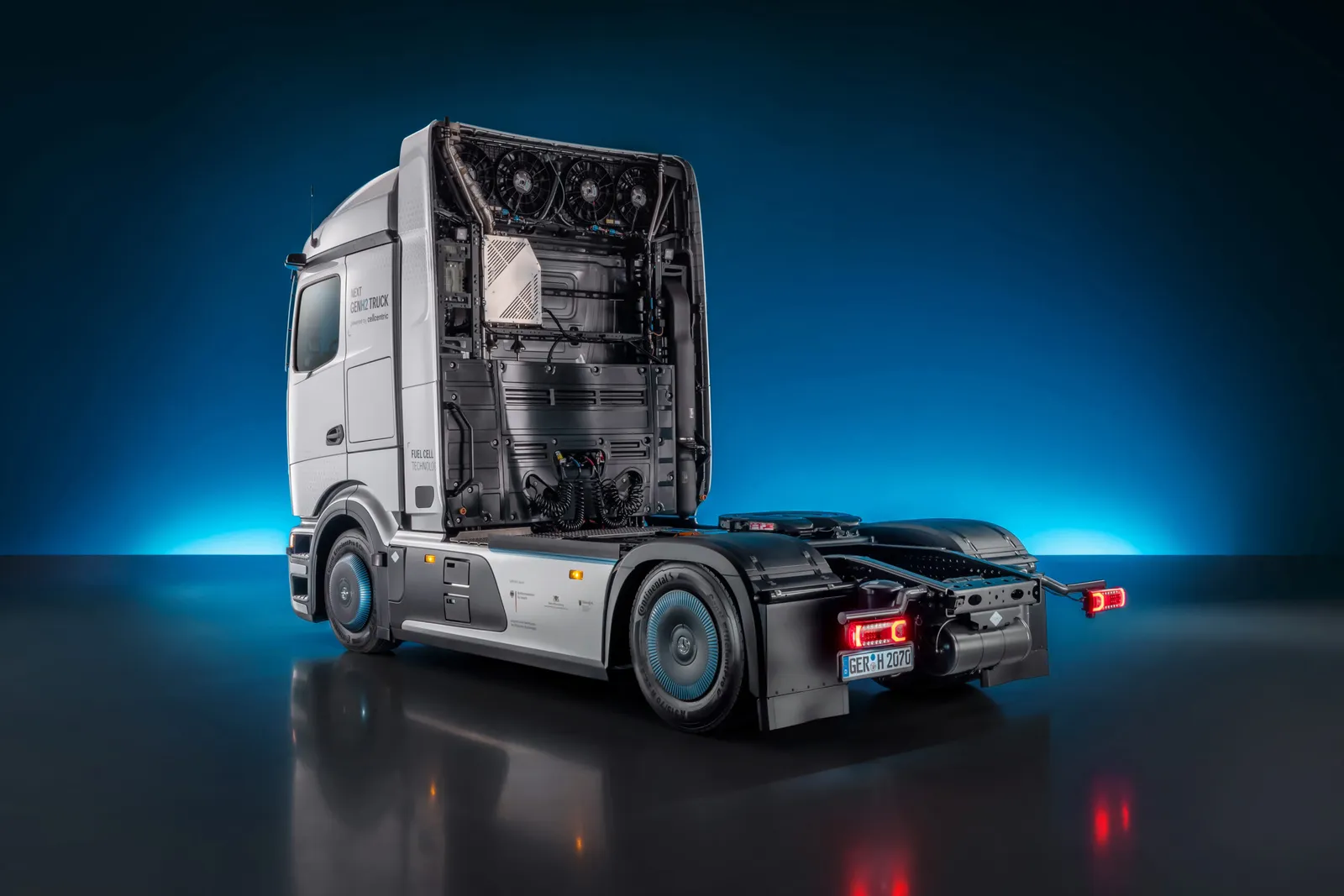
Feedback from customers and test drivers played an important role in the development of the NextGenH2 Truck. This input led, among other things, to a new design for the so-called Tech Tower behind the cab. A more compact arrangement of components shortened the wheelbase by 150 millimetres to 4,000 millimetres. This improves compatibility with a range of trailer combinations and standard trailers within European length regulations.
The Tech Tower also contains a new boil-off management system that ensures hydrogen can be handled safely, even when the vehicle is parked in enclosed spaces. An integrated cooling system maintains stable operating conditions, even at high temperatures or on difficult terrain. A new sensor system detects any hydrogen leaks. This means drivers can still sleep in the cab, an important consideration on multi-day journeys.
Testing programme and future plans
Prototypes of the NextGenH2 Truck underwent intensive testing in extreme conditions. Winter and summer tests were carried out in the Swiss Alps to check the system’s reliability. The results are being fed directly into the vehicle’s further development.
The development, production and deployment of the trucks are also receiving financial support. Germany’s Federal Ministry for Transport and the federal states of Rhineland-Palatinate and Baden-Württemberg are investing a total of 226 million euros in the project.
Series production of fuel-cell trucks is targeted for the early 2030s.
Een zakelijke vraag aan Mercedes-Benz Belgium Luxembourg? Get in touch
Companies in this story
Keep following this
Get an email when a new story is published. No account needed.
- ThemeTowards low-emission equipment and transport
- SubjectTransport & off-road
- CompanyMercedes-Benz Belgium Luxembourg