Daimler Truck BeLux focuses on hands-on experience: charging infrastructure installed at its own site for demo fleet and customer support

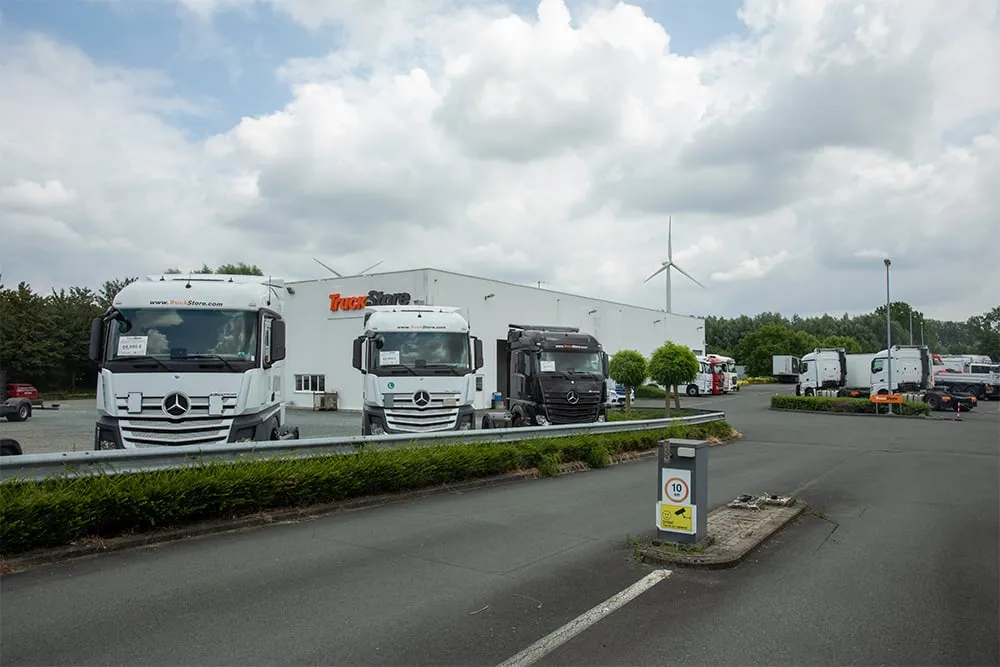
As the transport sector transitions to electric mobility, Daimler Truck BeLux faces the challenge of not only supplying high-quality electric vehicles, but also ensuring a seamless transition to electric mobility for its customers. To this end, Daimler Truck has decided to install charging infrastructure at its own site at TruckStore, Sint-Pieters-Leeuw. This investment is intended to provide valuable hands-on experience of the process of installing a complete charging infrastructure. The aim is to strengthen the organisation’s own expertise and operational efficiency.
Introduction. The decision to establish its own charging infrastructure at the site was driven by several strategic considerations. First, the demo centre plays a crucial role in showcasing the latest technologies and innovations to potential and existing customers. It is essential that the demo vehicles on display can be charged adequately between customer test drives. Investing in an on-site charging park ensures that these vehicles are always operational and ready for use. Another aim was to gain hands-on experience of the process of applying for and installing charging infrastructure. This provided insight into aspects such as timescales, resources required and potential challenges along the way. This experience enables Daimler Truck BeLux to guide and support customers more effectively as they meet all the requirements for a battery-electric fleet. In addition, the on-site charging park provides an ideal location for dealers to welcome potential customers and show them what is possible in electric mobility.
From application to zero emissions
Installing charging infrastructure at Daimler Truck BeLux’s site raised several points to consider, some of which had not been anticipated. One of the key findings was the need for a high-voltage substation to provide the required high-voltage connection, which requires a capacity of 1 megawatt. Unfortunately, this capacity was not immediately available, making it necessary to install a high-voltage substation with a transformer. Obtaining the necessary building permit for the substation required a thorough process.
Following extensive discussions with the municipality, the application for the building permit was submitted, with consultants and the construction company also playing their part. However, applying for the permit raised many questions that had to be addressed carefully before approval could be granted. This caused a considerable delay, with approval expected by August 2024, eight months after the application was submitted.
Once the permit has been approved, the transformer and charge points can be ordered. However, owing to long lead times, delivery is not expected until the end of 2024. This means that the entire process, from the outset to final delivery of the charging infrastructure, will take as long as two years. These findings highlight the complexity and challenges involved in implementing large-scale charging infrastructure, and demonstrate the need for careful planning and collaboration to ensure a successful transition to electric mobility.
It was also decided to make the charging infrastructure semi-public. This means it will be accessible to third parties for 10 hours a day, making the site eligible for subsidies in Flanders. The installation of solar panels to generate energy on site will be considered at a later stage. These two measures could make the investment more financially attractive.
Conclusion on charging infrastructure
In light of these insights, Daimler Truck BeLux stresses the importance of taking timely action to request the necessary infrastructure from the grid operator. It is essential to ensure that sufficient capacity is available to support the charging infrastructure. If it is not, expansion may need to be planned, but this can be a lengthy process that may take even more time. In such cases, alternative solutions should be considered, such as using mobile battery systems, charging at customers’ sites or at other locations, or even using public charging infrastructure, although this can often be more expensive.
It is also crucial to consider the specific requirements of trucks when planning the location of chargers. While installers generally have some experience installing charging infrastructure for passenger cars, they often have less experience with trucks. Sufficient space must therefore be provided for manoeuvring, turning circles must be taken into account, and the clearance height of any canopies must be assessed. By considering these factors and taking action in good time, potential obstacles can be avoided and the smooth implementation of the charging infrastructure ensured.
Daimler Truck BeLux remains committed to supporting its customers in this area, offering advice and guidance through its eConsulting team. Find out more about eConsulting.
Daimler Truck BeLux expands demo fleet
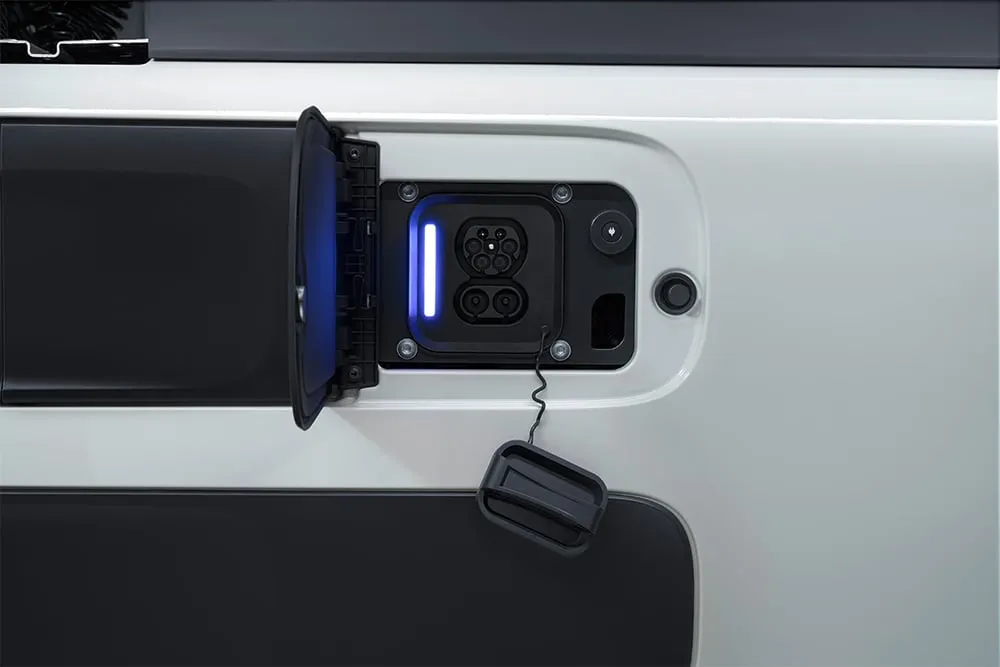
Daimler Truck’s demo fleet offers a diverse selection of electric trucks to demonstrate the versatility and performance of these vehicles. The fleet currently comprises several models, including the eActros 400 with refrigerated bodywork, the eActros 300 with curtainsider bodywork and tail lift, the eActros 400 with hooklift system, and the eActros 300 tractor unit with a gross train weight of 40 tonnes.
The demo fleet is set to expand in the near future, with the introduction of an eActros 300 tractor unit with a gross train weight of 44 tonnes and a fifth-wheel load of 12t at a gross vehicle weight of 20t, expected in July. An eEconic fitted with a refuse collection body will also be added towards the end of the year.
Further expansion is planned for 2025, with the launch of the eActros 600. Two tractor units will be introduced early next year, followed by a rigid truck in the second half of 2025. In addition, every dealership will have its own eActros 600 demo tractor unit.
Use of the demo fleet is carefully coordinated in collaboration with Daimler Truck BeLux’s eConsulting team. For each request made through a dealership, the team checks whether sufficient charging options are available. If necessary, an adjustable 20-kilowatt mobile charger (CEE plug, 400V / 32Ampère) or a 40-kilowatt mobile charger (CEE plug, 400V / 63Ampère) can be provided. If this is not possible, alternative charging options, such as public charging, are discussed. Drivers also receive comprehensive training on charging the vehicle, driving a battery-electric vehicle and using its various safety systems. This training is essential to getting the most out of the vehicles, as energy recuperation while driving can significantly extend their range.
To make the demo vehicles (eActros 600) easy to identify, all eActros 600 trucks will feature uniform livery that can be recognised throughout Europe.
From September this year, the eActros 600 prototype will also be deployed in Belgium for a select group of customers. Belgium is one of four countries in Europe to receive this opportunity first. This will allow customers to experience the eActros 600’s innovative technology and provide feedback before it is rolled out on a larger scale.
Question about this story? Ask your question
Keep following this
Get an email when a new story is published. No account needed.
- ThemeTowards low-emission equipment and transport
- SubjectTransport & off-road