The Next Generation is raring to go
With the recent arrival of the Caterpillar 326 excavator, the Next Generation (Next Gen) has gained an eager advocate. Like the previously launched Cat 320, 320 GC and 323, the new 326 is more fuel-efficient, more comfortable, cheaper to maintain and, all told, much more efficient than its predecessor. That is Caterpillar’s promise. At Bergerat Monnoyeur and its extensive dealer network, we can see for ourselves whether it delivers.
A productivity increase of no less than 45 % is what Caterpillar promises with this 26-tonne excavator. It is made possible by a host of “easy-to-use Caterpillar technologies”, from the Cat 7.1 engine, which meets the strictest emissions standards, and the advanced hydraulic system to features such as Cat Grade Assist, Bucket Assist, Innovative Swing Assist and the onboard Cat Payload weighing system. The latter is connected to the company office and maintenance services via VisionLink. For the operator, the further improved comfort of the new cab, with its low-noise ROPS structure, also matters, of course. The Bluetooth-enabled radio is a welcome, and indeed essential, feature, as it has USB ports for charging a mobile phone.
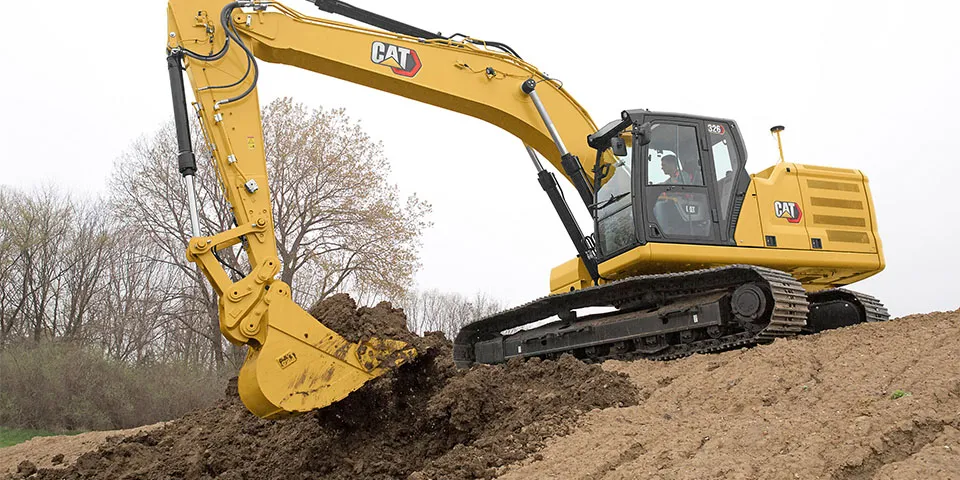
Like the other Next Generation excavators, the Caterpillar 326 is more fuel-efficient, more comfortable, cheaper to maintain and much more productive.
Modern 20-tonners
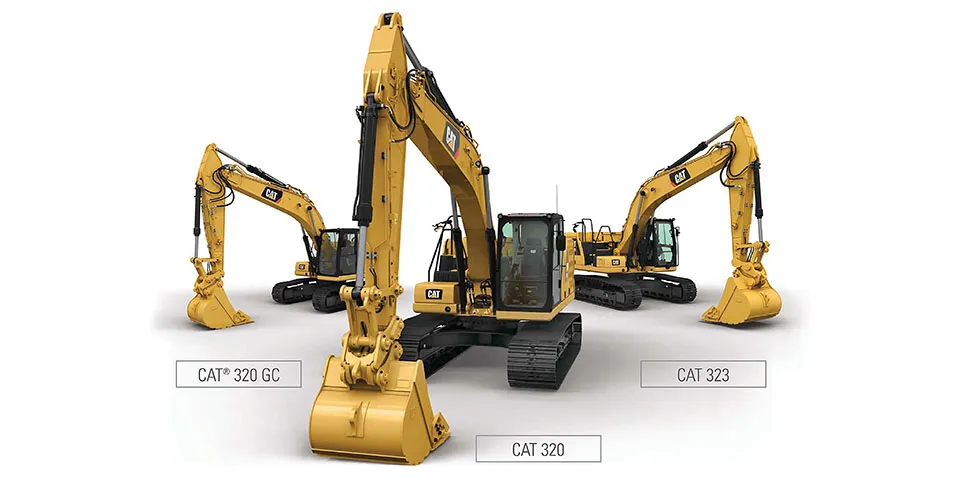
The Cat 320, 320 GC and 323 are modern 20-tonners, with the GC versions having a story of their own. Thanks to integrated Cat Connect technology, the Next Gen versions of the 320 and 323 deliver higher productivity with lower fuel and maintenance costs. These excavators are designed for medium- to heavy-duty applications, with the 323 offering the greatest lifting capacity and power in the range.
The new Cat 320 GC is specifically designed for light to medium-duty applications. It is a somewhat simplified version that can deliver substantial productivity at considerably lower cost per hour. A useful option when having your own machine is essential, but it does not need to be used continuously or for difficult jobs. It is still a genuine Caterpillar, and meets all requirements.
Easy operation
Ease of operation is central to the Next Generation’s design. Whether it is remote starting with a Bluetooth key fob, customisable joystick preferences or the unique operator ID function, which allows the power mode to be programmed to suit each operator, the new series of excavators is designed to be easier to operate than ever before. The large, high-resolution 8-inch (203 mm) screen also provides intuitive menu navigation. It can even display a digital version of the operating manual. The touchscreen also has rotary controls.
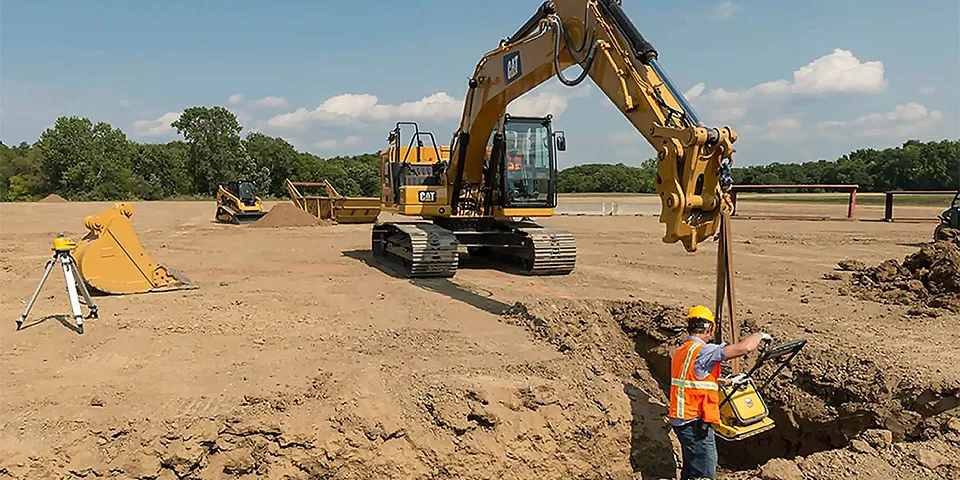
The new Cat 320 GC is a slightly simplified version that can deliver substantial productivity at considerably lower cost per hour.
Substantial fuel savings
One thing we are always keen to find out is how much fuel the new engine and improvements to the hydraulic system save. Caterpillar claims savings of no less than 25 % compared with the previous models. The new Smart mode automatically matches engine power and hydraulic power to the digging conditions, optimising both fuel consumption and performance. When there is no demand for hydraulics, engine speed is automatically reduced. The new cooling system is also more efficient, thanks to the use of multiple fans. A new main control valve eliminates the need for pilot lines, and fewer lines mean less oil, reducing operating costs in the long term.
Lower maintenance costs
Extending maintenance intervals can cut maintenance costs by a substantial 15 %. This also means less downtime, which is always welcome. For example, the new Cat hydraulic return filter can handle more contamination, and its service interval has been extended by around 50 % compared with previous filters, to no less than 3,000 hours. The service interval for the new Cat air filter, with its integrated pre-cleaner and primary and secondary filters, has doubled. The service interval for the redesigned fuel tank cap filter is now 2,000 hours. Each of the three fuel system filters has a service interval of 500 hours. All service points can now be easily reached by mechanics and operators while standing on the ground.
Question about this story? Ask your question
Keep following this
Get an email when a new story is published. No account needed.
- ThemeEarthmoving and road construction in practice
- SubjectProduct information