Online celebration as JCB switches to Stage V engines
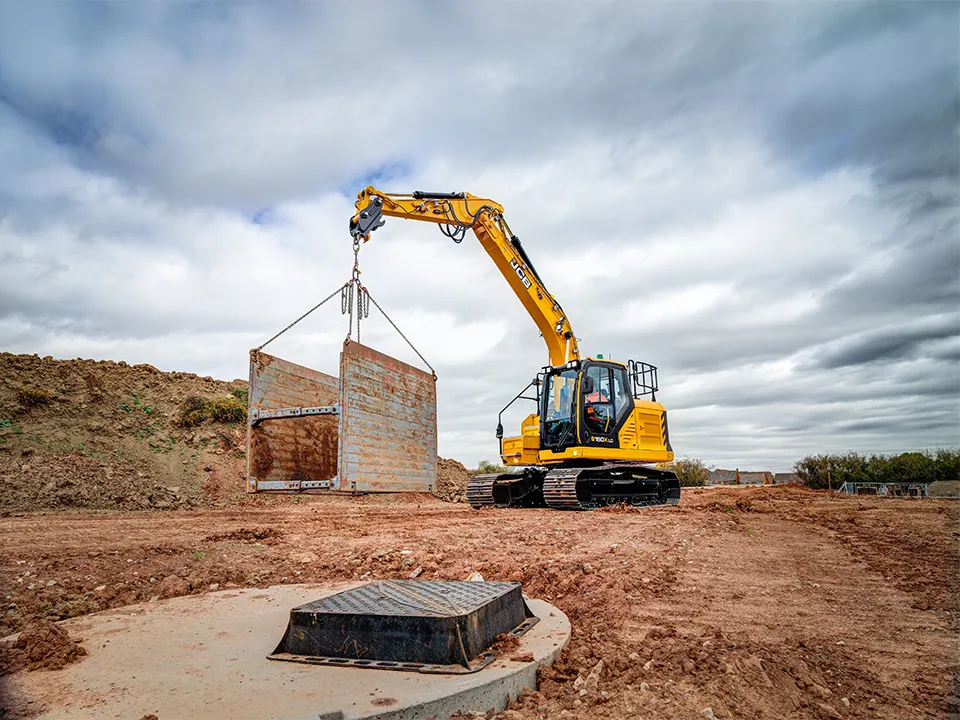
The popular 140X, 150X and 220X tracked excavators, 4 to 6-tonne compact excavators, JCB’s full range of telehandlers for the European construction sector, its first low-emission generator for the rental market, and a revised range of Teletruks.
JCB’s major switch to Stage V engines is a cause for celebration, but this year, sadly, the event had to be held entirely online, without an audience.
The switch to Stage V engines has become a real JCB celebration, as more and more engines have been coming from the company’s own factory in recent years. One example is the Dieselmax 448. In larger excavators, it will replace the Stage IV (Tier 4 final) versions known as the EcoMAX 444 and 448. The switch to the Dieselmax 448 not only reduces emissions, but also delivers considerably more torque, improving the machine’s versatility. Let’s start with the popular 140X, 150X and 220X tracked excavators. Here, Stage V’s greater efficiency is combined with an even better-equipped, larger cab, while retaining all the proven features of the Stage IV models.
EGR no longer needed
On the 140X and 150X, the JCB EcoMAX 444 has been replaced by a JCB Dieselmax 448. With a displacement of 4.8 litres, it delivers the same power of 81 kW (108 hp), but now produces 516 Nm of torque, an increase of no less than 135 Nm. On the 220X, the EcoMAX 448 has been replaced by the new JCB Dieselmax 448 engine, which delivers the same power of 129 kW (172 hp) and 690 Nm of torque.
All three excavators now also feature automatic engine shutdown to reduce fuel consumption and emissions when the machine is not in use. They are also equipped with a new Selective Catalytic Reduction Filter (SCR-F), which combines an SCR, Diesel Particulate Filter (DPF) and Diesel Oxidation Catalyst (DOC), with a large soot capacity. This makes exhaust gas recirculation unnecessary, so EGR (Exhaust Gas Recirculation) has been removed from the new intake manifold, resulting in cleaner combustion.
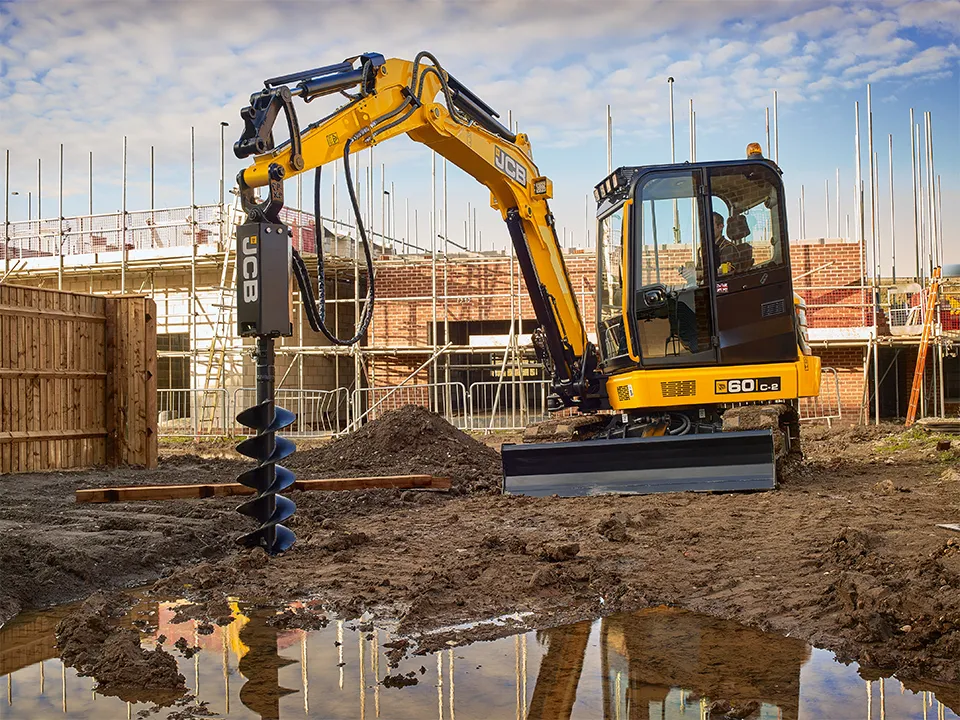
Compact excavators
The 4 to 6-tonne mini excavators are now known as Series 2. The zero-tailswing 50Z-2 replaces both the previous 48Z-1 and 51R-1 models, the 56Z-2 takes over from the 55Z-1, and the conventional tailswing 60C-2 replaces the previous 57C-1. They are powered by a 1.7-litre, three-cylinder, turbocharged Perkins Stage V diesel engine with common-rail injection, producing 34 kW (45.6 hp). Thanks to the diesel oxidation catalyst (DOC) and diesel particulate filter (DPF), diesel exhaust fluid (DEF) such as AdBlue is no longer needed. The engine is optimally matched to the hydraulic system and now comes with programmable automatic stop, automatic idle and one-touch idle functions.
Telehandlers, Teletruks and generator
All JCB telehandlers built for Europe, from the 531-70 to the 540-200, are being fitted with a JCB 448 Dieselmax engine producing 81 kW (109 hp). EGR is not required: automatic engine shutdown reduces fuel consumption, and four types of regeneration help reduce downtime.
The new range of Teletruk telescopic-boom forklift trucks features a 46 kW (62 hp) JCB by Kohler Stage V engine, a new design and a ROPS / FOPS Command Plus cab with 12 per cent more space. The machines offer greater lifting capacity at full reach.
Finally, JCB has introduced its first Rental Series (RS) generator to meet EU Stage V, giving customers higher prime power with lower emissions. The G40RS V replaces the Stage IIIA G36RS model and delivers 40 kVA at a frequency of 50 Hz.
Question about this story? Ask your question
Keep following this
Get an email when a new story is published. No account needed.
- ThemeEarthmoving and road construction in practice
- SubjectProduct information