Keestrack focuses on electrifying screening and crushing equipment
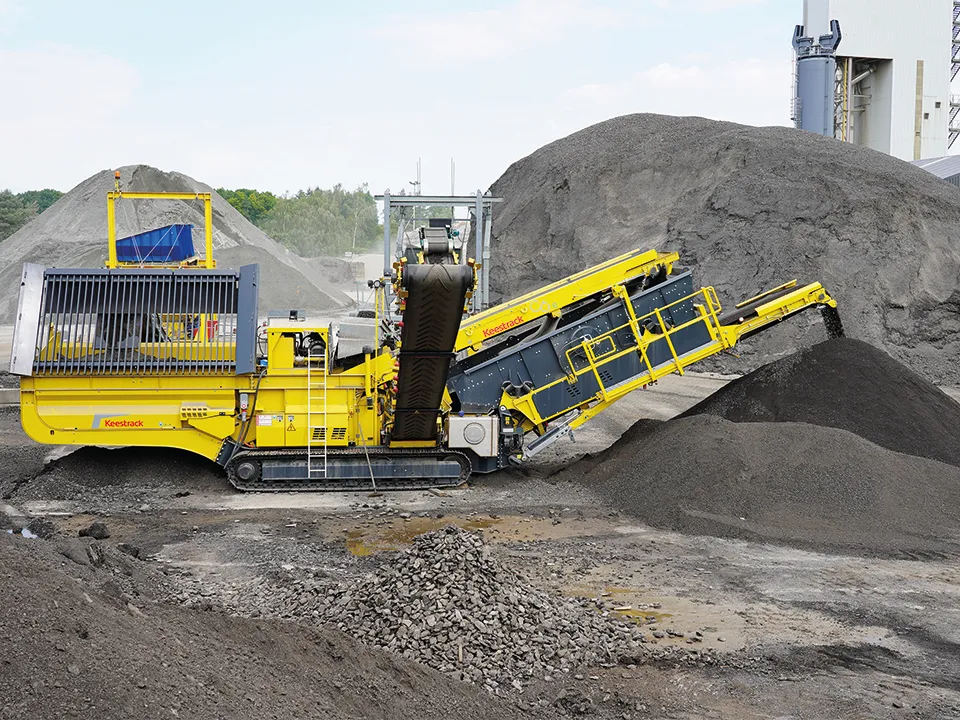
Family-owned Keestrack was a pioneer of mobile screens with direct feed in 1996.
Today, mobile screens of this type are the industry standard, but Keestrack continues to lead the market for mobile screening and crushing equipment. The company’s strong focus on electrifying its machinery is further evidence of this.
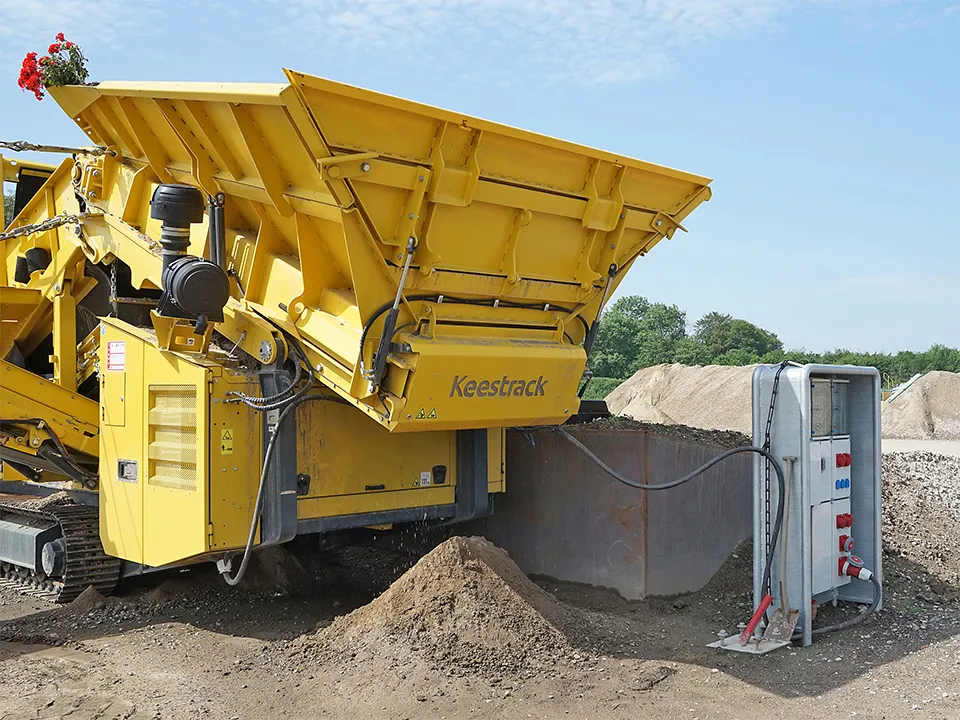
“We started electrifying our first machine, the C6 fine screen, in 2012,” says Marcel Kerkhofs, marketing manager at Keestrack. “Since then, electric drive has effectively become a standard option across all our machines. Only a few models are not electrically driven, and the largest are sometimes available only in diesel-electric versions.”
Kerkhofs says electrification is less attractive for smaller screens and crushers in particular, because the efficiency gains are smaller. “These are often highly mobile machines used by contractors that are not in continuous operation. But even our smallest impact crushers and screens are diesel-electric. They are often used in urban areas, making it easier to meet stricter emissions standards.”
More cost-effective
“At first, our customers were somewhat hesitant. They wondered how electrical cabinets would work on a dusty site. But now they are all convinced: it is much more cost-effective.”
According to Kerkhofs, running mobile crushing and screening plants entirely on electricity can cut fuel costs by as much as 70 per cent. “The initial investment in a diesel-electric machine is slightly higher,” says Kerkhofs. “But you recoup that quickly. Diesel-electric machines are more efficient than diesel-hydraulic ones. And ultimately, it comes down to cost. We strongly believe in sustainable business, but we cannot achieve that if there is no benefit for the end user.
Another advantage of electric operation is that, if something goes wrong with the engine, you can keep producing by connecting a generator set. “And, of course, it reduces maintenance. If you do not use the diesel engine, you do not need to maintain it. It also saves a great deal of hydraulic oil, reducing the environmental impact and cutting costs.”
Plug-out
Keestrack’s diesel-electric models are not only plug-in, meaning you simply connect them to a power socket to operate, but also plug-out, allowing you to connect several machines in a line. For example, a large crusher with a post-screen can be connected to a stacker or another screen. This can be done using either a regular power source or the diesel generator set. “Using the generator set does mean burning diesel again, of course, but still much less than if you were running on diesel-hydraulic power alone. That is because electric motors are far more efficient than hydraulic ones,” says Kerkhofs.
Question about this story? Ask your question
Companies in this story

Keep following this
Get an email when a new story is published. No account needed.
- ThemeOn-site demolition and recycling
- SubjectProduct information
- CompanyKeestrack