Recycling to perfection
Text and images Keestrack
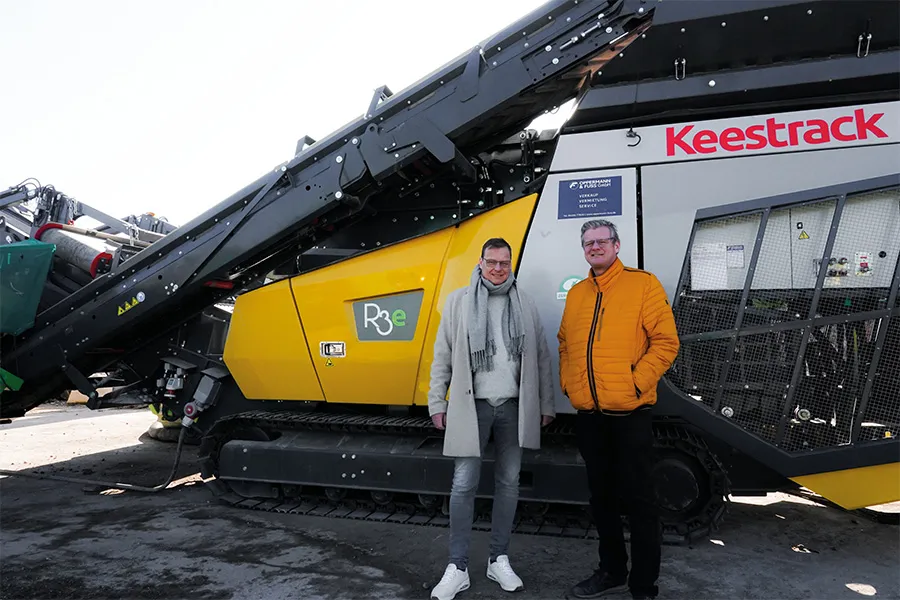
From demolition waste to sustainable building material through fully emission-free electric crushing and screening
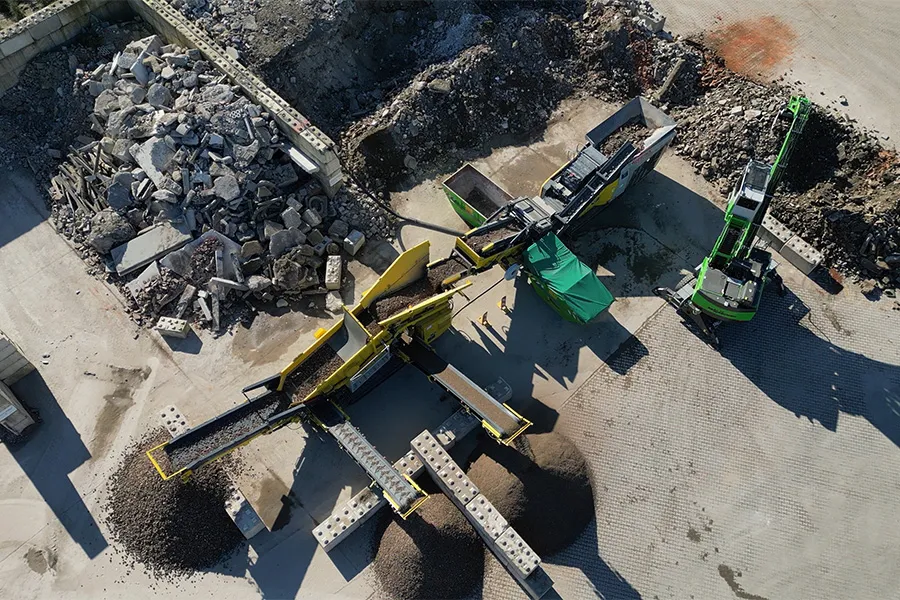
The German company Büscher comprises several businesses, including a concrete plant, recycling centre and container service. In 1961, Büscher made concrete like everyone else, using gravel, sand, cement and water. Today, the company has changed the recipe, completely replacing sand and gravel with 100% recycled construction and demolition waste to manufacture prefabricated load-bearing and non-load-bearing internal wall elements.
Büscher received a great deal of demolition waste, which it would normally recycle into aggregates for road construction, as many recycling companies do. Because this material was difficult to sell and available in large quantities, brothers Wolfgang and Hans-Jürgen Büscher looked for a solution. They came up with the idea of using the material as a raw ingredient for prefabricated concrete elements. It was an excellent, sustainable idea, but persuading specialists and authorities that this could be the future proved difficult.
Technical approval
The company not only proved that it was possible, but also received technical approval from the Deutsches Institut für Bautechnik (DIBt). The German federal association for building materials authorised the use of up to 100% recycled aggregates, including type 3 crushed sand, in prefabricated load-bearing and non-load-bearing internal wall elements in exposure classes XC1 and X0 (dry). Eight years of scientific substantiation were needed to demonstrate that a house can be built sustainably from entirely recycled material, and at lower cost. It took just 4 months to build a complete three-family home made from 75% recycled concrete and demolition waste. The pipes and electrical wiring are all integrated into the paint-ready prefabricated elements, so no plastering is required.
A perfect example of the circular economy
The first house built with 100% recycled natural mineral substitutes in its load-bearing and non-load-bearing internal wall elements has now been completed, a first. And when it is time to demolish it, it will be recycled into new concrete using the Büscher method. A perfect example of the circular economy! Prof. Dr.-Ing. Wolfgang Breit of the Technische Universität Kaiserslautern concludes: “The quality is good because Büscher has taken the right measures to ensure the acceptance of construction and demolition waste, the processing of the material and its use in prefabricated concrete elements.” The main advantage of this certified production process is the efficient use of resources. The company uses low-cost demolition material that is available locally in large quantities to produce a sustainable, carbon-neutral product with lower CO2 emissions. It also saves on transport costs by making use of material that is already available. “We want to make our process known, and would be pleased if other concrete plants, recycling companies and others interested in sustainable construction using secondary building materials got in touch. No expensive raw materials are used, which also makes the end products cheaper. It is a real win-win situation,” says Thomas Overbeeke, Operations Manager at Büscher.
Crushers and screens with Zero-drive technology
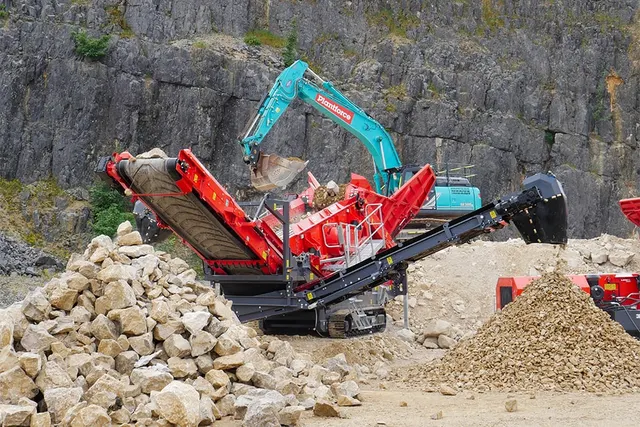
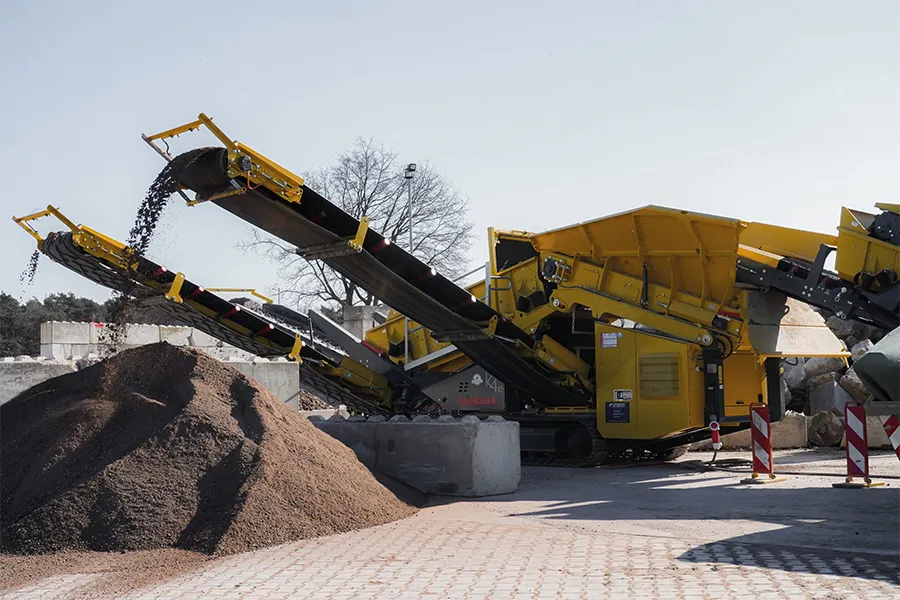
This minimises the environmental footprint and helps us work towards a circular economy. This is also why Keestrack crushers and screens with Zero-drive technology are used. The Büscher site is equipped with solar panels that supply up to 323 kW/h of electricity. This green energy powers the concrete plant as well as the Keestrack R3e ZERO impact crusher and K4e ZERO screen. Both Keestrack machines are fully electrically powered, have no combustion engine on board and produce zero net emissions. Energy consumption is approximately 152 kWh. Operating and maintenance costs are drastically reduced because there is no combustion engine on board.
R3e ZERO
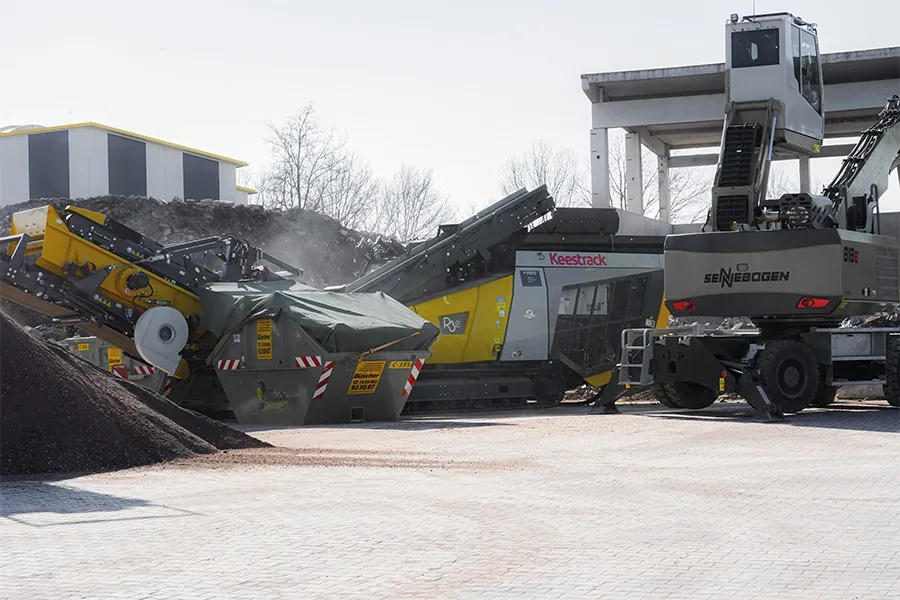
The R3e ZERO impact crusher, with pre-screen, closed circuit with recirculation conveyor and after-screen, produces aggregates to a defined size. The installed wind sifter removes plastic, wood and paper contaminants, while the overband magnet separates metals. The R3e supplies power to the connected K4e ZERO via its 125 A plug-out connection.
K4e ZERO
The K4e ZERO screen has a capacity of up to 350 tonnes/hour. Equipped with a standard heavy-duty plate belt and a hydraulically adjustable screening angle, the screen delivers particularly high screening capacity. At the Büscher recycling site, the decision was made to position the conveyors for the fine and middle fractions on the same side of the screen, improving access for the wheel loader.
Remote control
Both Keestrack machines at Büscher are equipped with remote control, allowing both the crusher and the screen to be operated from the excavator. They also feature an integrated water spray system and a Keestrack telematics system. ■
Een zakelijke vraag aan Keestrack? Get in touch
Companies in this story

Keep following this
Get an email when a new story is published. No account needed.
- ThemeOn-site demolition and recycling
- SubjectZero emission
- CompanyKeestrack