More attention needed for charging infrastructure for zero-emission equipment
Text Pieter de Mos Beeld Volvo CE en Pieter de Mos
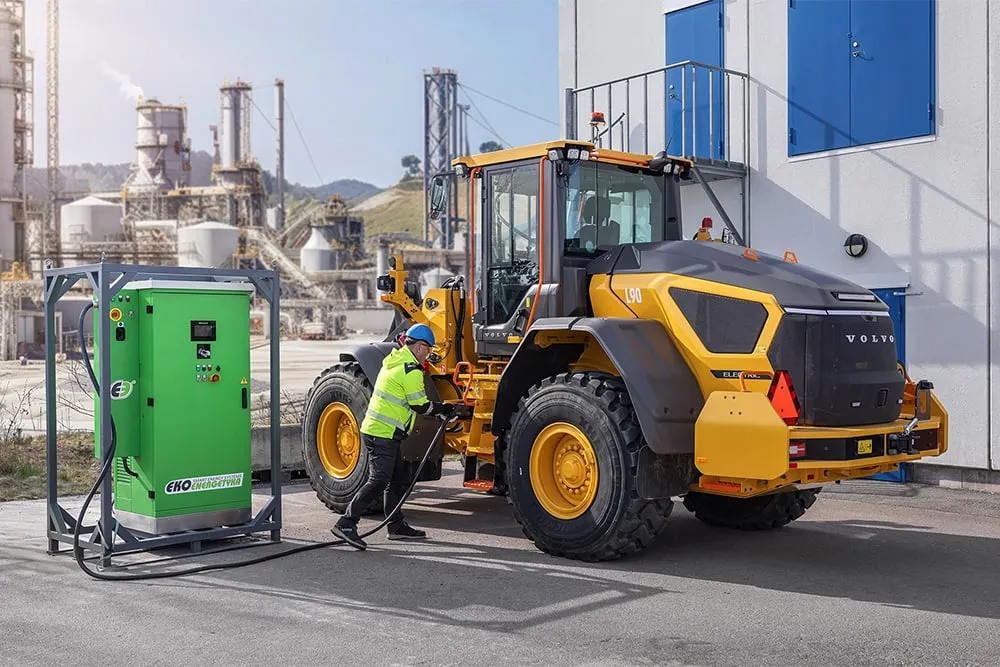
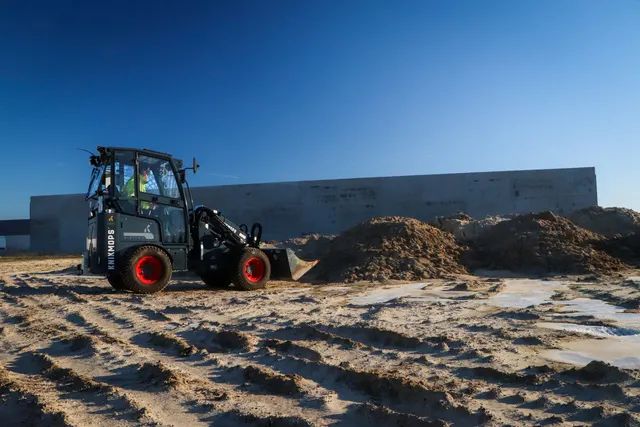
You hear and read it more and more often: the future is electric. The zero-emission construction site is getting closer, as a growing number of machinery manufacturers unveil electric versions of small and medium-sized construction equipment. Working with them is attractive because they are quiet, clean and easy to handle. At the same time, more attention is needed for charging infrastructure that is radically different from what we are used to. Storing electricity is the new refuelling.
More and more cities are designating their centres and neighbouring residential areas as low- or zero-emission zones. Flanders’ air and climate policy plans include fully emission-free urban logistics from 2025. ZES (zero-emission zones for urban logistics) are expected to become a reality from 2027. From then on, cars, lorries and vans with older diesel engines will no longer be permitted, and construction machinery with diesel engines will also be barred.
Electric-powered equipment can help you avoid this problem, but then you run into another one. How do you get all those electric machines charged quickly at an inner-city site, both during the lunch break and overnight? A different but comparable problem arises when working out in the field. Where do you get the electricity you need?
Charging electric equipment
There are several ways to provide electric equipment with enough power. The first is simple: plug it into a standard 230 V socket. This really only works overnight, as charging is painfully slow and there is no guarantee of a full battery the next morning. There are better options, such as installing a temporary site power cabinet with a 3×50 or 3×63 amp supply. This is usually not enough for demanding users with several electric machines. They are better off choosing distribution boards rated at 80 or even 125 amps, allowing them to charge several machines at once. If that is not feasible or sufficient, a buffer system is recommended. Diesel generators are, of course, out of the question; we are talking here about systems that can store large amounts of electricity.
Buffer systems as a smart stopgap
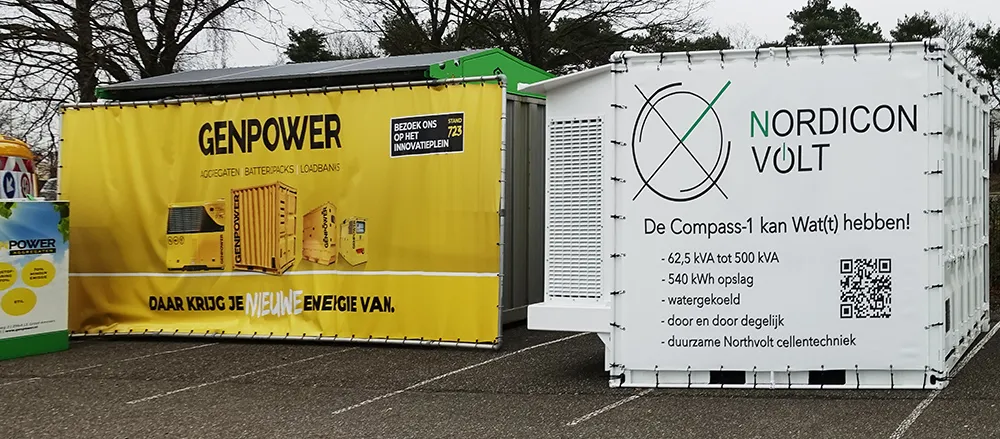
An electric buffer system consists of one or more high-capacity battery containers. These can store several hundred kilowatt-hours (kWh), making it possible to charge medium-sized electric machines reasonably quickly. The advantage is that a relatively low-capacity power connection (3 x 63A) is sufficient to charge the buffer. This makes sense, as the buffer system has plenty of time (24/24 hours) to recharge gradually, while still being powerful enough to supply several machines with electricity in a short time.
Rent a power buffer rather than buy one
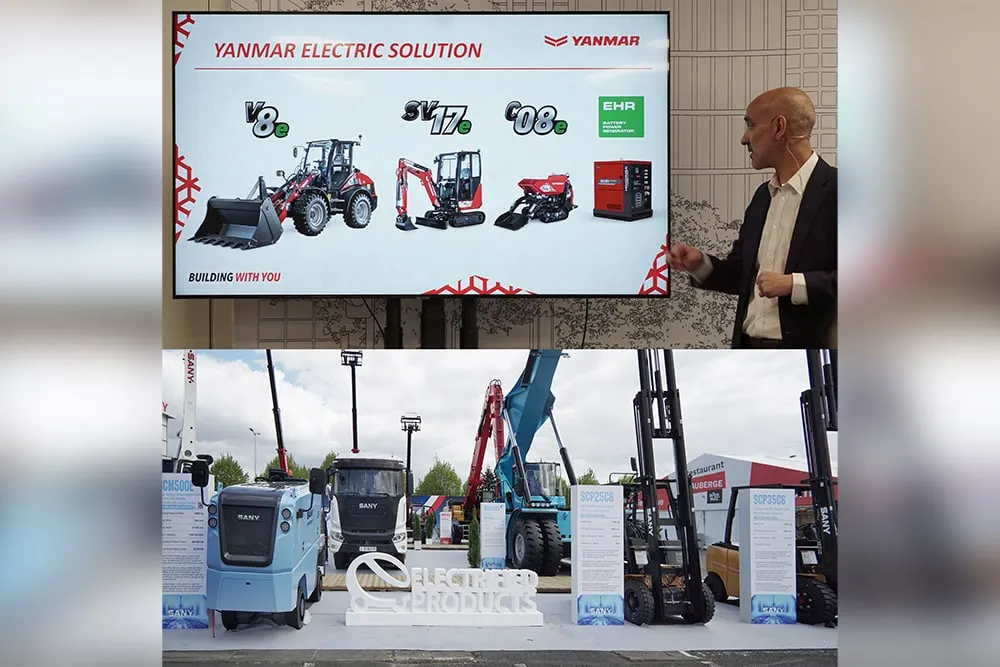
Today, larger rental companies offer not only electric machines for hire, but also the necessary chargers and battery packs. They say renting is a smart and affordable way to gain experience with electric equipment and the associated infrastructure. They also offer advice, given that users are still largely unfamiliar with the technology. This is useful, as a growing range of equipment and solutions makes it possible to provide suitable charging capacity in almost any situation.
Buffer systems also have drawbacks: they are often large and heavy, making them difficult to move, and, as many people complain, they are not cheap. This got two Dutch students thinking, and led them to Skoon: a marketplace for clean energy.
Marketplace for clean energy
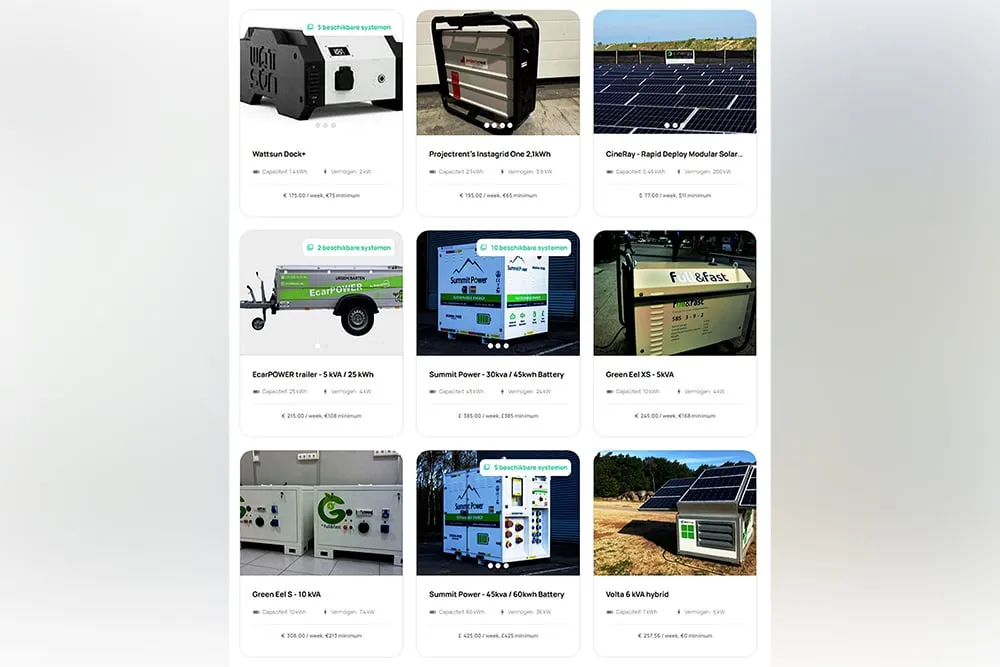
The marketplace for clean energy helps companies that have already invested in buffer capacity to save money. In practice, this capacity is rarely used all year round. A battery container or solar panel system can therefore sit idle, while another business could make good use of it for a few weeks. Skoon’s energy marketplace connects the two parties and provides customers with extensive advice. The website www.skoon.world/marketplace/nl now lists more than a hundred ‘products’, from a compact Wattsun Pack and a Solar Power Wall to trailer-mounted battery packs and large battery containers. There are now several suppliers in Belgium too. And after all, what is stopping you from crossing the border into Zeeuws-Vlaanderen, Brabant or Limburg to pick up a suitable system?
Question about this story? Ask your question
Keep following this
Get an email when a new story is published. No account needed.
- ThemeTowards low-emission equipment and transport
- SubjectZero emission