









Volvo Trucks introduces a new generation of heavy-duty vehicles focused on fuel efficiency and the driver
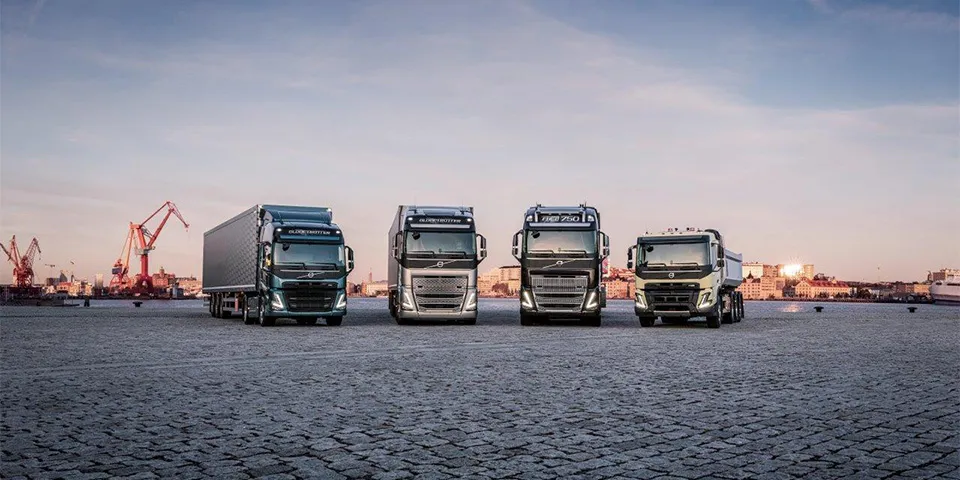
Volvo Trucks introduces four completely new vehicles, with a strong focus on the driver’s environment, safety and productivity. “We are particularly proud of this major investment in the future. Our aim is to be our customers’ best business partner by making them even more competitive and helping them attract the best drivers in an increasingly challenging market,” says Roger Alm, President of Volvo Trucks. The new Volvo FH, FH16, FM and FMX account for approximately two-thirds of Volvo Trucks’ deliveries.
Growing demand for transport is putting pressure on the availability of skilled drivers worldwide. In Europe, for example, estimates suggest that around 20 per cent of all driver vacancies cannot be filled. Volvo Trucks wants to help customers recruit and retain the best drivers. That is why it is focusing on developing new vehicles that are safer, more efficient and more attractive to qualified drivers.
“Drivers who operate their vehicles safely and efficiently are invaluable to any transport company. Responsible driving can help reduce CO2 emissions and fuel costs, while lowering the risk of accidents, injuries and unplanned downtime. Our new vehicles help drivers work even more safely and productively, giving our customers a stronger hand in the competition for the best drivers,” Roger Alm continues.
The new Volvo Trucks models are available with a range of cab options and can be optimised for a wide variety of applications. For long-haul transport, the cab is often the driver’s second home. In regional transport, the vehicle often serves as a mobile office, while construction vehicles are robust, practical work tools. That is why visibility, comfort, ergonomics, noise levels, manoeuvrability and safety were key considerations in the development of all the new models. The exterior has been redesigned to reflect the features of the new models and create an attractive design.
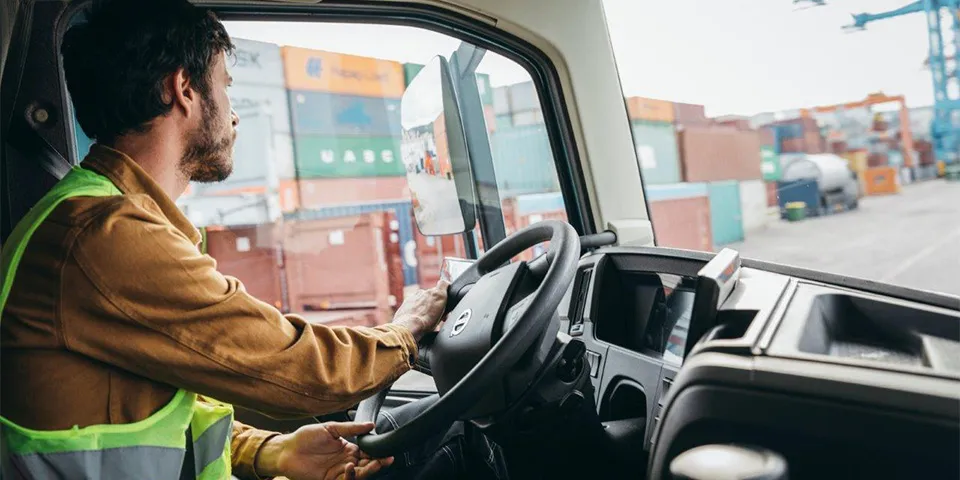
The all-new cab offers much more space and improved visibility: Volvo FM and Volvo FMX
The new Volvo FM and Volvo FMX feature an all-new cab and many of the same instrument display features as their larger Volvo counterparts. The interior volume has increased by around a cubic metre, providing greater comfort and more workspace. Visibility is now even better, thanks to larger windows, a much lower door line and new mirrors.
The new adjustable steering wheel with a tilting steering column allows the driver’s position to be tailored more precisely to individual needs. The lower bunk in the sleeper cab is higher than before, offering more comfort and extra storage space underneath. The day cab has a new 40-litre storage compartment with interior lighting on the rear wall. Cab comfort is further enhanced by additional insulation that helps keep out cold, heat and noise, while a sensor-controlled climate unit with a carbon filter helps maintain good air quality in all conditions.
All models equipped with an all-new driver interface
The driver’s area now features a significantly upgraded interface for information and communication. Drivers can more easily access overviews and manage various functions, reducing stress and distraction. The instrument panel is fully digital, with a 12-inch display that lets the driver easily select the information they need at any time. Within easy reach is an additional 9-inch secondary dashboard display for infotainment, navigation, transport information and camera monitoring. The functions can be controlled using buttons on the steering wheel, voice control, or the touchscreen and its control panel.
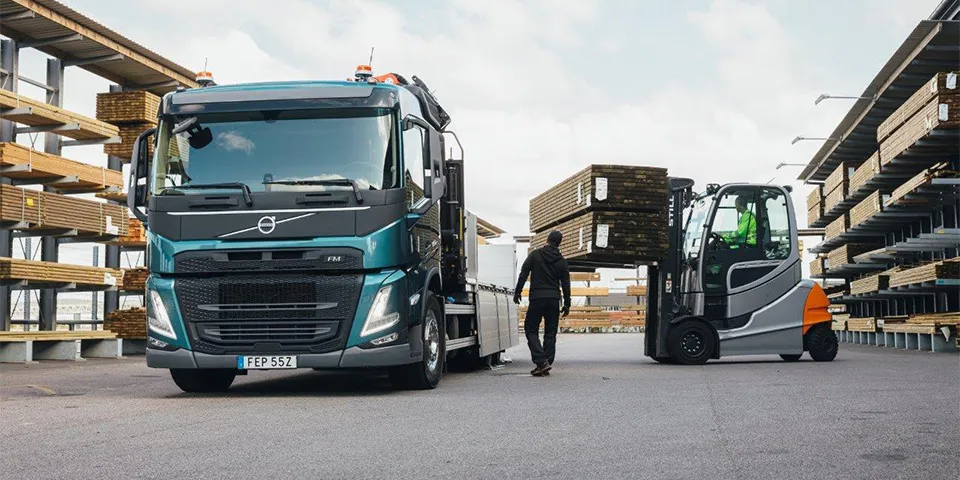
Improved safety systems to prevent accidents
Safety has been further enhanced with features such as adaptive high beam on the Volvo FH and Volvo FH16. This lighting system improves safety for all road users by automatically switching off selected sections of the LED high beam when the vehicle approaches oncoming traffic or another vehicle from behind.
Driving is also made easier by improved Adaptive Cruise Control (ACC), which operates down to 0 km/h, and downhill cruise control, which automatically applies the wheel brakes when additional braking force is needed to maintain a constant speed downhill. The Electronic Braking System (EBS) is a requirement for safety features such as Collision Warning with Emergency Brake and Electronic Stability Control (ESP), and is fitted as standard on the new vehicle. Volvo Dynamic Steering, with the Lane Keeping Assist and Stability Assist safety systems, is also available as an option. A traffic sign recognition system detects signs such as overtaking restrictions, road type and speed limits, and displays them on the instrument panel.
Visibility, which is already very good, can be further improved by adding a passenger-side blind spot camera that provides an additional view of the side of the vehicle on the secondary dashboard display.
Fuel-efficient engines and alternative powertrains
Both environmental and economic considerations are important to transport companies. As there is no single energy source that can address all the challenges of climate change, and different transport segments and assignments require a range of solutions, different types of powertrain will continue to coexist in the near future.
In many countries, including Belgium, the Volvo FH and Volvo FM are available with an LNG engine. Its fuel efficiency and performance are comparable to those of equivalent diesel-powered Volvo trucks, but its climate impact is much lower. The engine runs on biogas, reducing CO2 emissions by up to 100 per cent, or on natural gas, which cuts CO2 emissions by 20 per cent compared with equivalent diesel-powered Volvo trucks. These figures refer to emissions while the vehicle is in use, also known as tank-to-wheel emissions.
The new Volvo FH can also be fitted with a new, efficient Euro 6 diesel engine included in the I-Save package, delivering a significant reduction in fuel consumption and CO2 emissions. The new Volvo FH with I-Save and the new D13TC engine can achieve fuel savings of up to 7%* on long-haul journeys.
*The fuel efficiency claim is calculated by comparing the cost of diesel and AdBlue for the D13TC Euro 6 Step D with the LH Fuel package (I-Save) against the D13 eSCR Euro 6 Step D without the LH Fuel package. Actual fuel consumption may vary depending on many factors, such as driver experience, use of cruise control, vehicle specification, vehicle load, actual topography, vehicle maintenance and weather conditions.
Question about this story? Ask your question
Keep following this
Get an email when a new story is published. No account needed.
- ThemeConstruction transport on road and site
- SubjectGeneral







