









Trucks under overhead wires on motorways: a cost-effective climate solution for Flanders
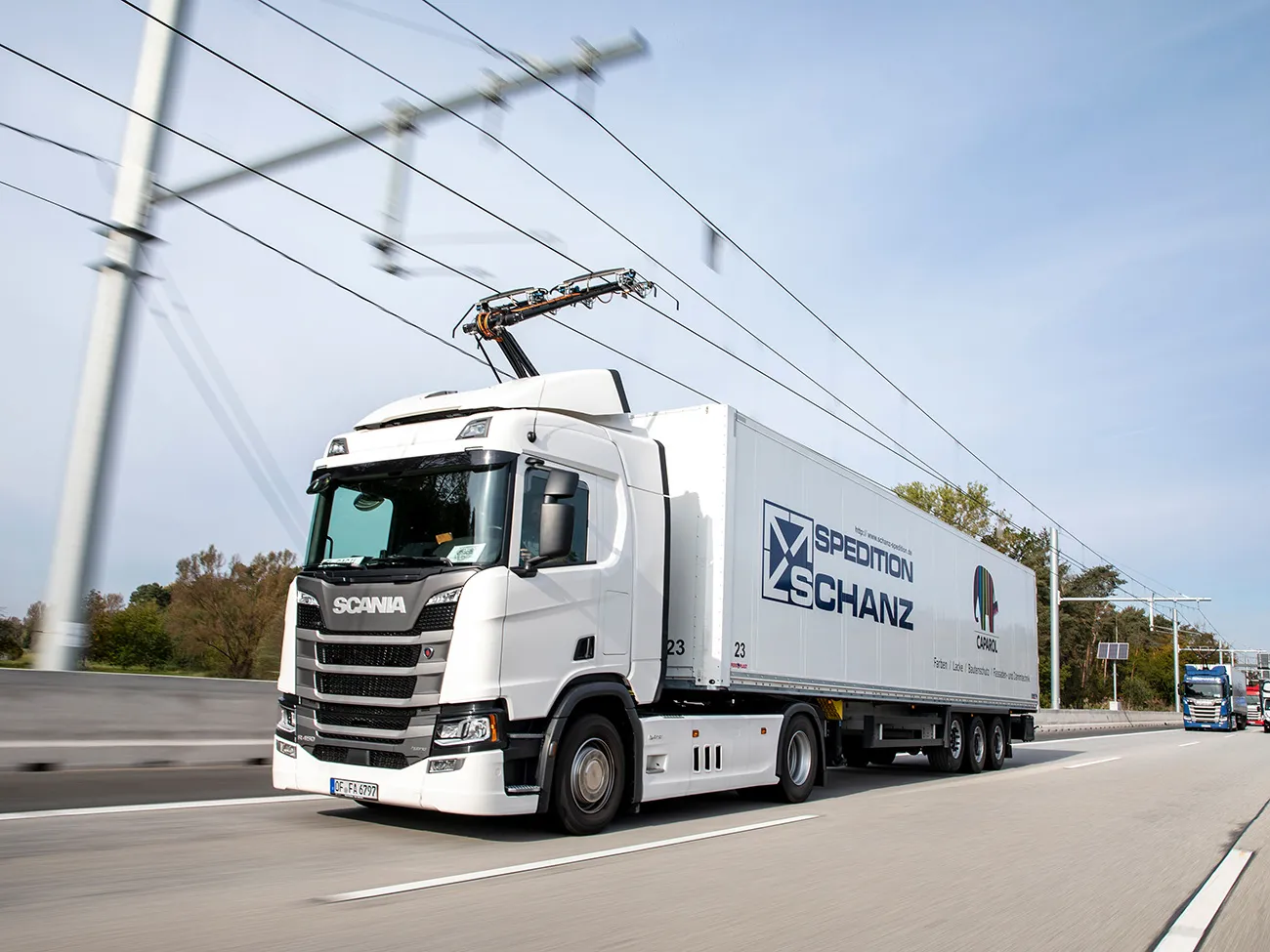
Trucks drawing electricity from overhead wires on motorways could also help Flanders make road freight transport independent of fossil fuels. This is shown by the interim results of the VIL Logibat project, in which 30 companies are participating. Research carried out by VIL partner UA shows that every euro invested in this climate solution today could generate up to 8.3 euros over a 20-year period.
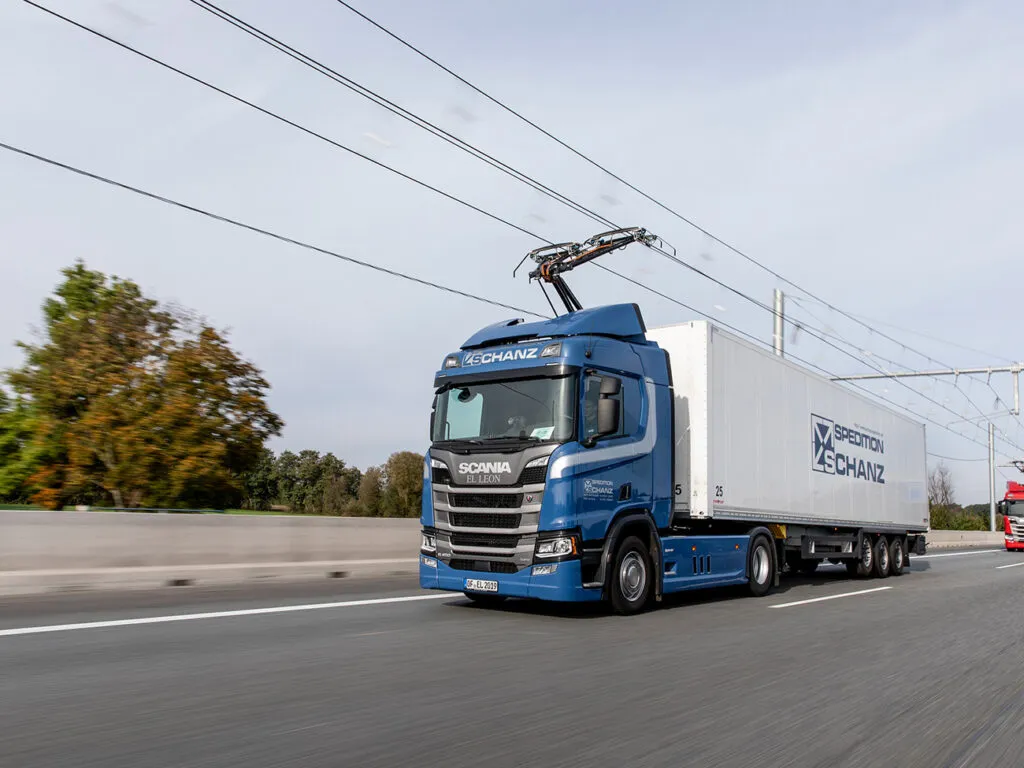
So-called Catenary Electric Road Systems (ERS), which equip trucks with a pantograph like those used on trains and trams, not only make it possible to drive emission-free beneath overhead wires, but also allow truck batteries to charge while on the move. They could therefore complement fixed charging points for trucks at depots and along motorways.
Logibat
Thanks to the rapid development of battery technology, battery-electric trucks can make a substantial and cost-effective contribution to road transport. In addition, increasingly stringent regulations and growing pressure to improve sustainability are prompting the logistics sector to consider its options. “In the Logibat project, VIL is investigating the operational and economic conditions required to make battery-electric transport viable, as well as the requirements for rolling out a nationwide charging network, both at shippers’ premises and depots and at (semi-)public stopping places,” says Sophie Delannoy, project manager at VIL
UA calculation model for ERS
ERS could form part of the solution for rolling out a nationwide charging network for trucks. Raimonds Aronietis, a transport economist at UA, has developed a calculation model specifically for Flanders. The model takes into account factors including the layout of the road network, the distribution of logistics hubs and industrial estates, traffic volumes on Flemish motorways, the performance and economic characteristics of different vehicle technologies, the construction costs of an overhead wire system, energy prices and more.
Relatively modest investment for extensive coverage
“The investment required to provide extensive coverage in Flanders is less than 2 billion. That sounds like a lot, but at 0.8% of Flanders’ GDP, it is relatively modest”, says Raimonds Aronietis of UA.
The network would also benefit greatly from use by international freight traffic. It could provide a profitable way to decarbonise road freight, both for hauliers and for the network operator. This is due to lower energy and investment costs compared with diesel and other alternative technologies. The lower investment cost stems from the possibility of equipping trucks with smaller battery packs than those used in conventional battery-electric trucks. The calculations show that with a wide rollout of an overhead wire network, almost all industrial sites in Flanders would remain accessible even with the smallest battery capacity of 100 kWh.
Flanders must not miss the boat
Siemens Mobility, one of the participating companies, is keen to put these results into practice.
“As a technology company with a long tradition in rail electrification, we have been developing ‘eHighways’ for more than 10 years. We have already learned a great deal from tests on German motorways and from research in the United Kingdom, Canada and Sweden, among other places. We are pleased that ‘eHighways’ have now also been shown to be clearly feasible and profitable in Flanders. Our neighbouring countries see this solution as a way to make freight transport more climate-friendly. Several major projects have already been developed in Germany, and the concept is being examined in depth in the Netherlands, France and the UK, among other countries. We hope Flanders does not miss the boat. Work can already begin on identifying the most suitable routes for similar projects, for example around our ports,” says Pol Caby, CEO of Siemens Mobility NV.
Question about this story? Ask your question
Keep following this
Get an email when a new story is published. No account needed.
- ThemeConstruction transport on road and site
- SubjectGeneral







