









The construction site is set for a real transformation
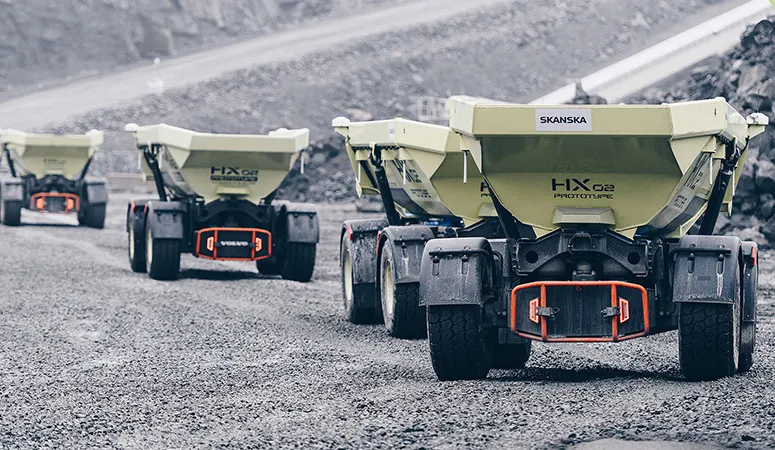
The future of an ‘emission-free construction site’ may be closer than we think. There are still plenty of obstacles to overcome, but Volvo Construction Equipment is highly enthusiastic about the initial results of a 10-week trial of autonomous, electrically powered construction equipment at a precursor to an ‘emission-free construction site’ in Sweden.
At Bauma 2013, Komatsu and Topcon unveiled a semi-automated excavator and bulldozer. The PC210LCi and 61Pxi use the intelligent machine control system (IMCS), enabling them to carry out certain tasks faster and more accurately than the increasingly scarce specialist operators. Six years later, on the eve of Bauma 2019, we find ourselves in a rapidly changing world of drones, 3D printers, autonomous vehicles, alternative fuels, big data and robots that lay bricks and assemble van doors.
“These are becoming the new standard,” says Volvo. “The construction and civil engineering sectors cannot afford to be left behind, which is why, following the wave of hybrid machines, we are now seeing more and more fully electric equipment entering the market. Alongside the first zero-emission mini excavators, comparable 15-tonne and even 25-tonne machines are now available to buy. A similar trend is emerging with vans and trucks. Following the electrification of small vans, city buses and large trucks for distribution and waste collection are now also operating with no local emissions. There is even a fully electric heavy-duty concrete mixer on the market. It drives and mixes without emissions or noise, making it ideal for construction in cities.”
The initial results of a trial involving autonomous, electrically powered construction equipment at an ‘emission-free construction site’ in the Vikan Kross quarry in Gothenburg are promising.
Machines that communicate
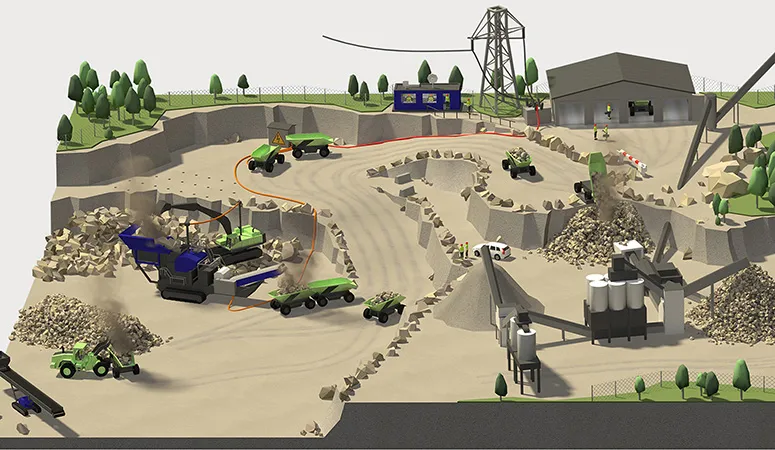
All the developments listed above have one thing in common: they are more or less trends driven by the spirit of the times, without a joined-up vision. Volvo says: “That is precisely what prompted Volvo CE to run the 10-week trial. For now, it is taking place in a quarry closed off from the outside world, but the ultimate aim is to make every construction site emission-free. Alongside electrifying the machines used, we are also looking at making them autonomous. We can only take a real step forward when we further automate the relationships between people and machines, and between the machines themselves. And that is certainly no easy task. All the machines need to communicate effectively if they are to work independently, without human intervention.”
Successful trial
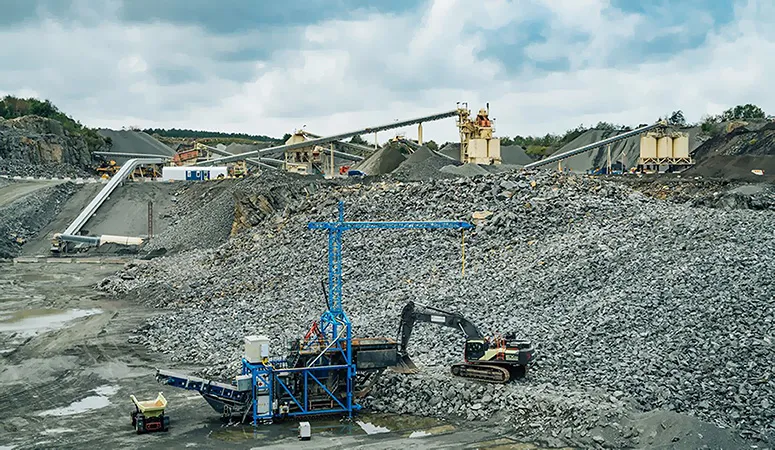
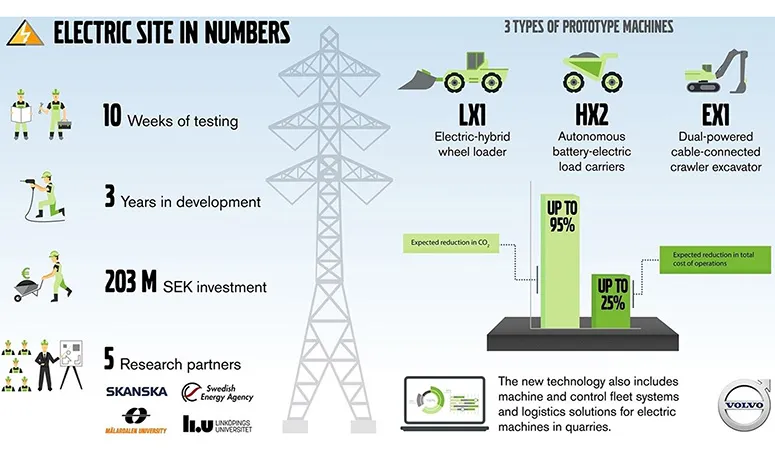
Two Swedish companies, Volvo CE and developer and contractor Skanska, share a mission to help improve the world. Driven by curiosity about what the future might hold for construction equipment, they got to work at the Vikan Kross quarry just outside Gothenburg. Stone is extracted and crushed there, requiring internal transport and equipment for loading, unloading and transfer. Volvo says: “Around ten autonomous, electrically powered dump trucks of the HX02 (prototype) type were used for transporting stone during the trial. They drive fully autonomously in a continuous loop between different locations in the quarry. Loading was handled by the LX1, Volvo CE’s prototype electric wheel loader. The EX1, a 70-tonne hybrid excavator based on a diesel-powered EC750, was used to load the crusher. The electric motor, fitted later, is powered via an external power cable.”
The initial figures from the ‘emission-free construction site’ trial.
Better than expected
According to Volvo and Skanska, the results of the 10-week trial with autonomous, emission-free machines have exceeded expectations. The figures speak for themselves: a 98 per cent reduction in CO2, an impressive 70 per cent reduction in energy costs and 40 per cent lower labour costs. Overall, the trial has delivered a substantial 25 per cent saving in Total Cost of Ownership. Both companies are keen to continue the trial through to the end of 2018. Another reason for extending it is simply that there is still much to learn and discover about machine management, safety, quarry layout, different working methods, interaction between people and machines, and so on. “This is only the beginning, but the beginning of something good. That is what we hope and expect,” Volvo concludes.
Text and images | Volvo
Question about this story? Ask your question
Companies in this story

Keep following this
Get an email when a new story is published. No account needed.
- ThemeSmarter and safer machine operation
- SubjectGeneral
- CompanyTopcon







