









Sustainable and efficient transport by inland waterway
Text Kris VandekerckhoveImage Smart Equipment / Flexus
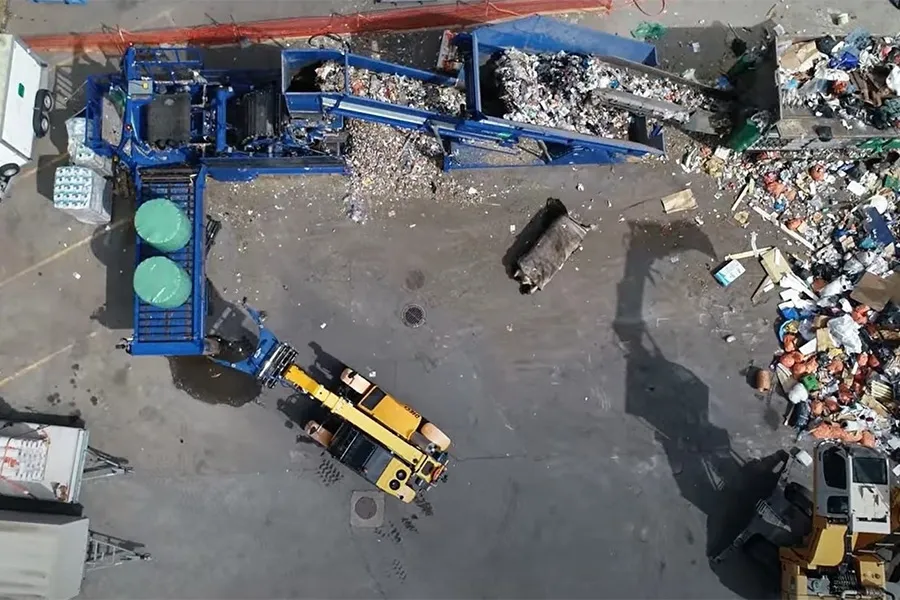
Recyclables baled to save space during stacking, storage and transport
Philippe Potier of Smart Equipment is a recycler through and through, with many years of experience in the recycling industry. He supplies state-of-the-art systems and machinery, as well as practical advice and highly attractive waste-processing solutions. Smart Equipment believes that waste is best processed in bales and that it is better transported by inland waterway.
Potier, Managing Director of Smart Equipment: “Transporting waste by water undoubtedly takes a lot of lorries off the road, which is unquestionably positive both economically and in terms of environmental impact. Politicians are beginning to recognise this too. Waste transported by inland waterway in the Netherlands benefits from a substantial discount on the environmental levy. This will certainly encourage this efficient and environmentally friendly way of handling waste!”
The environmental benefits of baling
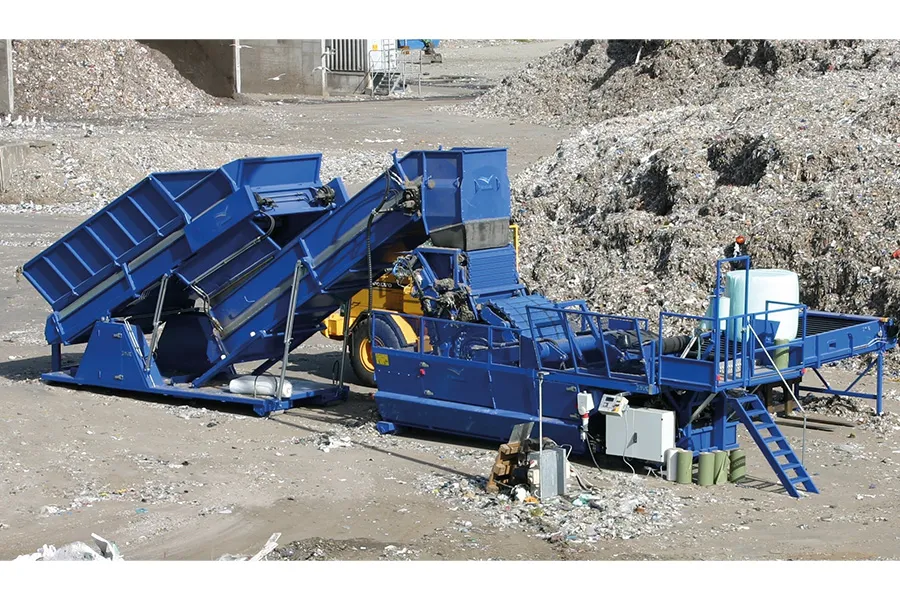
For bale production, Smart Equipment and Philippe Potier are firmly committed to Flexus’s integrated baling and wrapping solutions. The Swedish company is a pioneer in industrial compaction and volume reduction across a wide range of applications. Its machines offer a number of highly notable and environmentally responsible advantages:
Low energy consumption
A complete installation with baler, bale wrapper and conveyor belts uses no more than 10-40 kW/h. That works out at around 1-1.5 kW per finished bale. Low energy consumption is thanks to the baler’s specially patented design. The baler’s functions are powered electrohydraulically. The baling chamber has rotating sides, and the infeed mat rests on ball-bearing rollers.
No leakage or fermentation
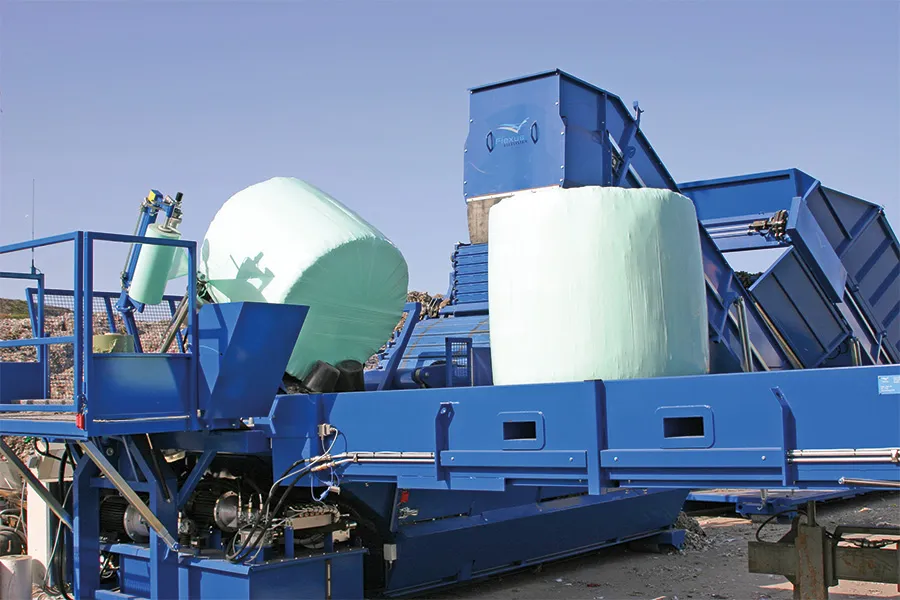
The stretch film is thin but very strong. It hermetically seals the material, preventing waste from escaping and halting decomposition. The waste is compressed to 30% of the volume achieved using conventional processing methods, then wrapped in stretch film to form airtight bales. Without oxygen, fermentation and decomposition cannot get under way.
Environmentally friendly stretch film and netting
The stretch film and netting used to wrap the bales are made of polyethylene, which is converted into carbon dioxide and water when incinerated. The film is thin, just 25-30 µ, and accounts for only 0.1-0.2% of the bale’s total weight. The netting is made from environmentally friendly polyethylene.
Bales can be stored for six months
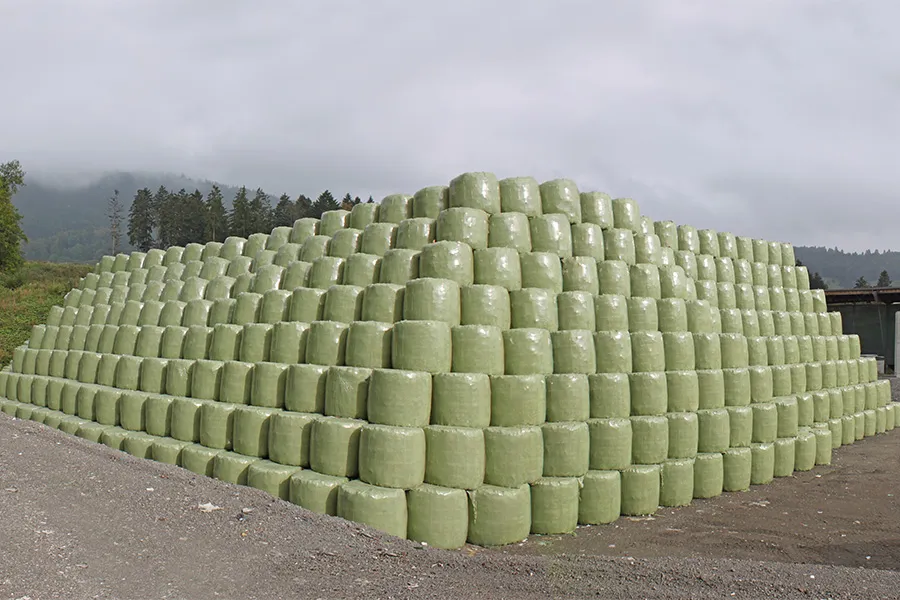
Potier: “Their system is a little like what you see farmers doing in their fields when they make large hay bales. It’s the same principle, but for recycled materials. As storage regulations become increasingly strict, we found that some of our customers were starting to ask for suitable solutions. Normally, once waste arrives on site, it has to be processed within 48 hours. But these bales can be stored for six months. This allows all the parties involved to start processing when it suits them best. The round bales produced by the semi-mobile Flexus machine save a great deal of space when stacked, stored and transported. The icing on the cake, of course, is that with this type of baling system you have far fewer problems, or none at all, with unpleasant odours and/or troublesome pests.” ■
Question about this story? Ask your question
Keep following this
Get an email when a new story is published. No account needed.
- ThemeOn-site demolition and recycling
- SubjectGeneral







