









Stage V environmental standards
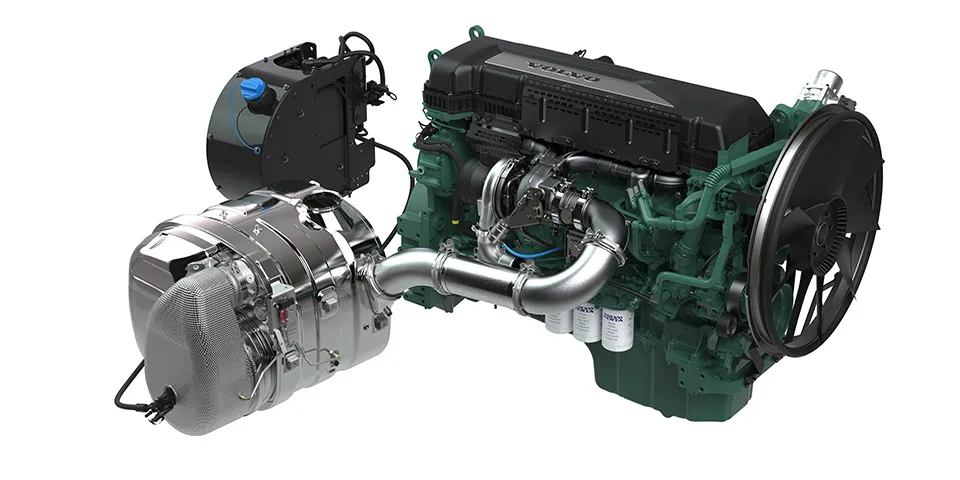
European emissions standards for engines used in non-road mobile machinery (NRMM) became progressively stricter following the introduction of the Stage I standard in 1997. The Stage V standard, Regulation 2016/1628, which replaces Directive 97/68/EC, has applied to most engines since 2019. These standards apply to equipment such as industrial drilling rigs, compressors, wheel loaders, bulldozers, non-road trucks, excavators, forklifts, road construction machinery, snowploughs and mobile cranes.
The Stage V legislation was proposed in 2014 and finalised in 2016. The standards came into force in 2019 for engines below 56 kW and above 130 kW. From 2020, they also apply to engines rated from 56 to 130 kW. Stage V was also extended to cover a number of engines that had not previously been regulated. The standards will be reviewed at the end of 2020, with a view to introducing even stricter requirements. Whereas the Stage III and IV standards were largely aligned with US (Tier 3/7) and Japanese standards, Stage V takes a different path. For example, US Tier 4 standards can be met without filters. The Stage V standards cover emissions of CO, HC, NOx and particulate matter. The limit for the latter is significantly stricter, falling from 0.025 g/kWh to 0.015 g/kWh.
Compact installations
To meet the Stage V standards, a particulate filter is almost always required in addition to selective catalytic reduction (SCR) and a diesel oxidation catalyst (DOC), primarily to limit particulate emissions. This makes the complete engine assembly larger, which machine builders must take into account, particularly if they also use EGR (exhaust gas recirculation), with its larger cooling system. Nevertheless, most engine manufacturers have managed to keep their engine assemblies as compact as possible while still meeting the Stage V standard.
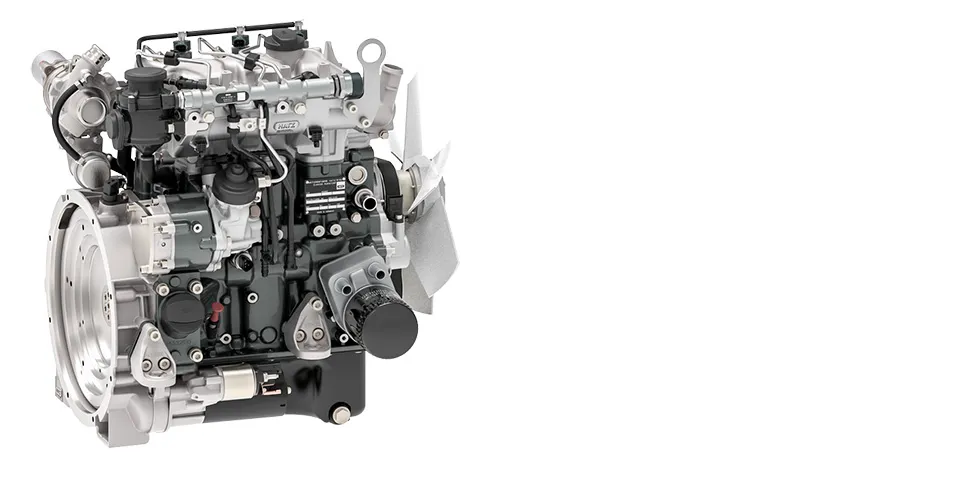
The Hatz Stage V 3H50T engine, rated at 18.4 kW.
Examples
This year, Perkins introduced a range of engines with capacities from 0.5 to 18 litres (4 to 597 kW) that meet the Stage V standard. Perkins is also working on electric-hybrid, mechanical-hybrid and hydraulic-hybrid solutions. At Volvo Penta, the entire engine range (D5, D8, D11, D13 and D16) meets the latest standard, with outputs from 105 to 585 kW. Notably, the engines require 20% less cooling, allowing the radiator to be made smaller. In terms of TCO, the oil change interval has been extended from 500 to 1,000 operating hours. John Deere, in turn, offers a range of Stage V engines with capacities from 2.9 to 13.6 l and outputs from 36 to 500 kW. The engines have been optimised for easy installation. Cummins meets the Stage V standards with all engines in its F3.8 to X15 series, while Hatz launched the E1, the first electronically controlled single-cylinder engine, with outputs of up to 12 kW.
Deutz can also supply all its engines in Stage V versions, and has additionally developed engines that run on gas and hydrogen. Kubota does the same, offering engines that run on diesel, petrol, liquefied petroleum gas and natural gas. Yanmar developed LPG-powered industrial engines that meet the Stage V standard. Gas engines produce fewer particulates. Kohler engines with Bluetooth technology are also already Stage V compliant, while FPT Industrial’s range includes both combustion engines and electric solutions, with the Cursor X 4.0 as its highlight. Finally, MAN Engines introduced, among other models, the new D4276 six-cylinder Stage V engine, with outputs from 450 to 515 kW; Caterpillar is marketing the C2.2, C3.6, C4.4, C13B and C27 as Stage V engines; and Doosan offers a range of portable compressors that meet Stage V. These are just a few examples, but all engine manufacturers now supply Stage V versions, while work continues on hybrid and electric solutions and the use of alternative fuels.
Question about this story? Ask your question
Companies in this story
Keep following this
Get an email when a new story is published. No account needed.
- SubjectGeneral
- CompanyYanmar







