









Second generation MirrorCam: Mercedes-Benz Trucks refines key details of its camera monitoring system
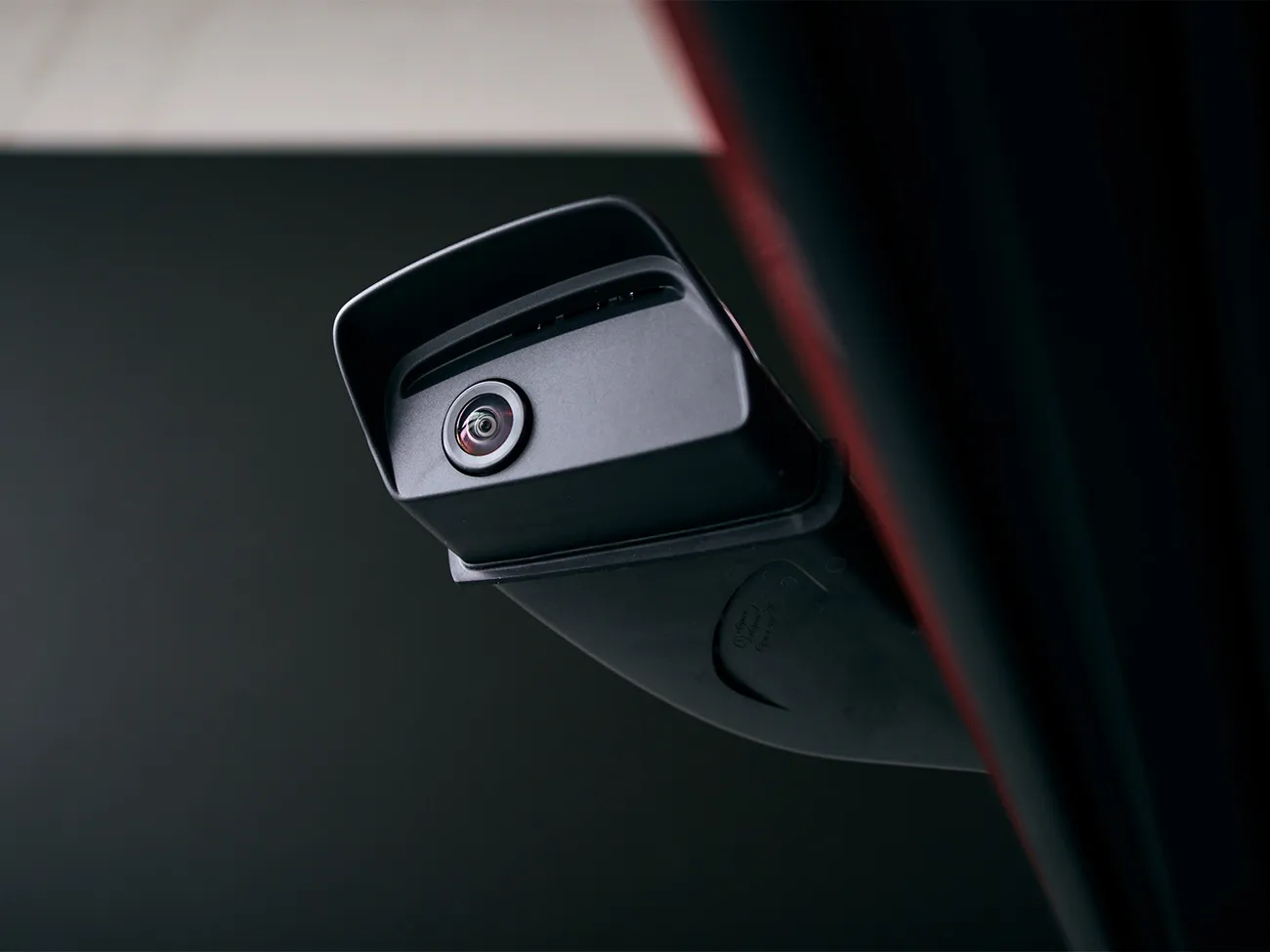
With the “Mercedes-Benz Future Truck 2025” design study, Mercedes-Benz Trucks presented a truck with cameras instead of exterior mirrors as far back as 2014. Then, in 2018, the manufacturer introduced MirrorCam, the first camera monitoring system for trucks. Production trucks equipped with MirrorCam no longer have traditional large and wide-angle mirrors. Instead, they have two cameras mounted on the roof frame, one on each side, as well as two vertically mounted monitors on the A-pillars and the corresponding controls in the driver’s cockpit. The decision to use two monitors of the same size, 15 inches, on the driver’s and passenger’s sides was a deliberate one. The larger the image of a moving object, the easier it is to judge its speed. And to help the driver spot situation-relevant visual information as quickly as possible, the four-part multi-view display was replaced with a single image.
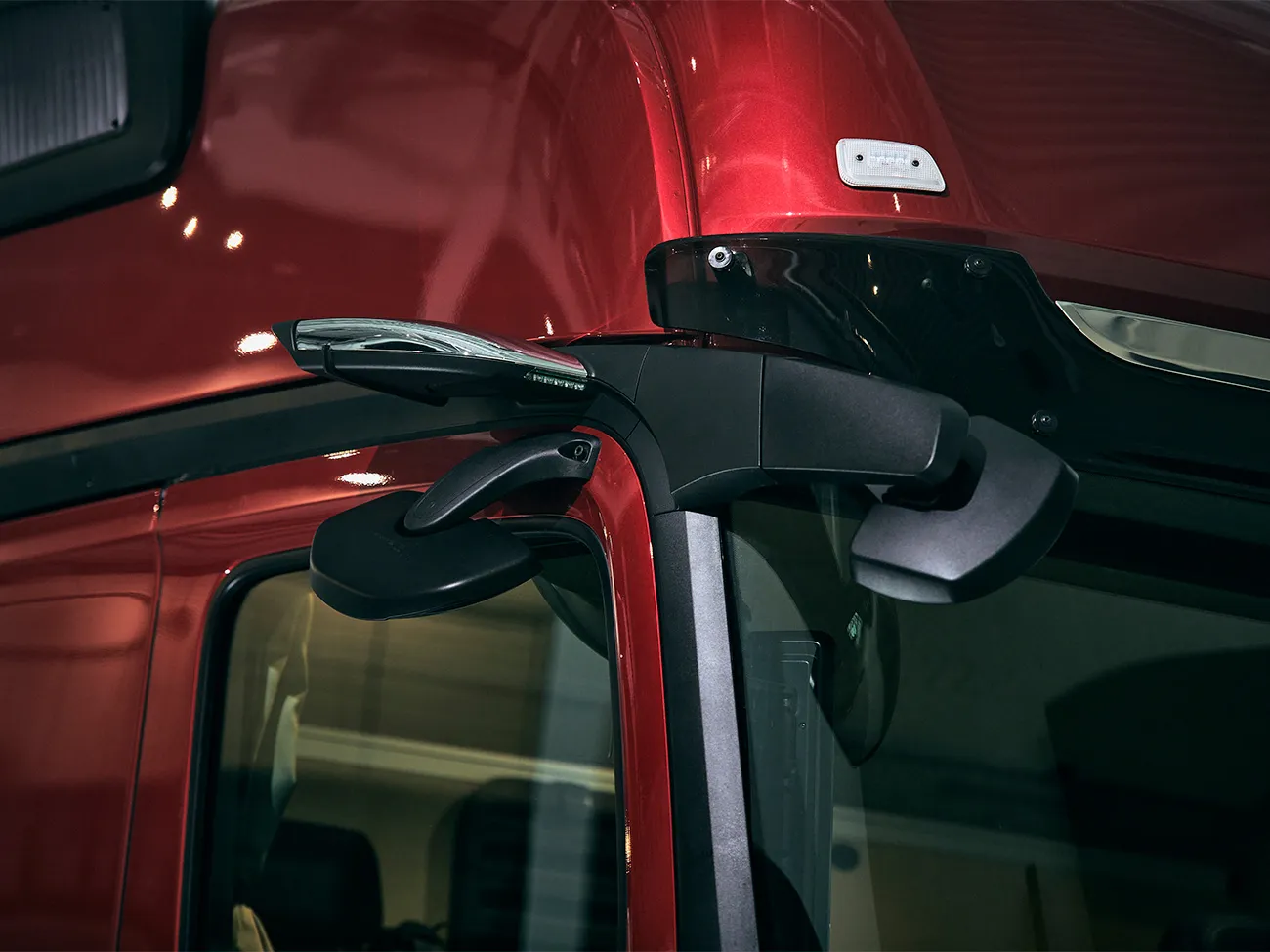
Mercedes-Benz Trucks has now updated MirrorCam for the first time. The second generation, available for the Actros, Arocs and eActros since April 2022, features further refinements to key system details. These improvements have also earned several innovation awards. “In-depth discussions with our customers and their experience of day-to-day operations gave us the basis for further refining individual technical parameters and creating even greater added value, particularly in terms of visibility and safety,” says Prof. Uwe Baake, Head of Product Engineering at Mercedes-Benz Trucks.
MirrorCam not only improves aerodynamic performance, reducing the truck’s fuel consumption and energy requirements, but also enhances road safety. In particular, it restricts the driver’s field of vision less than the large exterior mirrors mounted on the left and right A-pillars. This is especially beneficial at junctions, when manoeuvring and on tight bends. The electronic system also has functions for keeping an eye on the trailer, and can provide a dedicated view during challenging manoeuvres, making drivers’ daily work easier.
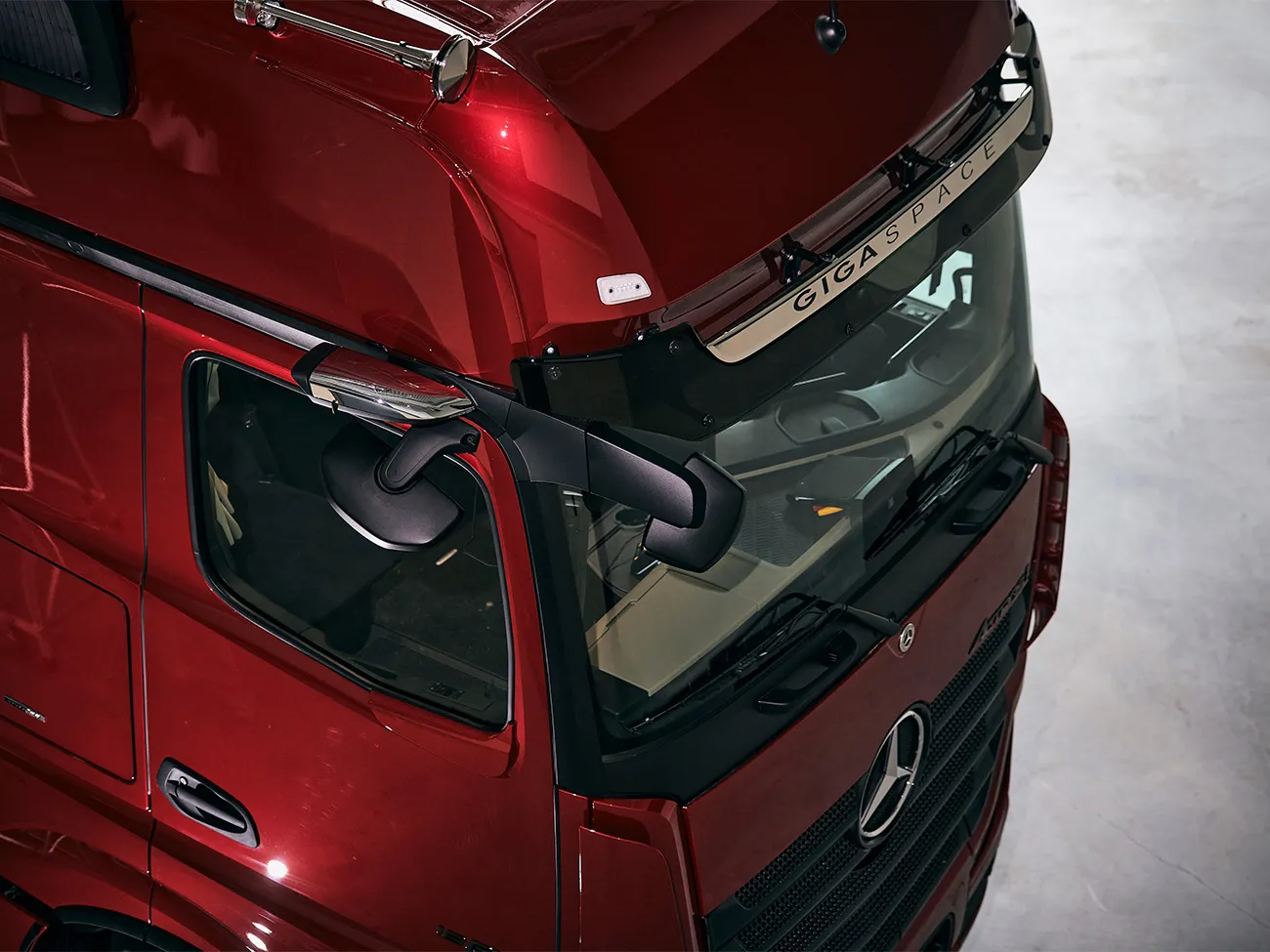
Less is more: shorter camera arms are a clear benefit
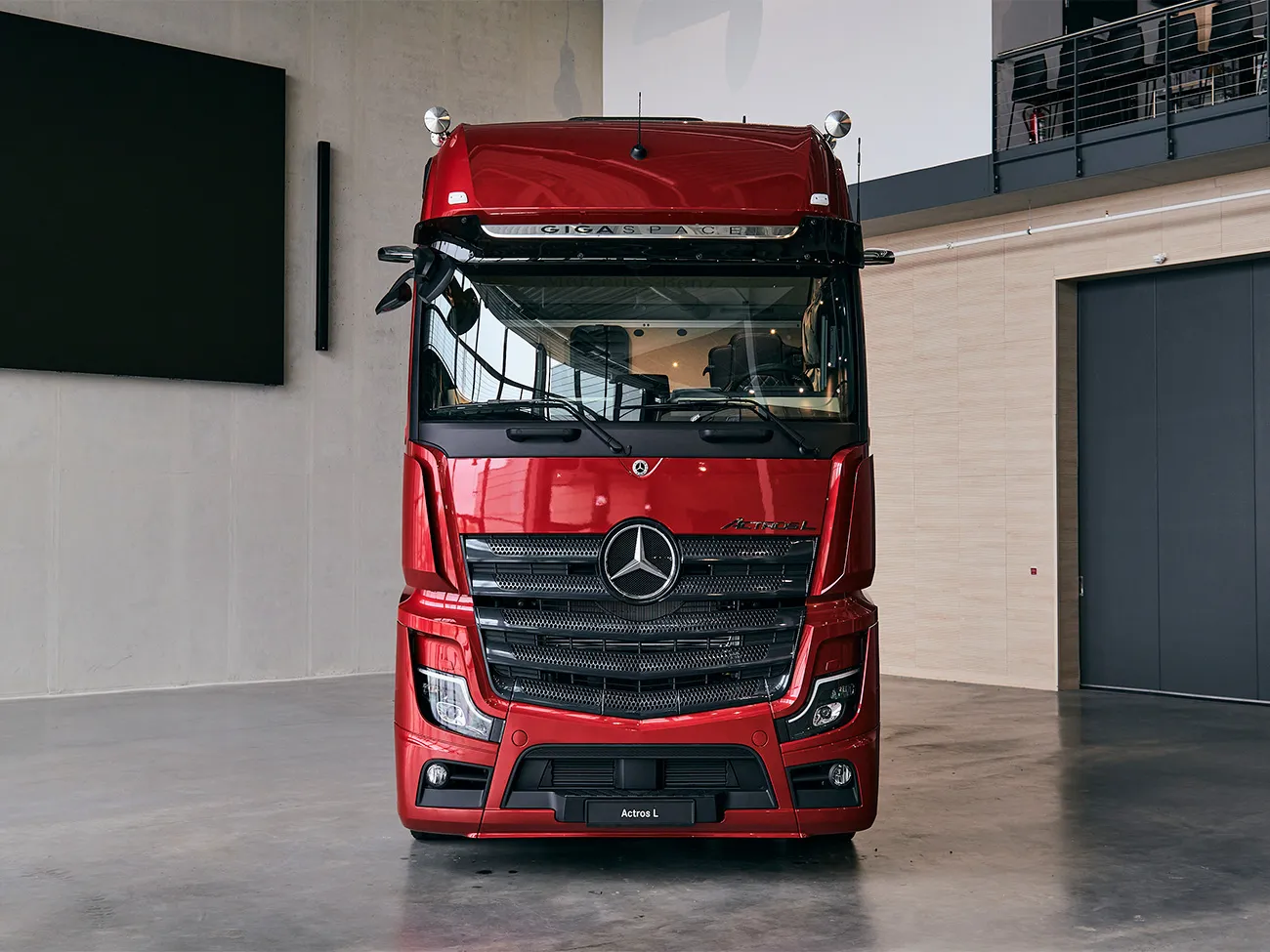
The second-generation MirrorCam is distinguished by camera arms that are 10 centimetres shorter on both sides. This applies to both the narrow and wide cab, and makes it easier for drivers to reverse in a straight line than with the first-generation MirrorCam. This is largely thanks to a perspective that is now comparable to that of conventional exterior mirrors. The smaller dimensions also bring another benefit: on the 2.5-metre-wide cab, the camera arm no longer extends beyond the kerb mirror in the driver’s field of vision. Collisions with objects at the roadside are now almost entirely ruled out. As the chassis width is identical, the arms could also be shortened on the 2.30 m-wide cab variant.
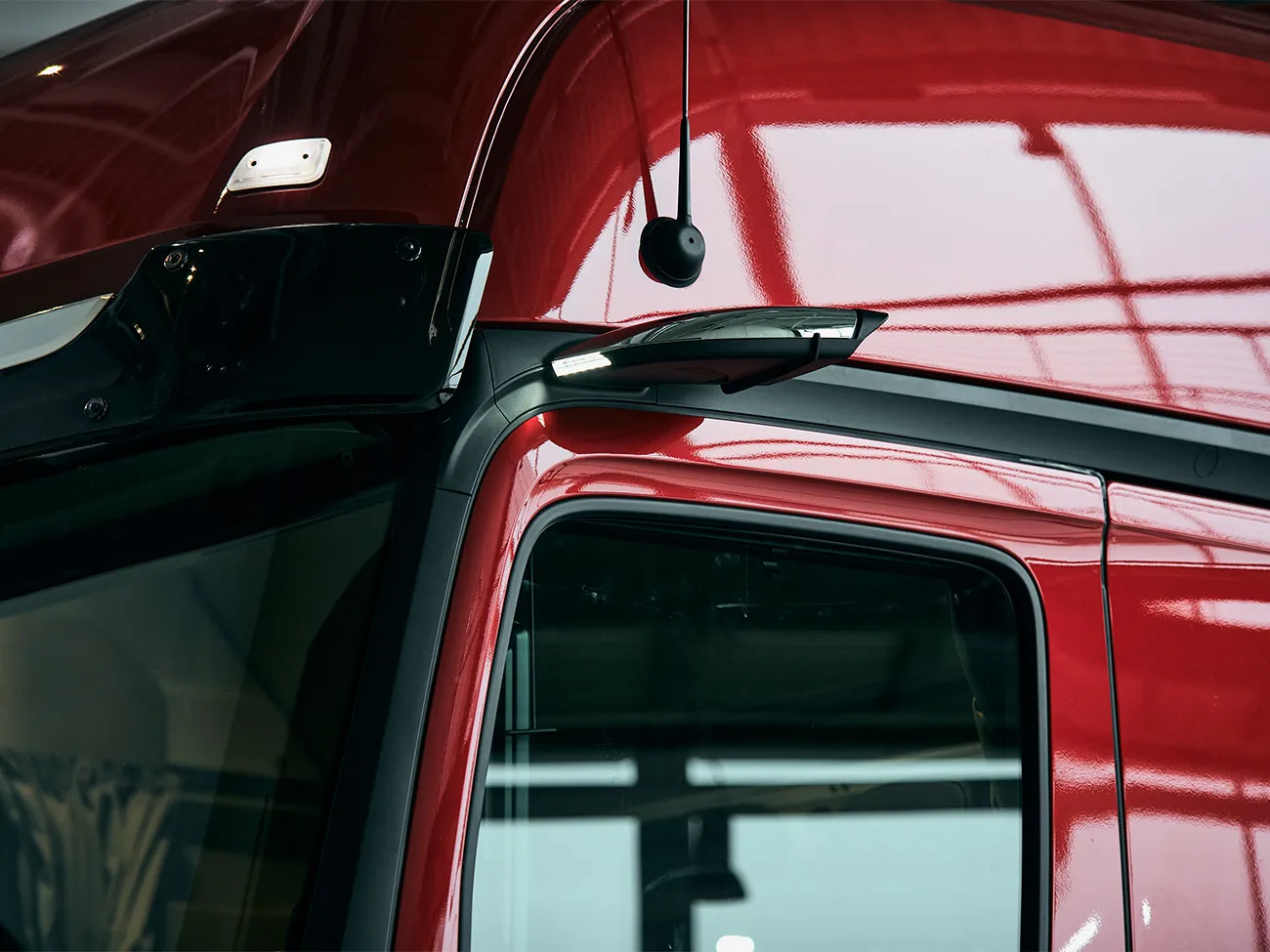
Improved image parameters and a drip edge on MirrorCam
Mercedes-Benz Trucks also improved other features as part of the camera system update. For example, a drip edge has been added to the bottom of the MirrorCam to prevent rainwater from reaching the lens and causing unwanted visual effects. The engineers at Mercedes-Benz Trucks have also improved what is known as ‘tone mapping’, a process that adjusts camera images so a wide range of shades can be accurately reproduced on a display. The first result of this improvement is increased screen contrast. The camera system already stood out for its high brightness, and its improved colour reproduction and brightness mean that the area relevant to the driving situation is shown more clearly on screen, for example when reversing into a dark or poorly lit depot.
Driver safety and comfort come first
These improvements give MirrorCam even more added value. For example, the upgraded system can provide even better support for drivers carrying out a range of manoeuvres safely and without stress, including overtaking, driving in poor visibility and darkness, turning and navigating narrow passages. Familiar benefits remain, such as a wide-angle view when reversing, distance lines on the display to help judge the distance to objects behind the vehicle, camera movement when turning and monitoring the area around the vehicle during rest periods.
The interaction between MirrorCam and the Mercedes-Benz Trucks turning assistant has already proved its worth, particularly in complex traffic situations and at confusing junctions. If, contrary to expectations, there is a risk that the driver may fail to spot a cyclist or pedestrian when turning right, the system can intervene within its limits, issue warnings to the driver in several stages and, if the truck is equipped with optional Active Sideguard Assist, automatically apply the brakes at turning speeds of up to 20 km/h. The turning assistant continues to use the MirrorCam screen to provide visual warnings.
Question about this story? Ask your question
Keep following this
Get an email when a new story is published. No account needed.
- ThemeConstruction transport on road and site
- SubjectGeneral







