









On the road with Mercedes-Benz’s latest trucks: the all-electric eActros and the new-generation Actros L
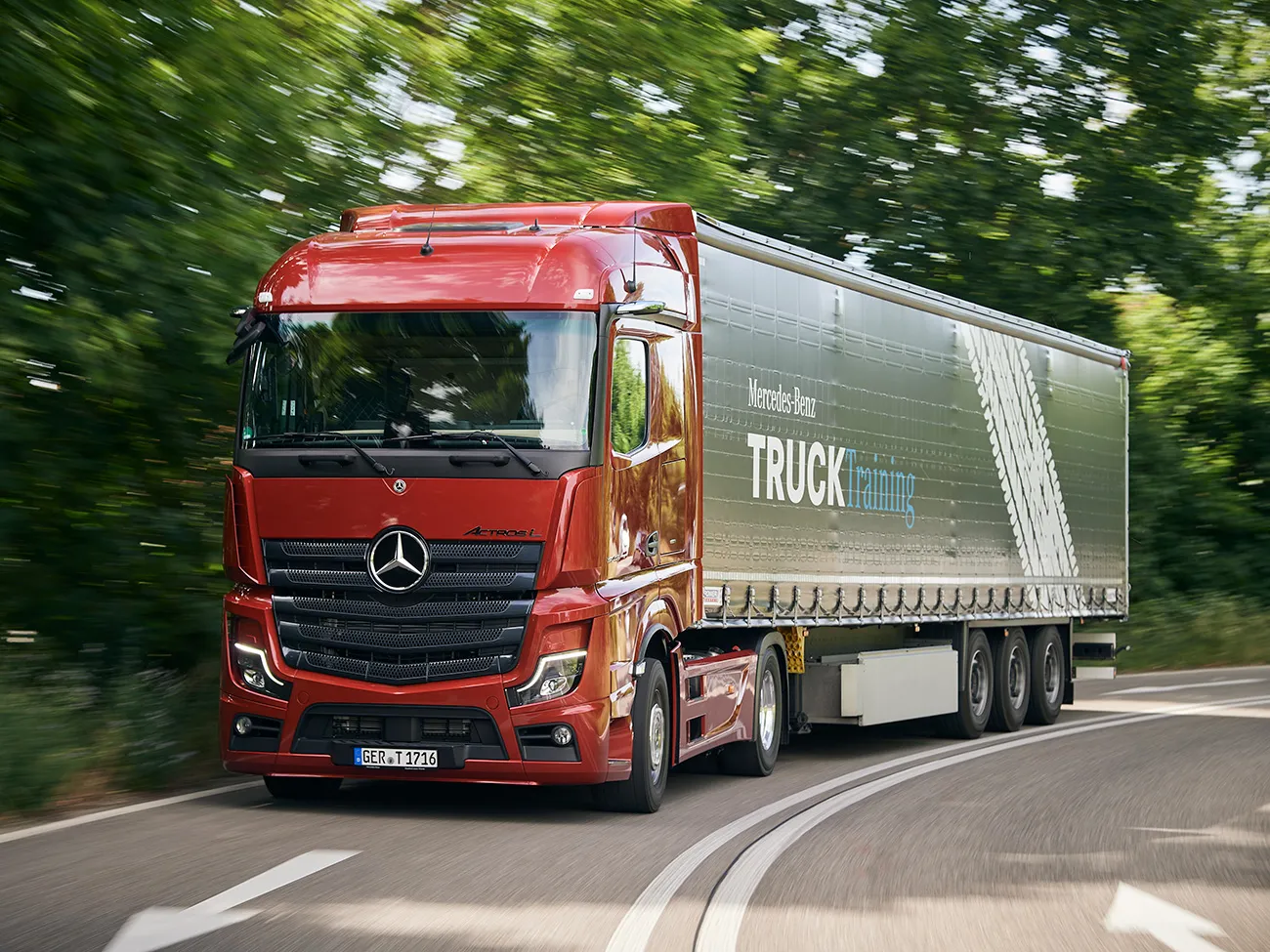
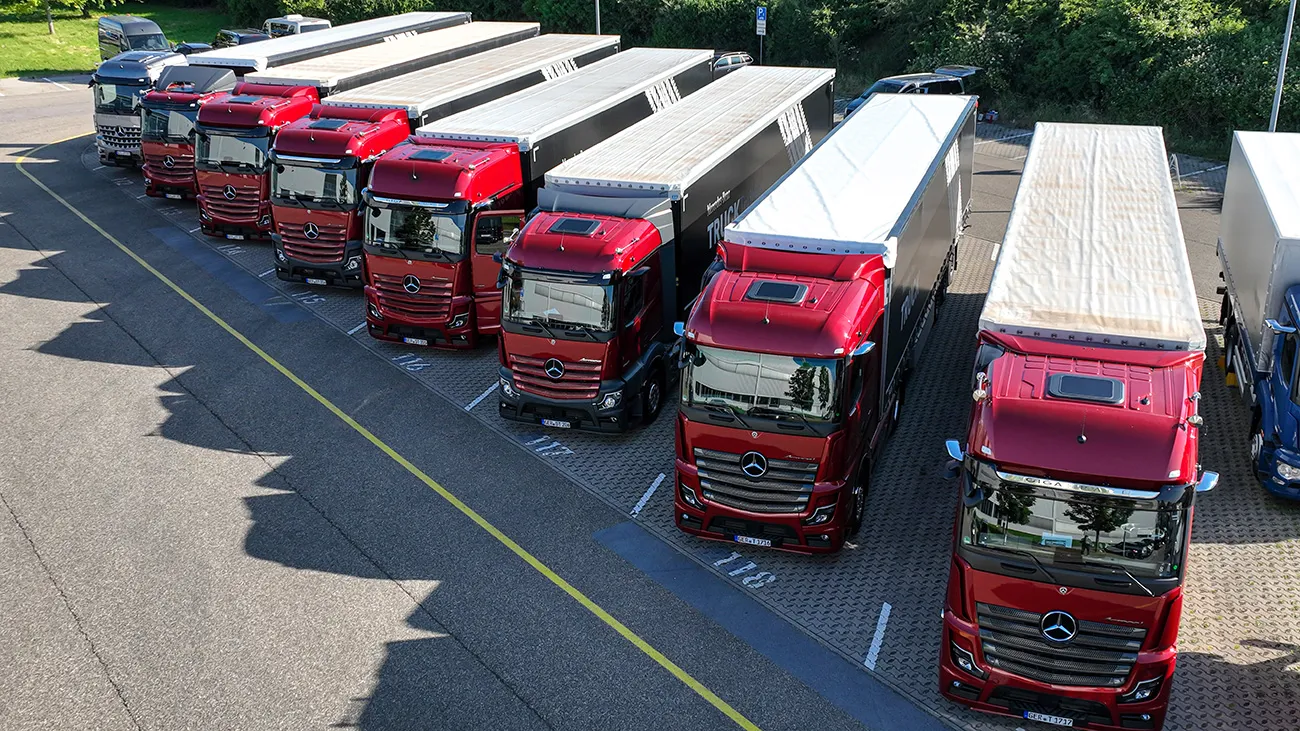
At the ‘Driving Experience’ in Wörth am Rhein, Mercedes-Benz Trucks is giving international journalists an up-close look at the heavy-duty, battery-electric eActros distribution truck and its flagship for long-haul transport, the Actros L. Both trucks are highly advanced and feature numerous innovations. Although their powertrains differ, they enable transport companies to manage their day-to-day operations efficiently while offering safe, comfortable and dynamic trucks. Following the ‘Driving Experience’, the manufacturer is holding a customer event lasting several weeks, which will welcome around a thousand participants from across Europe. It will cover the key aspects of electric mobility, including infrastructure, services and electric trucks.
- The eActros impresses with its powerful acceleration, energy recuperation that extends its range, and smooth driving characteristics
- The eActros is part of an integrated package that also includes comprehensive eConsulting services and intelligent digital solutions
- Both the eActros and the Actros L have been fitted with the second-generation MirrorCam since April 2022
- The third generation of the OM 471 commercial vehicle engine, available from October 2022, makes the Actros L even more dynamic and can cut fuel consumption by as much as 4 per cent
- PowerShift Advanced and Top Torque ensure a high level of driving comfort in the Actros L
- Karin Rådström, CEO of Mercedes-Benz Trucks: “The huge interest in our eActros driving event in Wörth is further proof that e-mobility is already gaining popularity with customers. Customers are sending a strong message to all stakeholders to join forces and get more electric trucks on the road quickly, expand charging infrastructure and achieve cost parity.”
Karin Rådström, CEO of Mercedes-Benz Trucks: “The huge interest in our eActros driving event in Wörth is further proof that e-mobility is already gaining popularity with customers. Customers are sending a strong message to all stakeholders to join forces and get more electric trucks on the road quickly, expand charging infrastructure and achieve cost parity.”
An impressive driving experience with the eActros
Climb in, fasten your seatbelt and set off. It is that simple in the battery-electric Mercedes-Benz eActros. Better still, the only sounds you hear are the compressor’s soft hum, the tyres rolling and the wind rushing past as you accelerate. First impressions matter, and this whisper-quiet experience gives you a better sense of the appeal of the battery-electric series-production truck that Mercedes-Benz Trucks has specially developed for heavy-duty distribution. The relaxed driving experience is immediately apparent on main roads, on country roads with varying topography, and in towns and villages. There is no interruption when changing gear or in the power delivery. The electric motors deliver exactly the same high torque across the entire rev range, and their powerful acceleration comes into its own in every traffic situation. Even under heavy load, noise levels in the cab remain relatively low.
The driver can also see at any point during the journey how efficiently the eActros is running, and can even extend its range using intelligent energy recuperation. This is because the electric motor converts kinetic energy into electrical energy every time the truck brakes, while the pitman arm is actively engaged during coasting phases. The energy recovered in this way feeds the eActros’s batteries, helping to extend the vehicle’s range. Another benefit of recuperating braking energy is that it reduces the load on the eActros’s braking system. Depending on the situation, the driver can choose from five different recuperation levels. They can even activate a ‘one-pedal driving’ function via the digital cockpit’s touchscreen. The truck then slows through energy recuperation, without the mechanical brake being applied. This allows the driver to focus fully on the traffic, rather than the technology. The interactive multimedia cockpit, fitted as standard in the eActros, provides detailed information on the state of charge, remaining range, and current and average power consumption in kWh per 100 kilometres.
And while we are on the subject of energy, the eActros battery comprises three (eActros 300) or four (eActros 400) battery packs, each with an installed capacity of 112 kWh[1] and a usable capacity of around 97 kWh. With its four battery packs, the eActros 400 has a range of up to 400 kilometres.[3] At the heart of the eActros’s technology is its drive unit, an electric rigid axle with two integrated electric motors and a two-speed transmission. Both liquid-cooled motors deliver a continuous output of 330 kW and a peak output of 400 kW. The eActros can be charged at a power of 160 kWh: using a standard DC fast charger with a charging current of 400 A, the three battery packs take just over an hour to charge from 20 to 80 per cent.
Smart digital solutions for even more efficient operation
To get the most out of the eActros, save operators time and effort, and make the transition to electric mobility as smooth as possible, Mercedes-Benz Trucks offers its customers a wide range of digital solutions and apps through the Fleetboard portal. These include personalised charging management. This provides complete transparency over the charging process at a customer’s infrastructure and enables costs to be managed by displaying transaction history. Charging can also be planned more effectively to maximise use of charging stations, while Charge Management allows charging to be started and stopped from any location.
Another digital solution is the mapping tool, which enables transport companies’ back-office staff to respond quickly to the current status of a vehicle whenever necessary. The tool can show in real time where a vehicle is, whether it is moving, stationary or charging, the battery’s state of charge and the remaining range. Another tool is the logbook, which provides detailed information on driving, rest and charging times, gross weight, distance travelled, routes, topography, temperature, energy consumption and changes in the battery’s state of charge. This enables fleet managers to track every individual eActros in the company’s fleet and optimise its use when discussing the situation with drivers or dispatchers. It also means their electric vehicles can be integrated into daily routines as effectively as possible.
Mercedes-Benz’s Complete Service Contract is also available for the eActros, helping to ensure optimum vehicle availability. This comprehensive service package covers workshop work to maintain and repair the entire vehicle and its powertrain, including wear parts. The service contract always includes comprehensive customer support through Mercedes-Benz Uptime. This intelligent system records all relevant vehicle data, from tyre pressure to the status of the electric motor and battery. In this context, Mercedes-Benz Uptime has already been expanded to cover more than a hundred e-specific control systems, which continuously monitor charging processes and the high-voltage battery’s voltage history. The information is also available through the new cloud-based customer portal. By connecting all vehicles, Mercedes-Benz Service and transport companies can work together to simplify the planning of workshop visits.
Expert advice for tailored electric mobility
Whatever the powertrain technology, every investment in a commercial vehicle must pay off in transport companies’ day-to-day operations. Several questions also need to be answered in advance, particularly when it comes to all-electric trucks: Which routes can I use electric vehicles on? How well developed is the charging infrastructure? What structural measures and investments are needed to charge vehicles at the depot? This makes it all the more important not simply to sell customers an electric truck, but to support them throughout their transition to electrification. Electric mobility is about more than a new powertrain. That is precisely why Mercedes-Benz Trucks has integrated the eActros into a business ecosystem that also includes consultancy services to support intensive vehicle use and optimise total cost of ownership.
Our eConsulting teams use existing routes to establish electric truck operating profiles that are as realistic and relevant as possible for each customer. Depending on the customer’s requirements, and alongside depot electrification, eConsulting also answers questions about planning, ordering and implementing charging infrastructure, as well as connecting it to the grid. Mercedes-Benz Trucks has established strategic partnerships with Siemens Smart Infrastructure and ENGIE specifically for this purpose. Mercedes-Benz Trucks can also help customers apply for public funding for infrastructure and vehicles.
At the ‘Driving Experience’ event, Mercedes-Benz Trucks made every effort to answer questions about charging infrastructure and the charging process at a specially built charging depot: how long does it take to install the necessary charging infrastructure, and what costs should be expected? What is the charging standard for the Combined Charging System (CCS), and which chargers are recommended? How does the vehicle communicate with the charging connection? The event also explained in detail whether fast or slow charging is better, and what the difference is between cooled and uncooled charging cables.
Acoustic warning, turning assistant, new MirrorCam and ABA 5
As is clear on every journey in the eActros, this truck is particularly quiet on the road. To ensure vulnerable road users such as pedestrians and cyclists are alerted in good time to the presence of an electric truck nearby, the eActros is fitted as standard with the external ‘Acoustic Vehicle Alerting System’ (AVAS), in accordance with legal requirements. The eActros’s acoustic warning system comprises two loudspeakers, one at the front and one at the rear, both connected to each other and to the vehicle. Different sounds are played when driving forwards or reversing, depending on the driving conditions. The forward-driving sound ‘simulates’ the sound of a quiet fan, while a pulsing two-tone sound is heard when reversing.
Improved visibility around an electric truck is particularly important when turning. To prevent accidents as effectively as possible in these circumstances, especially those involving pedestrians and cyclists, or at least limit their consequences, the eActros comes as standard with the S1R turning assistant. If, against all expectations, there is a risk that the truck driver might overlook a cyclist or pedestrian when turning, the system can intervene and warn the driver in several stages. The turning assistant uses the MirrorCam screens for visual warnings. In the eActros, these screens are positioned where the conventional main and wide-angle mirrors would be.
The second generation of MirrorCam has been in use since April 2022 and can now support drivers even more effectively in a wide range of traffic situations. This is thanks to camera arms that are 10 centimetres shorter and new image parameters used by the system. One advantage of the shorter camera arms is that drivers can now reverse more easily than with the first generation. This is because the MirrorCam perspective is now closer to that of a conventional glass mirror. Thanks to more refined colour and brightness calibration in the camera, which is already very bright, the screens can show relevant areas with even greater precision, for example when reversing in a dark or poorly lit area.
With this support, the improved MirrorCam can help drivers handle situations such as overtaking, manoeuvring, driving in poor visibility or at night, negotiating bends and navigating narrow streets more safely and with less stress. The existing benefits also remain: a wide-angle view when reversing, distance lines to make it easier to judge distances to obstacles, panning of the camera image on bends, and monitoring the area around the truck during rest periods.
Another safety highlight is the fifth generation of the Active Brake Assist system (ABA 5), with pedestrian detection. ABA 5 combines radar and camera systems. If ABA 5 detects an imminent collision, whether with a vehicle ahead, a stationary obstacle or a pedestrian approaching from the opposite direction, crossing the road, walking in the lane or suddenly stopping in fright, the system first gives the driver a visual or audible warning. If the driver does not respond appropriately, the system can then apply partial braking at three metres per second squared. This is equivalent to around 50 per cent of the maximum braking force. If the threat persists, ABA 5 can automatically apply maximum braking when encountering moving people, at driving speeds of up to 50 km/h.
The proven flagship for conventional long-haul transport: the Actros L, from October 2022 with the third generation of the OM 471 truck engine
Alongside its ever-growing portfolio of battery-electric vehicles, Mercedes-Benz Trucks is once again setting new standards in the premium conventional diesel truck segment with the Actros L, which has been in production since November 2021. The top model in the successful Actros range reaffirms Mercedes-Benz Trucks’ commitment to doing everything possible to meet the needs of its customers and drivers, and to providing them with the greatest possible added value time and again.
One example is the third generation of the heavy-duty OM 471 truck engine. The latest version of this power unit will be available in the Mercedes-Benz Actros L from October 2022. It offers an impressive range of technical innovations designed to reduce total cost of ownership (TCO) by cutting fuel consumption, CO₂ emissions and operating costs, while increasing margins without compromising performance, handling or driving comfort. To achieve this, Mercedes-Benz Trucks’ engineers have extensively revised the engine.
The third-generation OM 471 engine features two new turbochargers which, together with the revised exhaust after-treatment system, deliver maximum fuel savings of 4 per cent compared with the previous generation. Mercedes-Benz Trucks has also focused on the powertrain to make the truck even more dynamic. The new PowerShift Advanced automated transmission control enables quicker, smoother pull-aways and acceleration in many situations, thanks to precise gear selection. Another highlight of the third-generation OM 471 is the expanded Top Torque programme, which delivers extra performance when needed, for example on motorways or when overtaking.
Outstanding space and more safety equipment
The Actros L’s higher level of driver comfort is also reflected in its 2.5-metre-wide cab, available only in StreamSpace, BigSpace and GigaSpace versions. The absence of a central tunnel ensures a flat floor and a cosy atmosphere in the cab. Improved sound insulation reduces unwanted noise, helping to make the cab a quieter place, not only when driving but also during rest periods, while the seat position has been lowered and optimised. The optional, newly developed LED headlamps also make a major contribution to safety, thanks to their higher light intensity and the excellent road illumination provided by the xenon headlamps.
Other important safety features include driver assistance systems such as the fifth-generation Active Brake Assist with pedestrian detection, Lane Keeping Assist and the second-generation MirrorCam, as well as options such as Active Sideguard Assist (ASGA) and the second-generation Active Drive Assist (ADA 2) for Level 2 partially automated driving.
The last two systems in particular can play an important role in clearly defined traffic situations. The new Active Sideguard Assist can not only warn the driver about moving cyclists or pedestrians on the passenger side: it can now also automatically reduce the truck’s turning speed from 20 km/h to a standstill if the driver does not react in time.
Under certain conditions, ADA 2 can actively support the driver with longitudinal and lateral vehicle guidance and maintain a safe distance, accelerate and steer, provided the necessary system conditions are met, such as a suitable curve radius and clearly visible road markings. The Emergency Stop Assist sub-function, which is part of ADA 2, can also bring the vehicle to an emergency stop if the driver stops operating the steering wheel despite visual and audible warnings. Drivers can monitor the operation and functions of the assistance systems using the user-friendly interactive multimedia cockpit, whose two colour screens form the heart of the HMI (Human-Machine Interface).
With all these driver assistance systems, Mercedes-Benz Trucks aims to provide drivers with the best possible support when the vehicle is operating within the system limits. However, drivers remain fully responsible and must always be able to drive the vehicle safely, as required by law.
Question about this story? Ask your question
Keep following this
Get an email when a new story is published. No account needed.
- ThemeConstruction transport on road and site
- SubjectGeneral







