









Much lower CO2 emissions for Indu-Tools customers thanks to MOSA hybrid generator
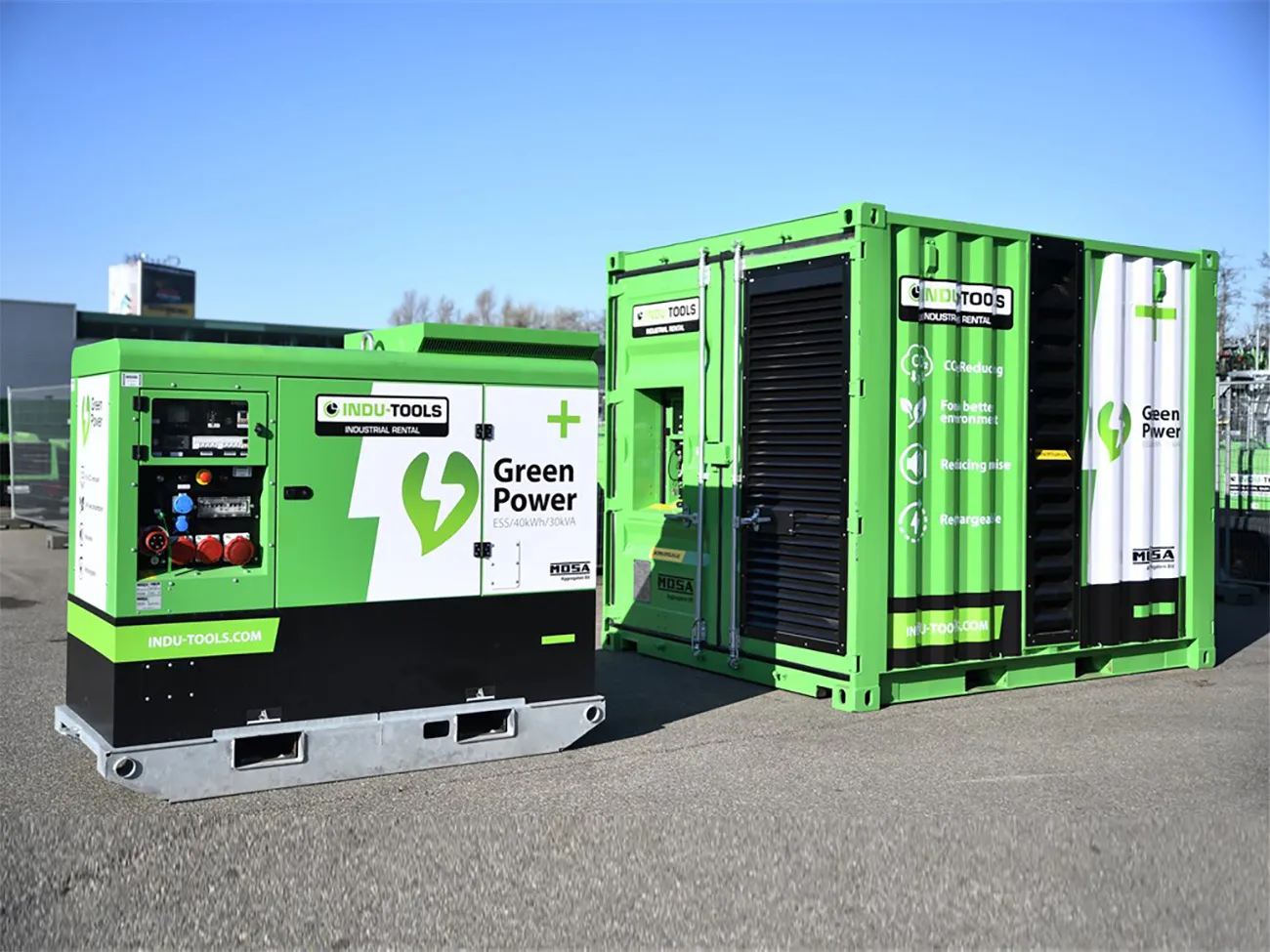
Indu-Tools, based in Rotterdam, supplies equipment to the (petro)chemical, infrastructure, (renewable) energy, industrial and maritime sectors. It is the first company to put the new hybrid energy storage system from MOSA Aggregaten BV into operation. The system, with a storage capacity of 80 kWh and an output of 30 kVA, is housed in a standard 10ft container, which also contains a 60 kVA generator. The system is now available to hire from Indu-Tools.
The new Energy Storage System (ESS) cuts emissions by 30 to 80% compared with conventional (bio)diesel generators, significantly reducing the CO2 footprint of mobile power generation too. The machine runs almost silently on battery power. This reduces noise at the worksite, for example in a residential area or when work is carried out at night. The system is rechargeable, making it a more sustainable option. The hybrid generator stores any surplus energy, making it available for later use.
“One major benefit for our customers is that they don’t have to worry about their power supply,” explains Sander Matthijssen, CEO of Indu-Tools. “The generator and ESS work together to manage the power supply automatically. When demand for power is high, the generator starts first. As demand falls, the generator first recharges the ESS, after which the ESS supplies the power and the generator switches off. This ensures the generator operates at an optimal load, lasts longer, suffers less wear and uses less fuel per kWh delivered.”
Sander Matthijssen continues: “The energy transition is an important issue. At some worksites, reducing CO2 emissions is already mandatory, either at the client’s request or under government requirements. With the new ESS, we have made a deliberate investment in sustainable methods. This helps our customers reduce emissions during their work and contribute to a better environment.”
“In early 2020, we began developing energy storage and hybrid energy systems in-house, with outputs ranging from 15 kVA to 60 kVA,” says Alex de Borst, Technical Sales Manager at MOSA Aggregaten. “We designed the system completely from scratch. Ease of use, service life, compactness and safety were our priorities. The generator and battery pack are housed together in a standard 10ft container, making the system easy to transport and unload on site, or secure to the deck of a maintenance vessel. An innovative sliding system allows the generator to be rolled out of the container for servicing and maintenance. The controls are extremely simple and easy for any user to understand. Several systems are now in operation in the field, including one combined with a mobile radar vehicle belonging to the defence shooting group.”
Question about this story? Ask your question
Keep following this
Get an email when a new story is published. No account needed.
- SubjectGeneral







