









Materials sector reaches record high
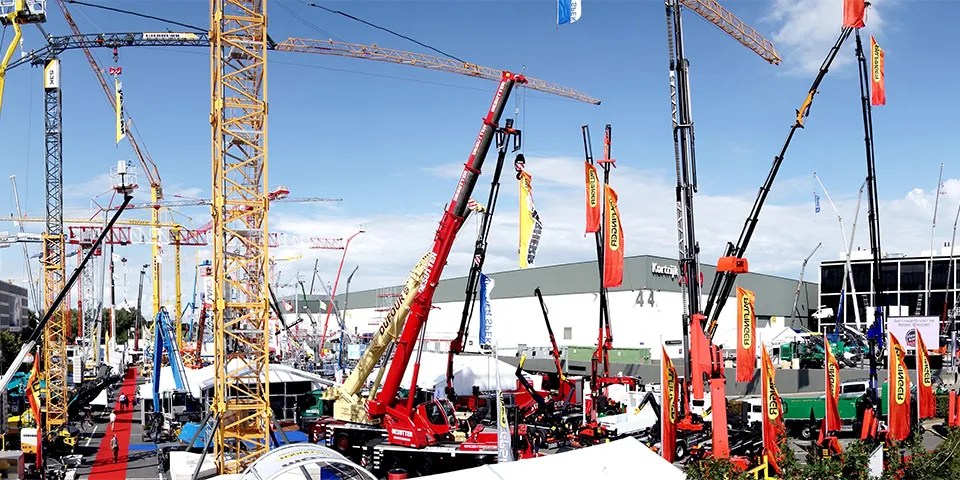
2018 was a record-breaking year for the materials sector, an ‘all-time high’ that, inevitably, will be followed by a much more moderate period. That is the conclusion reached by both Belgian trade association Sigma and CECE (Committee for European Construction Equipment).
In his opening address at Sigma’s annual meeting, Sigma chair Dries van Haut highlighted the conclusions, which are set out in greater detail in the 2019 Economic Report. In it, trade association Sigma discusses the current state of play on behalf of Belgium’s machinery importers, looking at the picture from the perspective of Sigma members and the Belgian economy in general, as well as, more specifically, the materials handling, civil engineering/construction and construction sectors.
Van Haut spoke about the exceptional growth in mini excavators and the growing shortage of skilled staff. But, he said, the biggest surprise was that machinery sales performed even better in 2018 than in 2017. Several records were broken.
However, he also noted that after an ‘all-time high’ like that, it is hardly surprising that 2019 is already proving to be a weaker year. “Have we already peaked?” Sigma chair Dries van Haut asked himself. His answer was clear: “I think so. Invoiced sales figures are still good, but that is mainly down to the longer delivery times we have experienced. Order intake has been falling sharply for several months.” Fortunately, he said, that is no cause for concern, as levels remain high and there is no banking crisis like the one during the previous downturn.

Sigma chair Dries van Haut is not yet concerned, even though sales have clearly “peaked”.
More decisive action
Some of the concerns are coming from abroad. Van Haut said that several developments could affect the sector: “A trade war between Trump and Xi Jinping, Huawei seeing its smartphone sales fall. Who knows, perhaps I will soon no longer be allowed to import Chinese excavators? More recently, ships have been sunk in the Gulf, and there may or may not be a response from Trump towards Iran. Closer to home, there is Brexit. Will it happen or not? And when? Last but not least, there are the results of the elections in our own country.”
Van Haut has a clear view on the elections: “The differences between north and south have rarely been so clear, which looks set to make forming a government very difficult. It seems likely to become another lengthy process. The previous long period without a government took place during a crisis. The advantage then was that the government had to operate on provisional monthly budgets, so politicians looking to make a name for themselves could not make all kinds of pointless spending commitments. Now that the economy is doing well, we need a decisive government to ensure that the necessary public investment goes ahead, so we can maintain our positive momentum.” Van Haut points to the huge delays affecting major projects such as the Oosterweel connection near Antwerp. Invoking Alexander the Great, he calls for much greater decisiveness: “We should stop trying to untangle an impossible knot and cut through it with one mighty stroke of the sword. That mighty stroke must come from a decisive government. Today, we see all the parties involved tugging at their end of the rope, only making the tangle more complicated.”
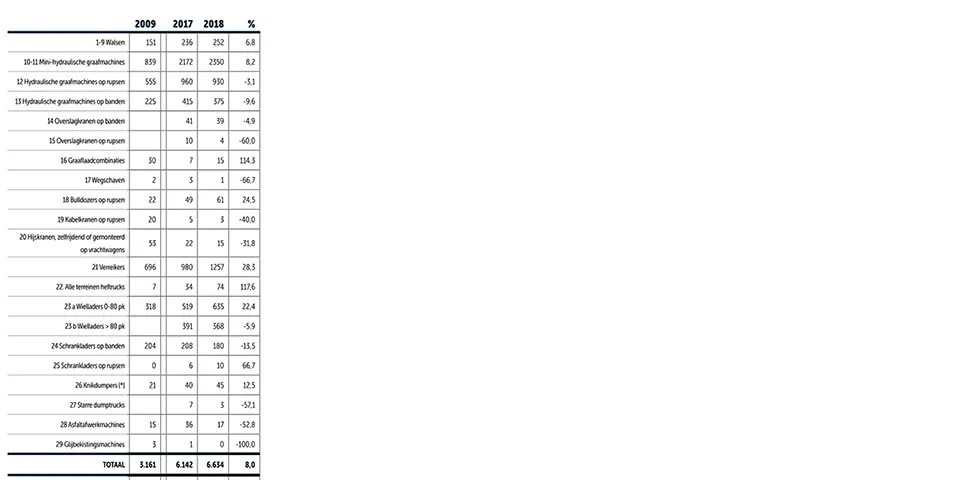
Sigma table comparing machinery sales in 2017-2018 with those a decade earlier.
Sigma in figures
Back to the figures. The 2018 results leave nothing to be desired. We quote from the ‘Sigma in figures’ chapter: “With total turnover across all members of €1,679,650,100, up 11.2% on 2017, we broke all records again in 2018 in the civil engineering and materials handling sections.” The largest increase in unit sales was once again recorded for mini excavators, continuing a decade-long trend. Their 8.2% increase even exceeded the overall 8% growth in the civil engineering/construction sector. At the same time, we saw a slight decline in larger tracked hydraulic excavators (-3.1%) and a sharp fall in wheeled excavators (-9.6%), although in both cases levels remain well above those of ten years ago (see table).
The difference is even greater for wheel loaders. In the compact wheel loader category, with engine power of up to 80 hp, we saw strong growth, as with mini excavators, reaching 22.4% in 2018 compared with 2017. At the same time, large wheel loaders showed a negative trend (-5.9%).
In his speech, Van Haut also noted the strong performance of lift trucks, “with a new Belgian record of no fewer than 12,765 units sold in 2018!” However, the market has now stabilised here too. In the generator subsector, the message is the same as last year: despite press reports warning of possible power shortages during the winter, this has not led to an increase in sales of standby generators. We have, however, seen a clear shift towards the rental market.
Serious staffing problems
To round off, Dries van Haut highlighted “the biggest problem we all face today: finding skilled staff. Or perhaps I should say ‘finding staff at all’. The situation has become so dire that we have to keep lowering our standards. There simply aren’t any candidates available.” And this at a time when a huge number of machines need to be delivered. “That is all the more reason to make the most efficient possible use of the people we have. Van Haut: “For many years, Sigma’s negotiators have been able to influence negotiations on the supplementary joint committee for metal trading, 149.4. I am therefore very pleased to announce that this year too, we have been able to significantly increase the number of voluntary overtime hours. But let us be clear: this measure is necessary because far too few suitable new people are entering the industry.”
Finding these urgently needed staff is the biggest challenge for the years ahead. “We can sell as many machines as we like, but we still need the right people to service and repair them. As announced previously, our trade association will focus on this and develop the necessary initiatives to make the role of heavy machinery service technician more attractive.” Better pay could also help, he said.
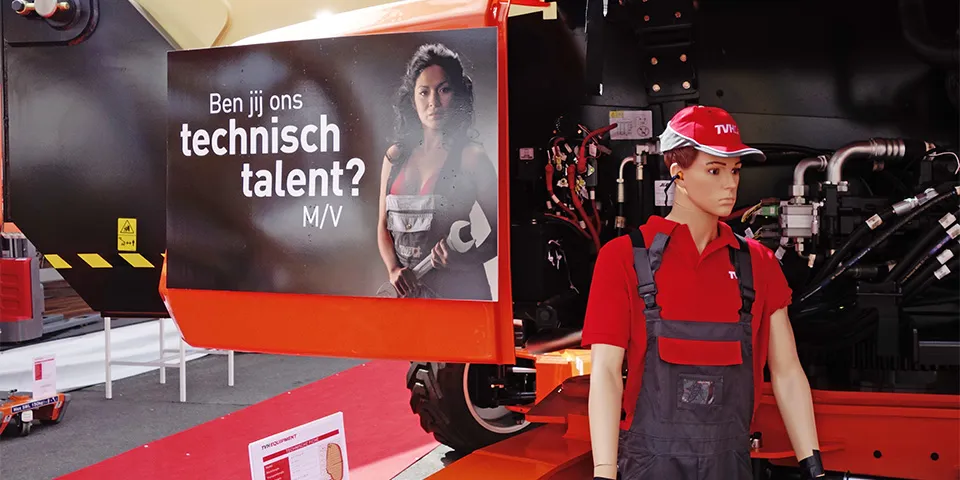
The growing shortage of skilled staff is a real concern. This is a major challenge for trade association Sigma.
European industry
CECE represents the interests of national manufacturers of construction equipment in 13 European countries, including Germany, the United Kingdom, France, Italy, Russia and Turkey. The sector comprises around 1,200 companies, which directly and indirectly employ around 300,000 people. Their combined annual turnover is approximately €40 billion.
According to CECE, manufacturers of machinery for the civil engineering, construction and agricultural sectors are not only highly innovative, but also make a substantial contribution to Europe’s economic climate. Around 20% of all construction equipment sold worldwide is still made in Europe, making this industry highly important to the continent.
Their innovative credentials are reflected, among other things, in ongoing efforts to reduce emissions. This is being achieved by improving diesel engines and exhaust systems, which have now reached Stage 5, and by introducing electric and gas-powered machines. Digital technologies are also being used to improve communications, enhance safety, enable more efficient and sometimes even automated working, and reduce maintenance and fuel requirements.
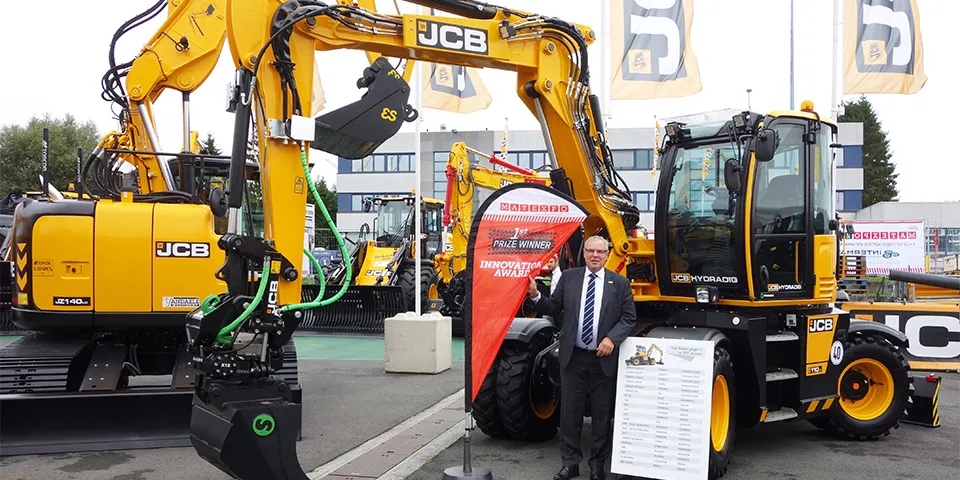
JCB says it plans to produce and sell 10% of the 1 million-unit global market. At Matexpo 2017, the British machinery manufacturer received an Innovation Award for its Hydradig excavator.
Record numbers worldwide
All these developments have led to rising machinery sales in recent years. In Europe, that growth will continue into this year, before sales start to fall again. The well-known and highly respected research firm Off-Highway Research expects sales to drop from more than 165,000 units in 2018 to just over 150,000 units in 2022. This puts Europe more or less on a par with China, where sales are also expected to decline.
In the rest of the world, sales are set to continue rising, with more than 1 million units expected to be sold in 2022, an unprecedented record. For context, the global total in 2017 was still below 900,000 units.
European growth markets
Countries such as Germany and the United Kingdom have traditionally been key players in Europe’s machinery market. Germany’s market grew by around 9% in a year, and its annual turnover in 2018 was many percentage points higher than in the record year of 2007, before the financial crisis. In the United Kingdom, JCB is pleased with global developments. The company says it plans to supply as much as 10% of the forecast 1 million units, securing itself a place in the global top ten.
Question about this story? Ask your question
Companies in this story
Keep following this
Get an email when a new story is published. No account needed.
- SubjectGeneral
- CompanyVan Haut







