









GM Recycling pioneers water bath for crushers and screens
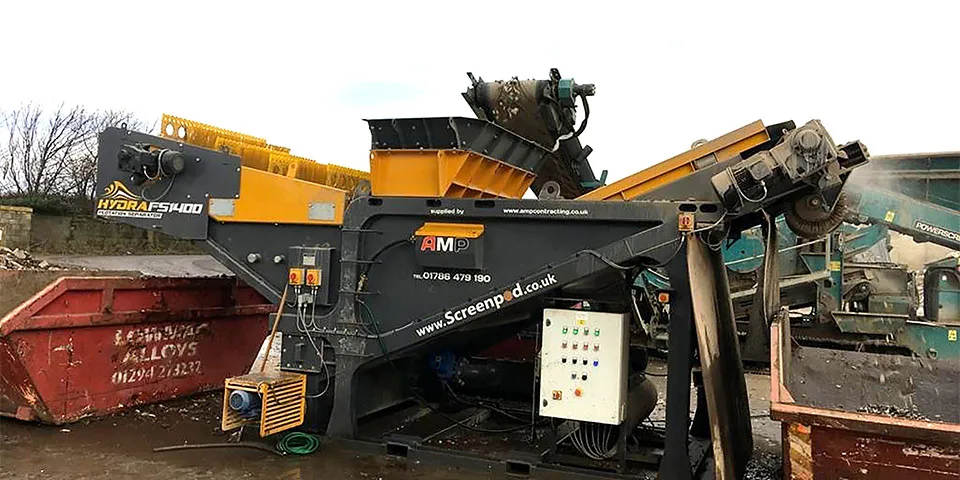
Quality always takes precedence over capacity. This has been the long-standing philosophy of GM Recycling in Lembeke, which sells, hires out and repairs crushers, shredders, screening machines and conveyor belts from the Gipo, Powerscreen and Terex Ecotec brands. Driven by a desire to produce a high-quality end product, owner Freddy Gillis came up with an innovative system that washes rubble in a water bath. The result? Spotlessly clean aggregate.
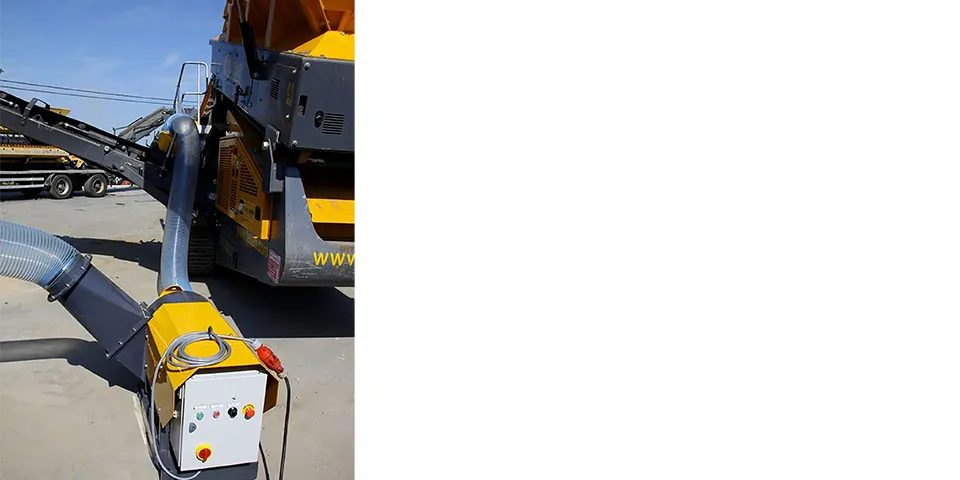
Developing the water bath system took around a year before it was ready.
Crushers and screening machines that use air displacement to clean aggregate are a familiar sight in the sector. But a water bath that washes aggregate, separating out silt and waste particles? That is new, according to Freddy Gillis of GM Recycling. “In the past, the focus was first on maximum output and capacity, with quality coming later. Over the past two years, we have seen a shift towards putting quality first. With this in mind, we came up with the water bath system together with our Irish manufacturer,” says Gillis. The water bath system is called Hydra FS 1400 and is available as a static unit, on a skid container system or on tracks. There are currently two models, depending on the required capacity and size.
Efficient system
The water bath can be combined with either a crusher or a screen to produce high-quality aggregate. But how exactly does it work? Gillis explains: “The water bath is fed with, for example, the midsize fraction from a crusher, comprising 20/40 material. The bath is fitted with a float system that raises or lowers the water level as required. Brushes that rotate gently across the water surface remove waste particles. The waste removed, such as wood or plastic particles, is carried away on a belt and deposited in a separate container. Stones are carried away on another belt and washed, allowing us to discharge the silt separately from the machine into another container. A magnet removes small iron and metal particles. Finally, the rubble falls from the belt onto a stockpile. It is a compact, technically simple but very efficient system,” says Gilis. “We use 2 to 3 cubic metres of water a day.”
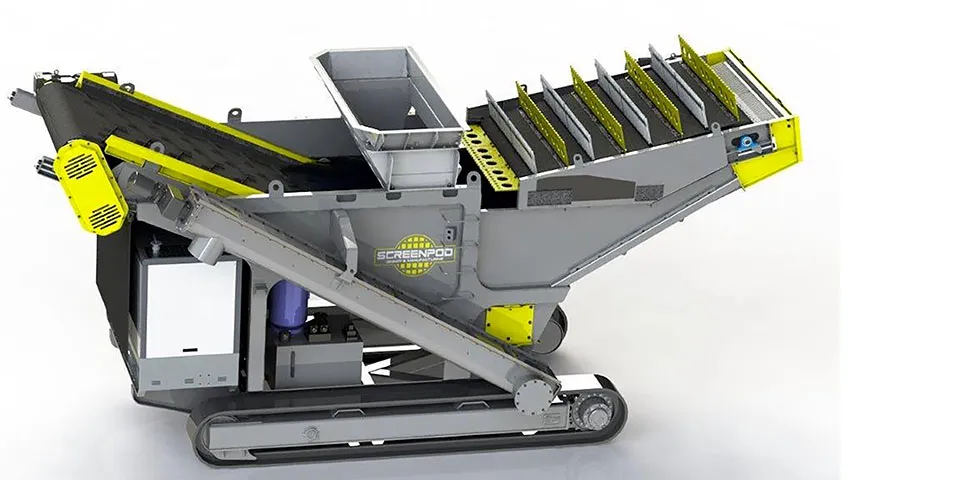
The bath is fitted with a float system that raises or lowers the water level as required.
Visual monitoring
GM Recycling can supply integrated air separators for the latest-generation Gipo and Powerscreen crushers to clean the second deck. The GM Recycling water bath offers a solution for older machines with a two-deck after-screen, where no blower is fitted to the second deck, the 20/40 level. “We often used a screw washer in the past. The downside of this system is its low processing capacity, which means it quickly blocks if overloaded. The screw is housed in a tube, so unblocking it often turns into a difficult and time-consuming job. Our water bath, however, is an open system, so you can monitor it visually at all times. If it is overloaded, there will simply be a little more material on the belt, and the oversize can never cause a blockage,” Gillis explains.
80 tonnes per hour
Developing the water bath system took around a year before it was ready, Gillis says. “It took some thought and experimentation to determine the right flow rate. The conveyor belts have to run slowly enough to clean the rubble, but also fast enough to keep up with the crusher or screen, so that the system remains economically viable. We can currently wash and clean 70 to 80 tonnes of 20/40 rubble per hour.”
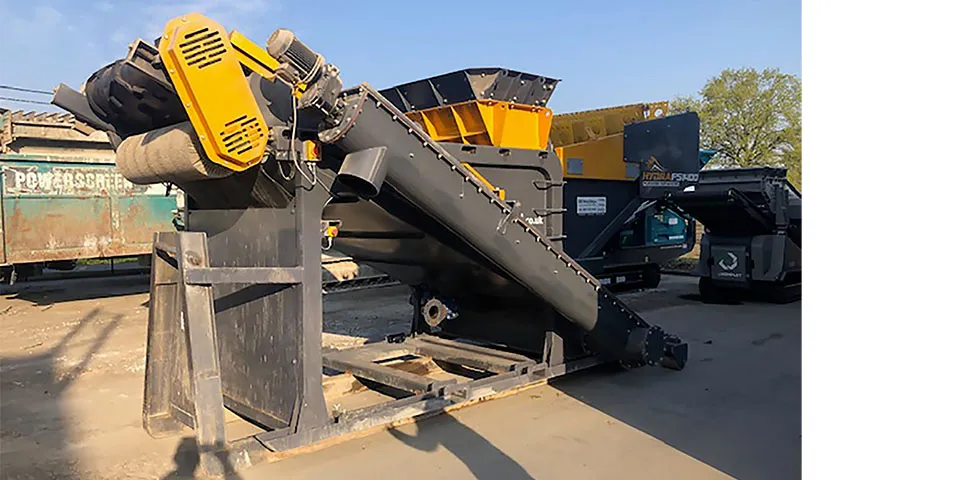
A water bath that washes aggregate, separating out silt and waste particles? That is new, according to Freddy Gillis of GM Recycling.
Not just rubble
The system has already proved its worth on several sites, where it cleaned concrete and rubble. But that is not its only application. Gillis says: “The unit is currently at a customer’s site in Rochefort, where it is being used to clean compost. Stones and metal in the compost were damaging the hammers in the customer’s shredder. Our water bath has solved the problem, extending the life of the shredder hammers by 30%.” Other trials involved removing stones from shredded tree roots and separating ordinary rubble from porous Ytong blocks. “In the latter case, we saw the importance of an open system and the stepless adjustment of the discharge belts. Both discharge belts are the same width, so the amount of contaminated material fed in does not matter. This is very important because the feeding crusher or screen delivers a constant flow,” Gillis says. The water bath can even be used in industrial applications. “We have also cleaned shredded aluminium of insulation,” Gillis concludes.
Question about this story? Ask your question
Companies in this story

Keep following this
Get an email when a new story is published. No account needed.
- ThemeOn-site demolition and recycling
- SubjectGeneral
- CompanyGM Recycling







