









Electric and in series production: Mercedes-Benz eEconic rolls off the line at Wörth plant
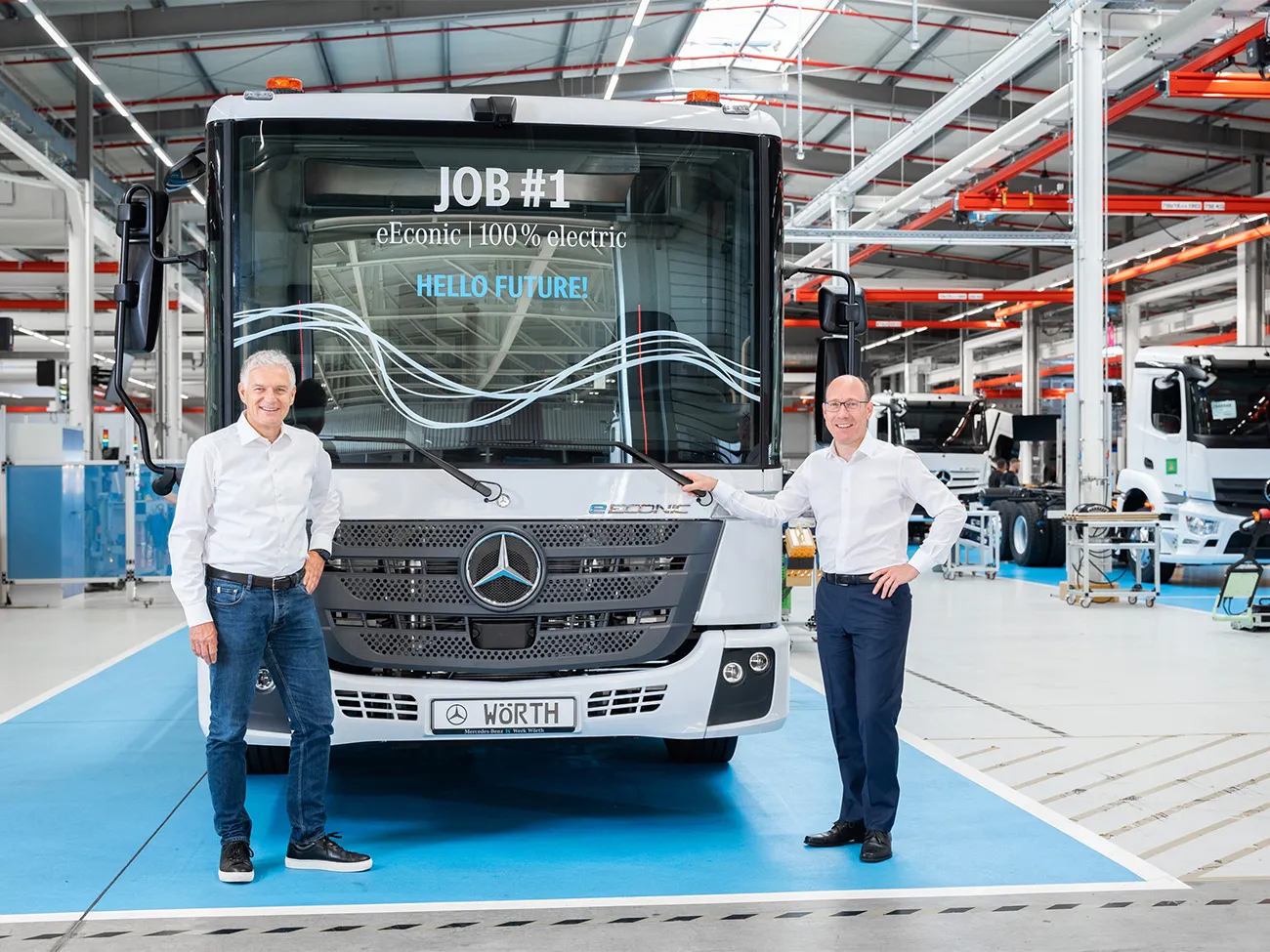
Daimler Truck is accelerating the electrification of its fleet: the Mercedes-Benz eEconic for municipal use is entering series production at the plant in Wörth, in the southern German state of Rhineland-Palatinate. It will soon become the second battery-electric Mercedes-Benz truck to roll off the line there, following the start of production of the eActros distribution truck in October 2021. The eEconic was developed in close cooperation with customers and, following intensive testing, has been undergoing real-world trials with customers since May 2022. The first series-production truck will be delivered to Urbaser A/S, a company operating in Denmark’s waste management sector. Other customers have also already chosen the series-production eEconic. The vehicles will be delivered over the course of the year.
Dr Ralf Forcher, Head of Mercedes-Benz Special Trucks: “From the initial sketch to the finished vehicle, from prototype to series-production truck, the time has now come: with the eEconic, we are putting the first electrically powered, series-produced Mercedes-Benz Special Truck on the road. Our discussions with customers have shown that cities and municipalities want CO2-neutral vehicles for their fleets. There is a particular need in large cities for quiet, clean and safe logistics and waste management solutions. And we have the right trucks for the job.”
Dr Andreas Bachhofer, Head of Plant and Production at the Wörth plant: “In autumn 2021, we launched series production of our electric trucks at the Wörth plant with the eActros, and the eEconic now follows. This is made possible by our flexible production system and our highly motivated local team, which integrated the eEconic into the production line in a very short time and is working hand in hand to meet our customers’ high quality requirements. The start of production of Wörth’s second electric truck is further proof that this site is already well into its transformation towards new drive systems.”
Series production of eTrucks at the Future Truck Center
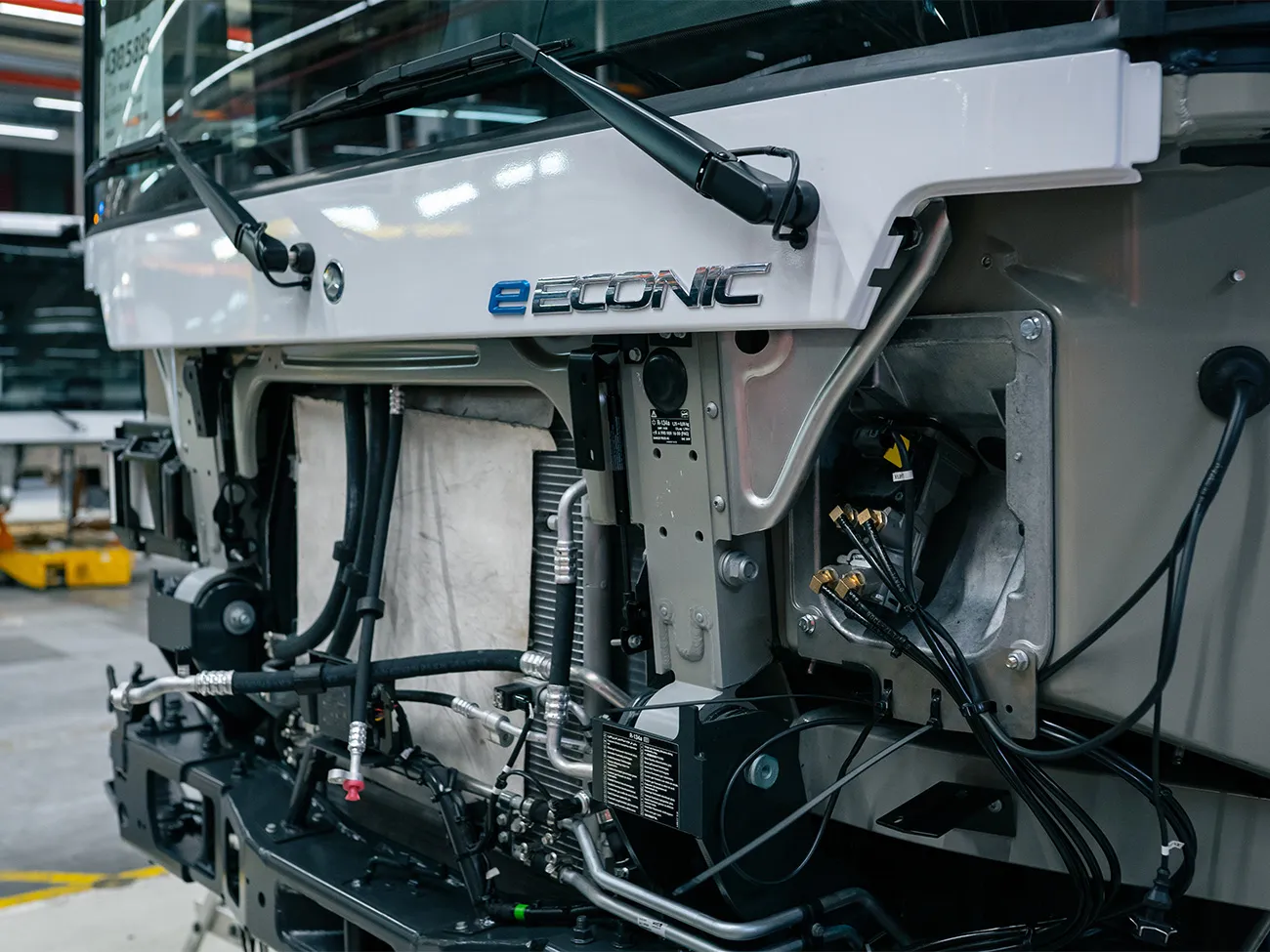
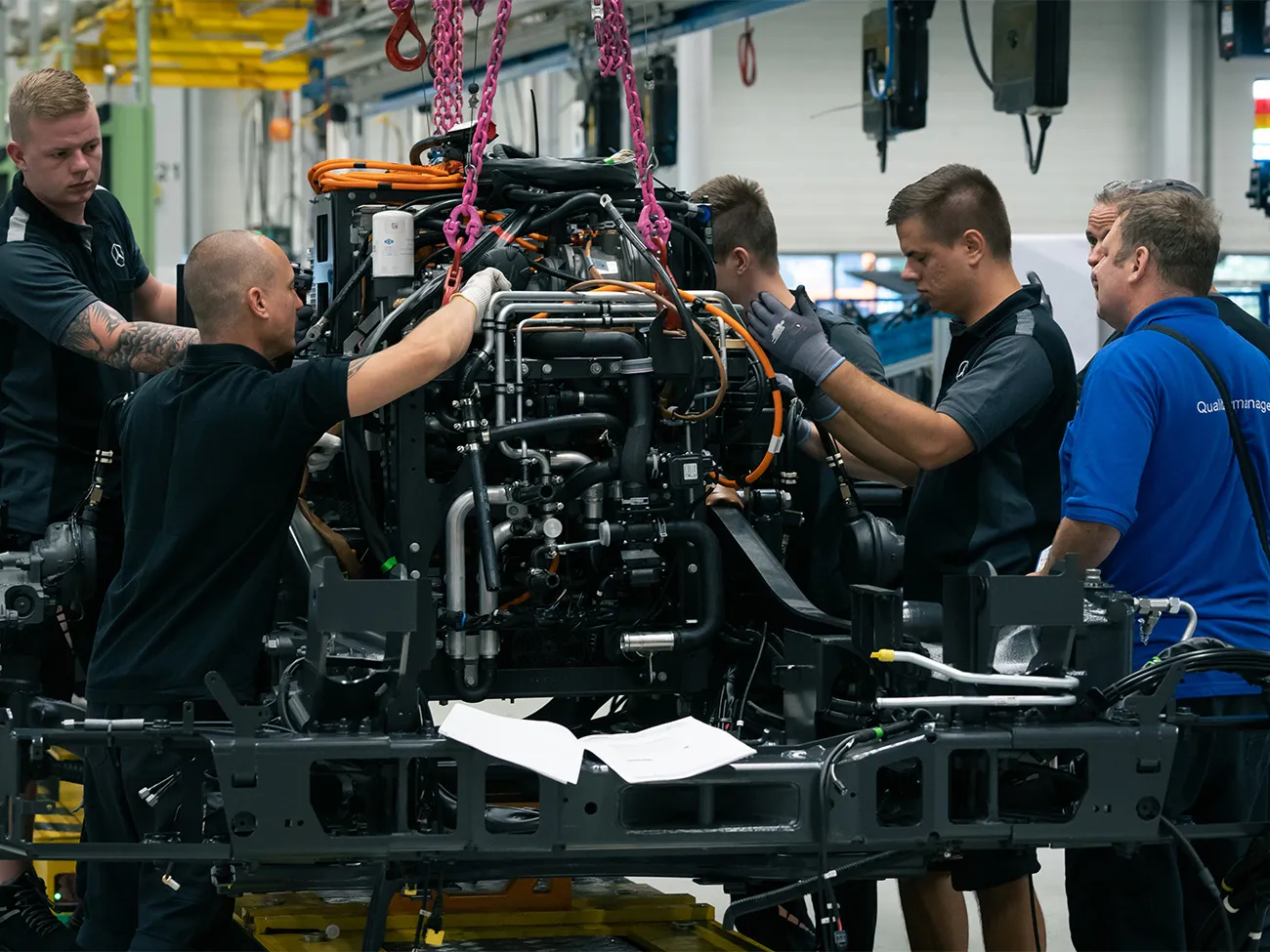
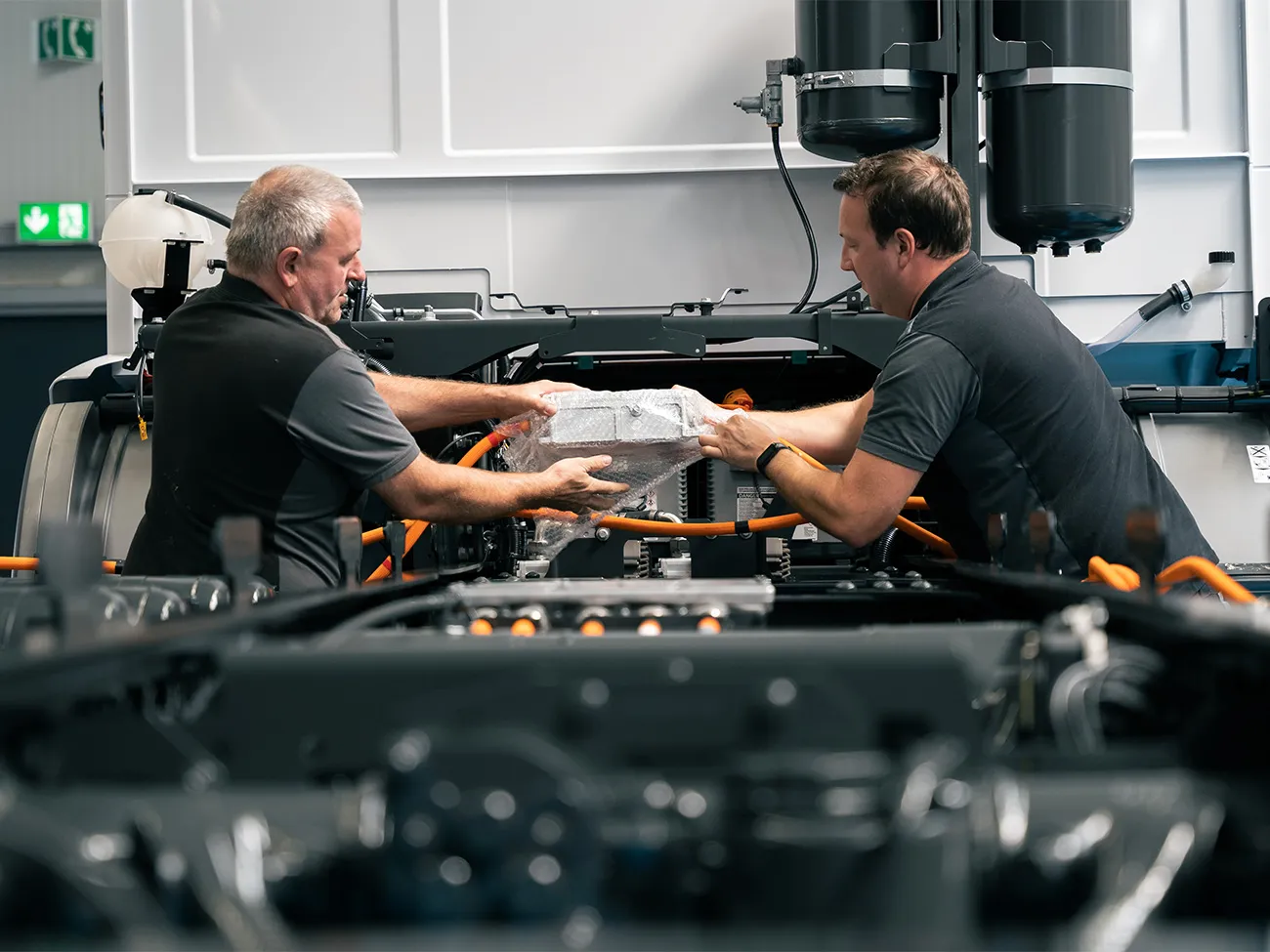
The eEconic is built on the existing Mercedes-Benz Special Trucks assembly line, alongside trucks with combustion engines, with production able to switch flexibly between the two. Once the vehicle has been largely assembled, the eEconic moves to the Future Truck Center for electrification, where, like the eActros, it is fitted with electric drive components. The HV batteries and charging units, among other components, are installed in several production steps. Once all HV components have been fitted, the entire system can be commissioned and the truck is ready to drive.
As part of its transition to CO2-neutral transport, the Wörth plant has set itself the goal of continuously developing employees’ skills for the production of trucks with new drive systems. This also means that employees working on HV vehicles such as the eEconic receive specific training and further development. Employees at the Wörth plant have been qualified to produce eTrucks since 2018. So far, around 2,700 employees have been trained at the in-house training centre to work with HV vehicles and HV components. They have gained the necessary knowledge and are ideally prepared for the new production requirements.
Fully electric municipal operations
The eEconic’s key technical specifications are largely identical to those of the eActros. As a refuse collection vehicle, the eEconic is designed to cover most typical Econic collection routes in a single shift without recharging. The electric drivetrain makes a flat cab floor possible, making it easier to move around the cab. This is a major advantage when the driver wants to exit through the folding door on the passenger side, away from traffic. The modern, intuitive Multimedia Cockpit is another significant upgrade over the conventional Econic. Another equipment highlight is the panoramic glass. The coated, heated Thermocontrol windscreen also prevents misting, improving the driver’s view of the road. It also reduces the amount of solar heat entering the cab. An important safety advantage in urban traffic: the eEconic comes as standard with the S1R Sideguard Assist turning assistant and fifth-generation Active Brake Assist emergency braking system.
Daimler Truck: zero-emission fleet by 2039
The start of eEconic production marks another milestone on Daimler Truck’s path towards CO2-neutral transport. To help decarbonise the industry, the company aims to achieve CO2-neutral road transport by 2050. It therefore aims to offer only zero-emission trucks in its key sales regions of North America, Europe and Japan from 2039. The so-called ‘dual strategy’ focuses on two complementary technologies for powering its drivetrains: batteries and hydrogen.
Question about this story? Ask your question
Keep following this
Get an email when a new story is published. No account needed.
- ThemeTowards low-emission equipment and transport
- SubjectGeneral







