









Daimler Truck AG and Volvo Group fully commit to hydrogen fuel cells
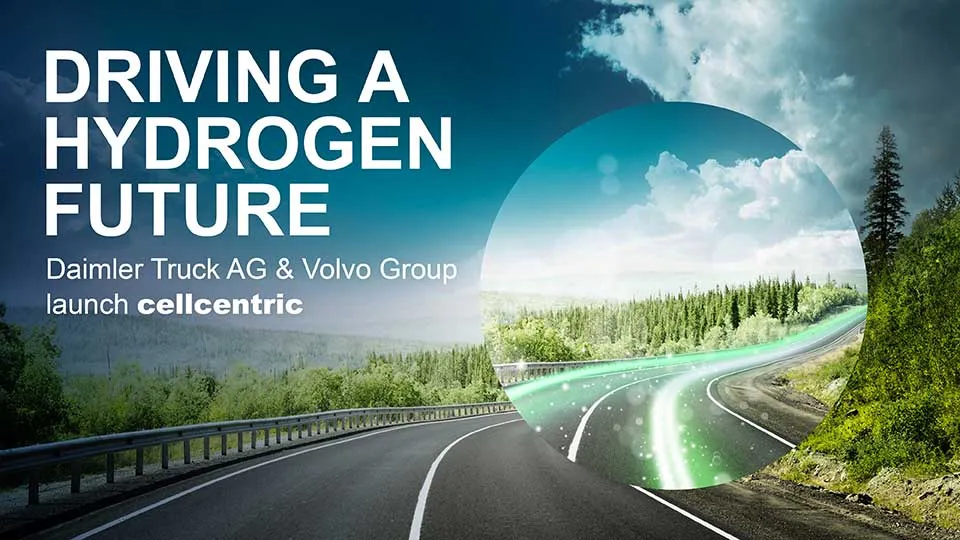
Launch of the new joint venture, cellcentric.
Daimler Truck AG and Volvo Group, two market leaders in the commercial vehicle sector, today presented the roadmap for cellcentric, their pioneering new joint venture for fuel cell technology. The sector’s first commitment of this kind aims to accelerate the use of hydrogen fuel cells in long-haul trucks and other applications. Cellcentric aims to become a leading global manufacturer of fuel cell systems and will build one of the largest plants for their series production, due to start operations in 2025. To accelerate the implementation of hydrogen-based fuel cell systems, cellcentric’s two shareholders are calling on the EU to create a harmonised policy framework that can turn the technology into a viable commercial solution.
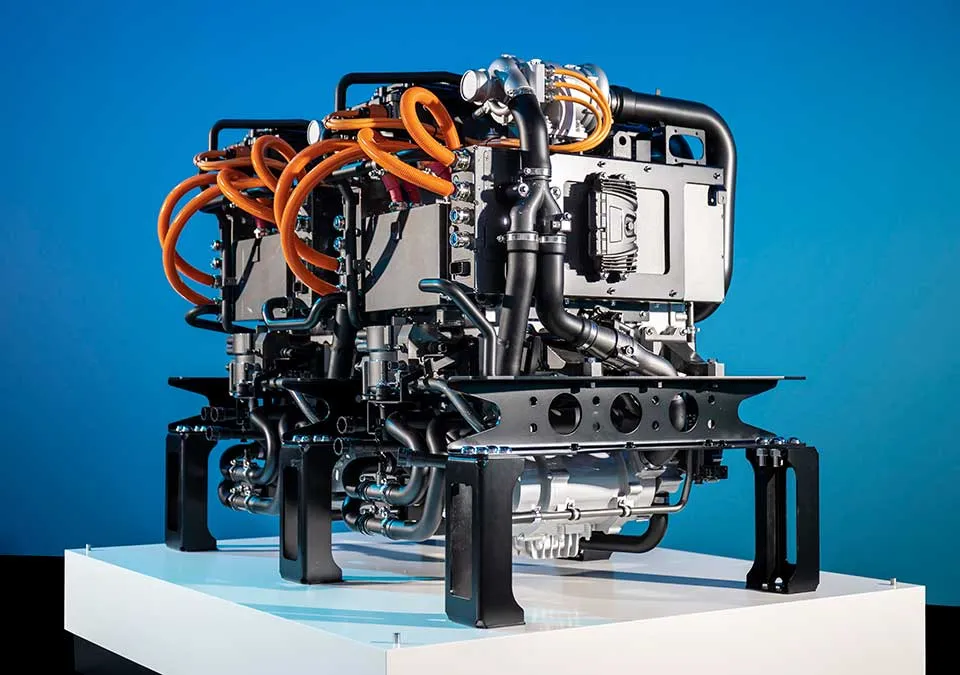
These ambitions were unveiled today at an exclusive digital launch hosted by Martin Daum, CEO of Daimler Truck AG, and Martin Lundstedt, CEO of Volvo Group. Founded to meet the 2050 sustainable transport targets and help build a carbon-neutral Europe, cellcentric will develop, manufacture and sell fuel cell systems for long-haul trucks and other applications. The joint venture draws on decades of expertise and development work at both Daimler Truck AG and Volvo Group.
Daimler Truck AG and Volvo Group say that battery-electric and fuel cell vehicles can complement each other, depending on individual customers’ use cases. Battery-electric vehicles are better suited to lighter loads and shorter distances, while fuel cell vehicles are preferred for heavier loads and longer distances.
Martin Daum, Chairman of the Board of Management of Daimler Truck AG and Member of the Board of Management of Daimler AG: “Hydrogen-powered fuel cell trucks are essential to providing CO2-neutral transport in the future. Together with battery-electric vehicles, they will enable us to offer our customers the best locally CO2-neutral transport solutions for every application. This is not possible with battery-electric trucks alone. That is why, together with our partner Volvo Group, we are committing to our fuel cell business, cellcentric. We are doing everything we can to accelerate technology development and prepare for series production. When it comes to the hydrogen infrastructure we need, it is clear that ‘green’ hydrogen is the only sensible choice in the long term.”

Martin Lundstedt, CEO of Volvo Group: “Our shared ambition is to meet the targets of the Paris Agreement and achieve CO2 neutrality by 2050 at the latest. We are convinced that hydrogen technology will play a crucial role in reaching this milestone. At the same time, we know there is much more to do than simply electrifying machines and vehicles. Closer cooperation between public and private stakeholders is needed to develop the technology and infrastructure required. We therefore call on policymakers and governments around the world to take joint action to make hydrogen a success. Partnerships such as cellcentric are crucial to delivering on our commitment to carbon-free road transport.”
With the backing of Daimler Truck AG and Volvo Group, Europe’s major truck manufacturers are calling for a network of high-performance hydrogen refuelling stations for heavy-duty vehicles. The network should comprise 300 stations by 2025 and around 1,000 by 2030 at the latest. This joint initiative, which uses hydrogen as a carrier for green electricity to power long-haul trucks electrically, is crucial to making road transport carbon-free.
As CO2-neutral trucks are currently considerably more expensive than conventional vehicles, a policy framework is needed to ensure demand and affordability. Daimler Truck AG and Volvo Group say this could be achieved through incentives for CO2-neutral technologies and a tax system based on carbon emissions and energy content. An emissions trading system could be another option.
Clear roadmap for series production of fuel cell systems and fuel cell trucks
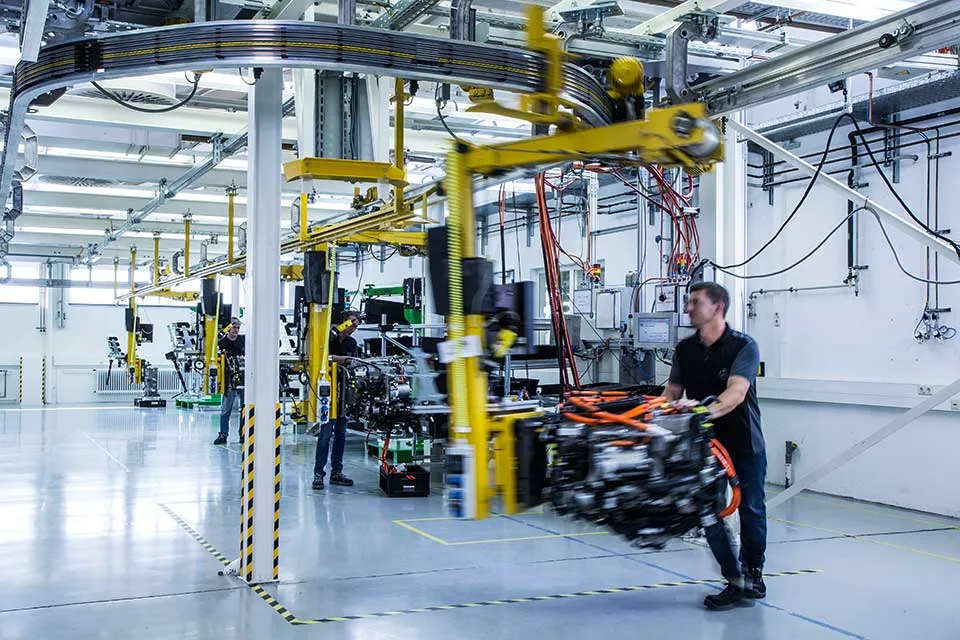
Cellcentric is currently drawing up plans for large-scale series production. More details and a decision on the production site will be announced during 2022. As a key step towards series production, preparations are under way to manufacture pre-series models at a new site in Esslingen near Stuttgart. At the same time, cellcentric is scaling up its prototype output.
Daimler Truck AG and Volvo Group aim to deploy fuel cell trucks for customer field testing in three years’ time, with the goal of moving to series production in the second half of this decade. All vehicle-related activities remain independent, as both companies continue to compete across all vehicle and product ranges, and in the integration of fuel cells into their products.
Joint venture for fuel cell systems
Daimler Truck AG and Volvo Group established cellcentric on 1 March 2021. To do so, Volvo Group acquired a 50 per cent stake in the existing Daimler Truck Fuel Cell GmbH & Co. KG for approximately 600 million euros, on a cash-free, debt-free basis. In November 2020, Daimler Truck AG and Volvo Group signed a binding agreement for the joint venture. A non-binding agreement had already been signed in April of the same year.
Cellcentric employs more than 300 highly specialised experts in interdisciplinary teams at sites in Nabern, Stuttgart (Germany) and Burnaby (Canada). Around 700 patents have been issued to date, underlining the company’s leading role in technological development.
Question about this story? Ask your question
Keep following this
Get an email when a new story is published. No account needed.
- ThemeConstruction transport on road and site
- SubjectGeneral







