









Coronavirus
“Probably the word appearing most often in newspapers and news reports around the world today. It is affecting our daily lives and society in such a profound way that we cannot ignore it. But first, let’s go back a little further in time. Sigma, the trade federation for importers of construction machinery and materials handling equipment, recently presented its economic report for 2019.” Those are the words of Dries Van Haut, chairman of Sigma vzw.
Dries Van Haut: “It goes without saying that 2019 was a good year for our sector economically. Thanks to a strong finish in December, we even did considerably better than in the record year of 2018. All the machine categories with higher sales volumes performed significantly better, with increases of between 4 and 17%. Only wheeled excavators and telehandlers remained more or less unchanged. But those were still excellent results, of course. Time to get the champagne out, then. But at that point, the now inevitable C-word came into view.”
“A fall in sales figures was written in the stars. Trees do not grow to the sky. The big question was whether it would be a gentle decline or a sudden crash. And, in addition, how far would we fall? In the absence of any special crises, a gentle downturn was the most widely heard, and above all, hoped-for scenario.”
“But then the coronavirus pandemic suddenly struck, bringing economic activity around the world to a sudden halt. Our ‘special crisis’ had arrived and immediately had a severe impact on our business. It is still difficult to determine how serious and far-reaching the effects will be. But the key question will undoubtedly be how long it will last. With restrictions being eased, we are seeing the economy start to pick up again. Construction, industry, distribution and logistics are all back at work, but everywhere productivity is lower as a result of the necessary measures to prevent infection. Falling revenues and higher costs mean less investment. In many cases, this does not just mean postponement, but cancellation: orders are being cancelled.”
“Rental companies have also been particularly hard hit. Because activity came to an almost complete standstill from one day to the next, their revenues also almost completely disappeared overnight. While investment purchases can be made later in the year, potentially bringing annual volumes back to a similar level, lost rental income is almost impossible to recoup, unless your rental fleet was severely underutilised. Rental companies are therefore postponing investment, especially given the considerable uncertainty about future workloads. Many Sigma member companies also rent out equipment themselves, but almost all generate significant sales revenue from rental companies. The impact will therefore be considerable.”
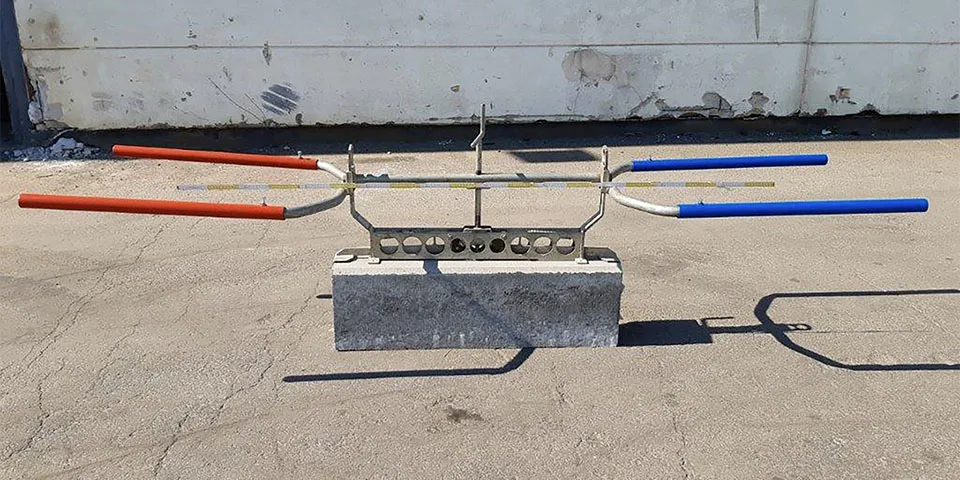
“The first major shock is behind us, and most of us have weathered it well. As employers and business leaders, we are grateful for the support measures made available to us: temporary unemployment, deferral of capital repayments, deferral of VAT payments, coronavirus loans … But now that recovery is gradually getting under way, we are also starting to look further ahead again. All those deferred payments will of course eventually have to be repaid, almost certainly from within a contracted economy. To avoid disastrous situations in the longer term, economic activity needs to be boosted again as soon as possible, without jeopardising public health, of course. A good example is the accelerated completion of roadworks at busy locations during lockdown. It is rare to see such a logical and decisive measure taken in our little corner of Belgium. More of the same, please! With less traffic, these works cause far less disruption, or none at all. They have also enabled a number of companies to come out of lockdown safely and shown them that work can still be carried out with a few creative adjustments. The notorious kerb-grab with extended handles is already an almost proverbial example in the construction sector of how a small, creative change can make working safely possible.”
“But government stimulus needs to continue. We still have a long way to go before we have recovered from this crisis. It will also take a long time to earn back and repay all the arrears we are building up now. That will almost certainly take much longer than defeating the virus once and for all. Hence my twofold appeal to governments: extend temporary support measures for as long as necessary to emerge from this situation in good physical and economic health, and ensure there are sufficient, and above all rapid, investments and interventions to maintain activity in logistics, industry and construction.”
“The first request is fairly obvious. I understand that at the start of the crisis it was impossible to predict how long it would last, so the measures adopted were given fairly arbitrary time limits. But now that it is clear we will have to live with restrictions on our social and economic lives for some time yet, support measures need to remain in place for longer. Our socioeconomic network is a complex, interconnected whole. School closures, for example, can make it difficult for some employees to work because they cannot rely on grandparents for childcare. As a result, they cannot come to work, limiting activity at certain companies. Their suppliers then also have less work and may have to put some of their employees on temporary unemployment. Deferring a number of payments or repayments for 6 or 12 months was a good way to provide immediate breathing space for the companies that needed it, but in many cases that will not be long enough. A longer-term solution is therefore needed.”
“Business leaders also call for more investment and investment incentives in other, more normal circumstances. But now the need is greater than ever, and above all, action must not be delayed. All too often in this country, we get bogged down in endless administrative or even legal procedures before anything can be delivered. It is high time to put an end to that and get an accelerated investment programme under way. Recent press reports, however, are far from encouraging on that front. Politicians are once again increasingly focused on political games rather than taking measures to give our economy the boost it needs. The formation of an effective government seems further away than ever. The fact that we have no fewer than 5 ministers involved in one way or another in the supply of face masks is met with wry smiles abroad. We Belgians just shrug our shoulders. It is hardly surprising, then, that the masks had still not been delivered when this article was written. By now, almost everyone has managed to get hold of some. We cannot build new infrastructure ourselves. We need our government to do that. Let’s hope it gives this the priority it deserves.”
“It is already clear that the world will not look the same after the coronavirus crisis as it did before. People and businesses have adapted their behaviour to the situation. Some will revert to business as usual after the crisis, but others will have seen the benefits of new methods or will want to become more resilient to threats for good. It is also crystal clear that we have entered a Darwinian ‘survival of the fittest’ situation. Responding quickly and flexibly to changing market conditions has always been a prerequisite for success. Today and tomorrow, it will be essential for survival.”
“I would like to end with the words of Winston Churchill: ‘Difficulties mastered are opportunities won’.”
Question about this story? Ask your question
Companies in this story
Keep following this
Get an email when a new story is published. No account needed.
- SubjectGeneral
- CompanyVan Haut







