









Cold, ice and snow successfully overcome: Mercedes-Benz Trucks tests electric trucks in Finland
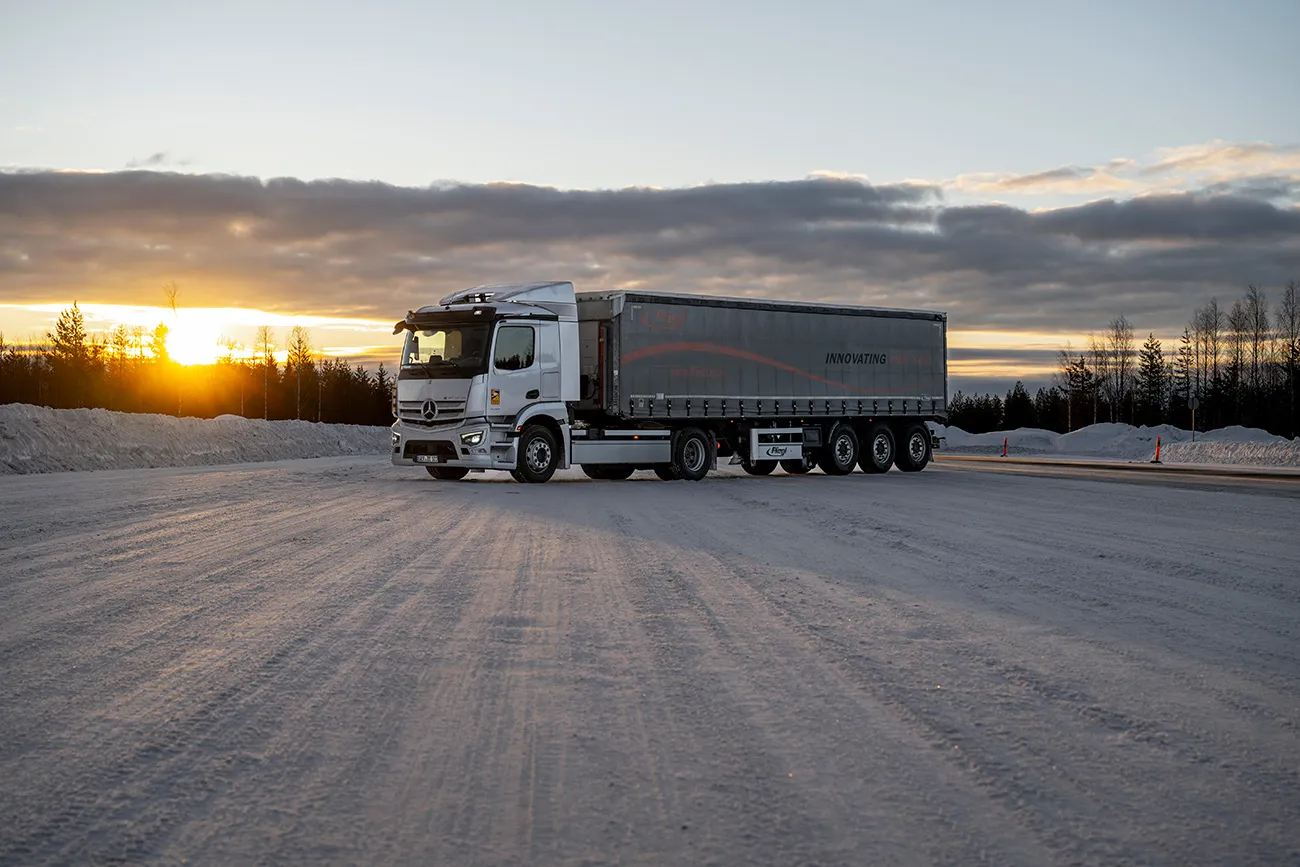
• Mercedes-Benz Trucks’ development and test engineers studied the operational capabilities of the eActros LongHaul and eActros 300 tractor unit in extreme conditions, with temperatures down to -25 °C.
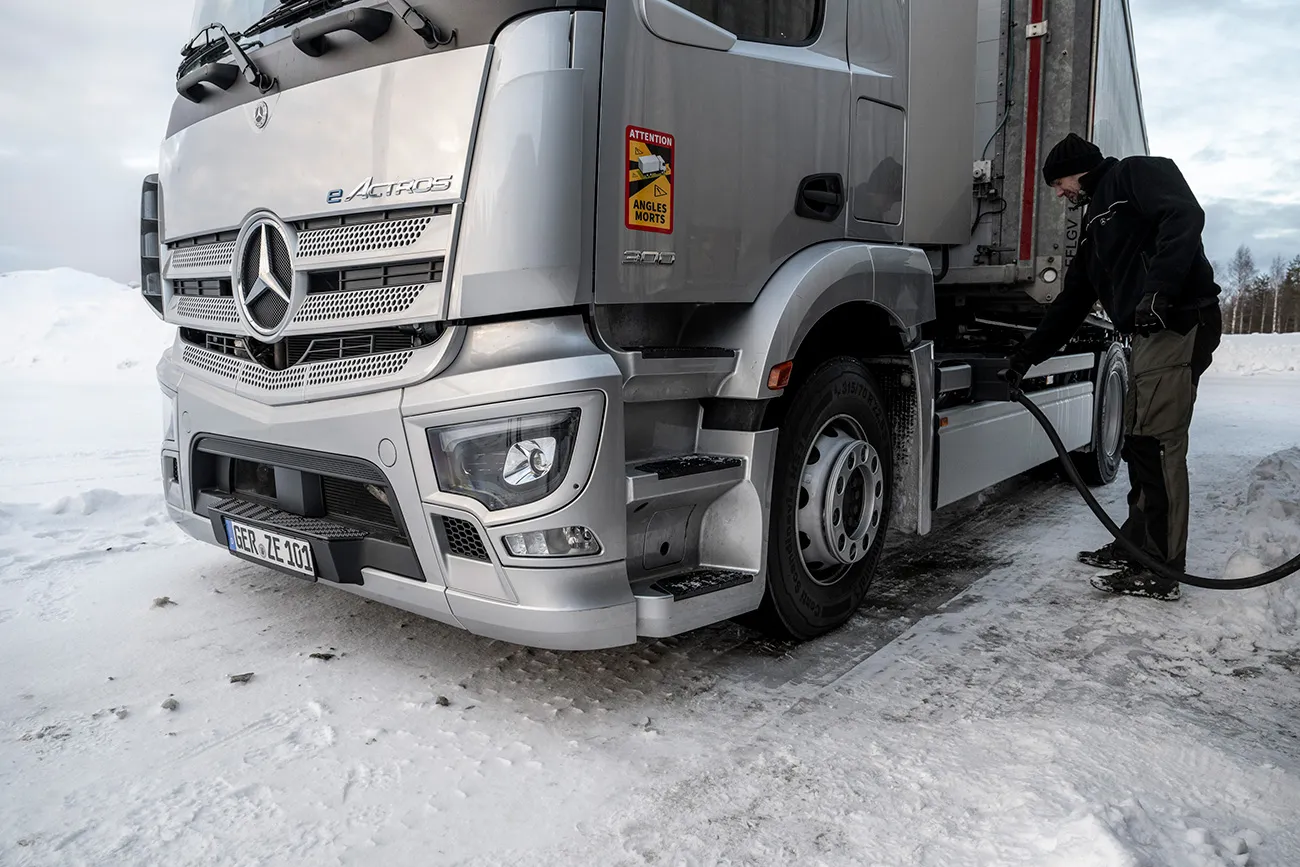
• The tests were mainly intended to assess the effects of extreme cold on driving behaviour, ergonomics and comfort. The engineers also investigated criteria such as starting performance, protection of the drive components against low temperatures, thermal management, charging characteristics and sensor robustness.
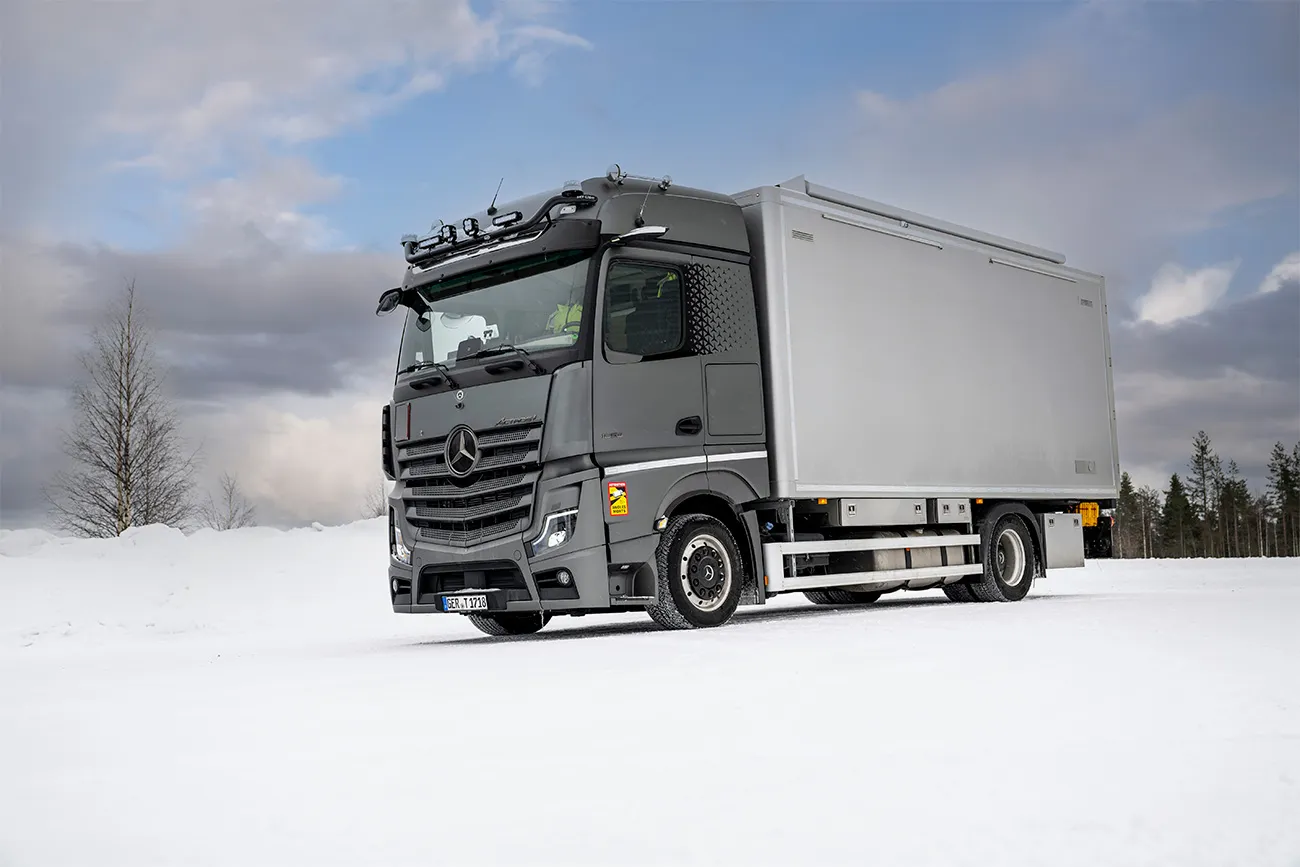
• Winter testing is also essential for conventionally powered production models such as the Actros, helping to further optimise their functions and systems.
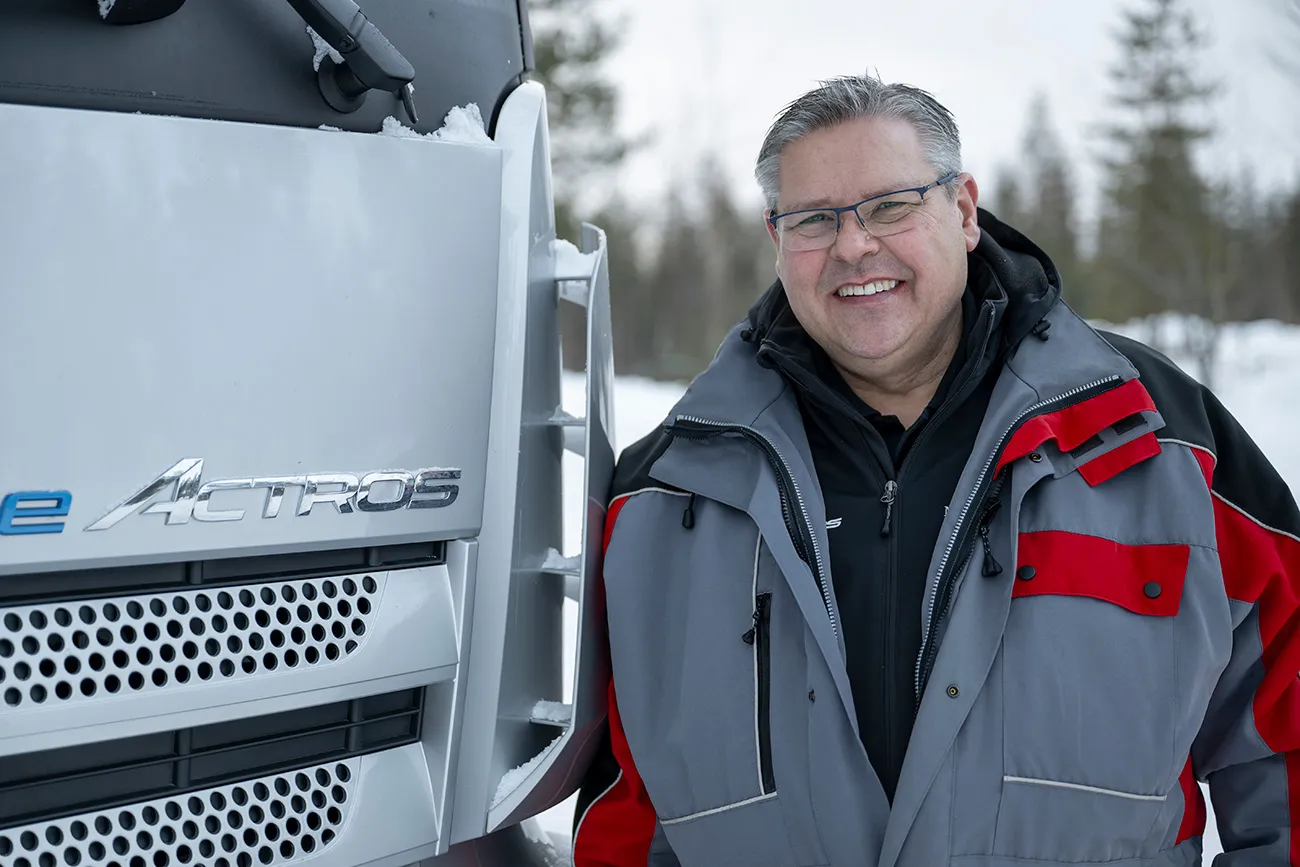
• Dr Christof Weber, Head of Global Testing at Mercedes-Benz Trucks: “These extreme winter tests are an essential part of our development processes for alternative drive systems. Given the intense competition in the sector, transport companies must be able to rely on our electric trucks throughout the year, just as they do on our conventional vehicles.”
Transport companies expect the same from battery-electric trucks as they do from their conventional diesel-powered counterparts. Even in challenging weather conditions such as cold, ice and snow, the vehicles must be able to carry out their work reliably. With this in mind, the winter tests conducted by Mercedes-Benz Trucks in Rovaniemi, Finland, once again proved to be important endurance tests. A range of models took part, including prototypes of the battery-electric eActros Longhaul, which will enter production in 2024, the tractor unit version of the battery-electric eActros 300, and the conventionally diesel-powered Actros L. The development and test team put the various models through their paces in extreme climatic conditions, including snowy and icy roads, strong winds and temperatures down to -25 °C, to identify potential areas for improvement.
Dr Christof Weber, Head of Global Testing at Mercedes-Benz Trucks: “These extreme winter tests are an essential part of our development processes for alternative drive systems. Given the intense competition in the sector, transport companies must be able to rely on our electric trucks throughout the year, just as they do on our conventional vehicles. That is why our test engineers put the vehicles through their paces in Finland for six weeks.
Comprehensive catalogue of criteria
During their journey to Finland, Mercedes-Benz Trucks’ development engineers tested all the vehicles’ functions and systems in real-world conditions. These included the turning assistant, part of the Active Sideguard Assist system, and the Active Drive Assist lane-keeping assistant in the Actros L. As they crossed several national borders, the engineers were able to investigate the impact of country-specific road markings, traffic signs and digital map data on the performance of the trucks’ driver assistance systems. And because the trucks were tested throughout the day, aspects such as driver’s seat comfort could also be evaluated.
Focus on battery-electric trucks during tests in the Arctic Circle
During tests with the eActros LongHaul and eActros 300 tractor unit, the experts paid particular attention to battery performance and the electric drive in extreme weather conditions. They tested aspects such as starting performance and protection of the drive components against low temperatures, as well as the software and interfaces. The heating and energy management systems were also put through intensive testing. Both systems ensure that the temperature of the drive system and cab is regulated correctly and efficiently, even at low ambient temperatures.
The tests showed that the eActros LongHaul generally heats its cab faster than a diesel truck, thanks to its smaller, more powerful heating circuit. Nevertheless, it is advisable to activate preconditioning while the electric truck is charging, as otherwise the heating system draws energy from the drive battery. After preconditioning, the eActros LongHaul loses less range, even at extremely low temperatures.
Dr Christof Weber, Head of Global Testing at Mercedes-Benz Trucks: “We are very pleased with our test results. When we tested the batteries and electric drive at extreme temperatures and assessed driving characteristics on slippery, icy roads, we found that our battery-electric trucks remain fully operational even in severe winter weather.”
The winter tests also focused on driving and braking performance on surfaces with varying levels of grip, as well as the effect of slush on the operation of sensors and driver assistance systems, for example. The team also tested how the Trailer Stability Assistant can reduce the risk of skidding when cornering or making evasive manoeuvres on winter roads, and how MirrorCam performs in the contrasting conditions of ice and snow.
Series production to start soon
The tractor unit version of the eActros 300, first shown at IAA Transportation 2022 in Hannover, can tow all standard European semi-trailers, provided the maximum permitted overall length of the tractor-trailer combination is observed. The electric truck is based on the same technology as the eActros 300/400. Three battery packs, each with an installed battery capacity of 112 kWh[1], provide a range of up to 220 kilometres[2] on a single charge. Series production is expected to start in the second half of 2023.
The eActros LongHaul for long-distance transport will be ready for series production in 2024. Mercedes-Benz Trucks presented a prototype of the electric truck at IAA Transportation in Hannover last year. The series-production eActros LongHaul will have a range of around 500 kilometres on a single charge and can be charged at high-power charging stations. At IAA, the ‘International Truck of the Year’ jury presented it with the ‘2023 Truck Innovation Award’. The eActros LongHaul uses batteries with lithium iron phosphate (LFP) cells. They are distinguished primarily by their long service life and higher usable battery capacity.
1 Nominal capacity of the new battery, based on internally defined boundary conditions, may vary depending on use and ambient conditions.
2 Range was measured internally under optimal conditions, with three battery packs, after preconditioning and in partially loaded distribution traffic with a semi-trailer, at an outside temperature of 20 °C.
Een zakelijke vraag aan Mercedes-Benz Trucks Belgium? Get in touch
Companies in this story
Keep following this
Get an email when a new story is published. No account needed.
- ThemeConstruction transport on road and site
- SubjectGeneral
- CompanyMercedes-Benz Trucks Belgium







