









Belgium’s climate for electric equipment is still fairly cool
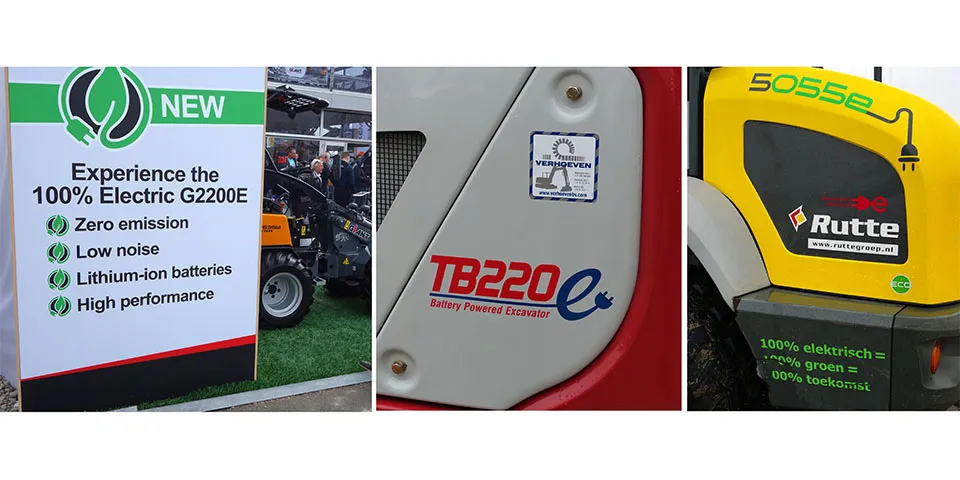
Contractors avoiding cities with low-emission zones. It reflects Belgium’s ‘cool’ climate towards the electrification of construction equipment. On this front, our neighbours to the north in the Netherlands are ahead of us. Let’s take a look at the most significant benefits and the inevitable drawbacks.
A striking finding from the Flemish Confederation of Construction (VCB): even if it means losing revenue, a quarter of contractors would rather avoid cities where a LEZ (low-emission zone) is in force. These are contractors who live a long way from those cities and do not want the hassle of applying for a day pass, making more difficult plans, having to look up information and, of course, risking fines. This group clearly shows that a (large) part of the construction sector is still unprepared for a trend that we will see increasingly often in urban areas: out with the polluters, make way for clean workers.
Sigma chairman Dries van Haut had already made the point in his New Year’s speech: “The defining social issue of 2019 was undoubtedly the climate”. He warned against the Dutch situation with nitrogen and PFAS standards, hoping we would not have to experience the same problems in our country. At the same time, he recognises that these problems will quickly widen the Netherlands’ lead in the electrification of construction equipment. They have to, as the government is raising requirements in more and more major cities. The same will of course happen in Belgium, and it would be a great shame if we had not taken precautions in time.
Benefits
Electric construction equipment offers major advantages in urban areas: there are no longer any emissions of harmful substances, and work can be carried out almost silently. This applies just as much to excavators, cranes and access platforms as to vans, lorries, concrete mixers, mobile cranes … Choosing electrification brings the ‘emission-free construction site’ within reach. In the Netherlands, construction companies have already successfully used emission-free working as a competitive advantage in tenders. The same will happen here.
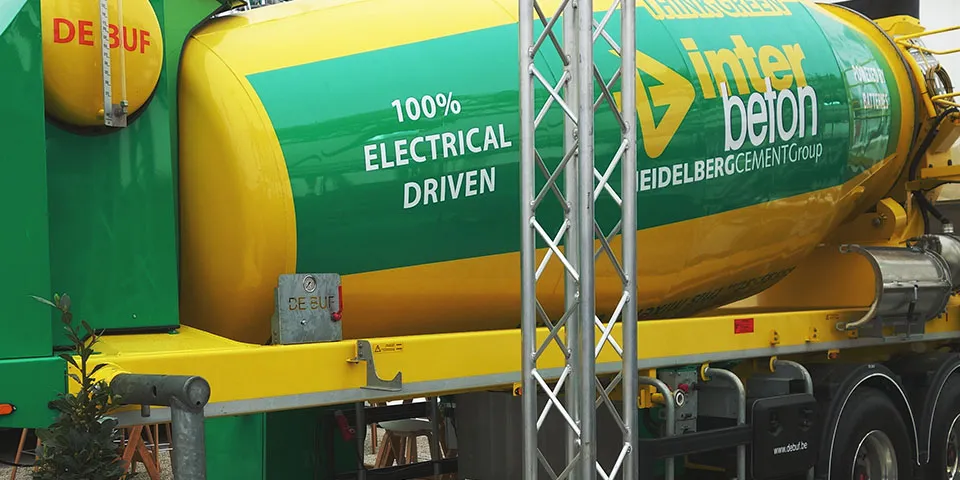
Construction equipment electrification: Electric construction equipment offers major advantages in urban areas: there are no longer any emissions of harmful substances, and work can be carried out almost silently.
Drawbacks
It should be said from the outset that some of the drawbacks will be temporary, as scientists and manufacturers/suppliers are working hard to turn them into advantages. Take the battery that makes electric drives possible. It is still heavy and expensive, with limited capacity, but significant improvements can be expected over the next five years. The current battery is the main reason why electric equipment costs more to buy and cannot run continuously for a full working day. That will change in time.
The current battery is also why large equipment, weighing around 15 tonnes or more, has barely been electrified. It would have to carry too many heavy batteries with too little capacity, which is not technically or financially viable. We therefore cannot do away with the diesel engine until better, cheaper batteries come onto the market. However, there are also important developments in diesel engines: modern versions emit fewer and fewer harmful substances.
Alternatives
Finally, several alternatives are emerging, or, in the case of hybrids, making a comeback. We are seeing them in vans such as the new Ford Transit Custom Hybrid. It is an electrically driven van with a petrol-powered auxiliary engine. This engine charges the battery and comes into play on longer journeys outside the city, where emissions are less of a problem. We are also seeing a hybrid approach with concrete mixers: they drive using the diesel engine, but once on site, the drum runs silently on electricity alone.
Alternatives such as hydrogen and the use of LNG and similar fuels are also developing rapidly, but for now they are less suitable for use in (heavy) construction equipment. But there could be surprises there too, because innovation never stands still. This article could therefore be largely out of date by next year or the year after. All the better.
Question about this story? Ask your question
Companies in this story
Keep following this
Get an email when a new story is published. No account needed.
- SubjectGeneral
- CompanyVan Haut







