









Alpine drive with batteries and hydrogen: Daimler Truck’s CO2-neutral trucks demonstrate their capabilities
• Electric truck demonstrations in Tyrol at altitudes of up to 1,560 metres above sea level
• In action: prototypes of the hydrogen fuel cell-powered Mercedes-Benz GenH2 Truck and the battery-electric Mercedes-Benz eActros 300 Tractor Unit
• Clear commitment to a dual strategy based on battery and hydrogen power
• Dr. Dalibor Dudic, Head of Vehicle Projects at Mercedes-Benz Trucks, Daimler Truck AG: “Hydrogen- and battery-based powertrains are essential to ensuring fully emissions-free transport in the future. In the distribution sector, the battery-electric eActros is already in regular use with numerous customers across Europe. The eActros LongHaul is in the final stages before series production and will offer predictable long-distance transport. In the second half of the decade, the series-production version of our GenH2 Fuel Cell Truck will follow, for particularly challenging operating conditions. Here in Tyrol, we have shown that both powertrain technologies can operate with complete reliability and effectiveness.”
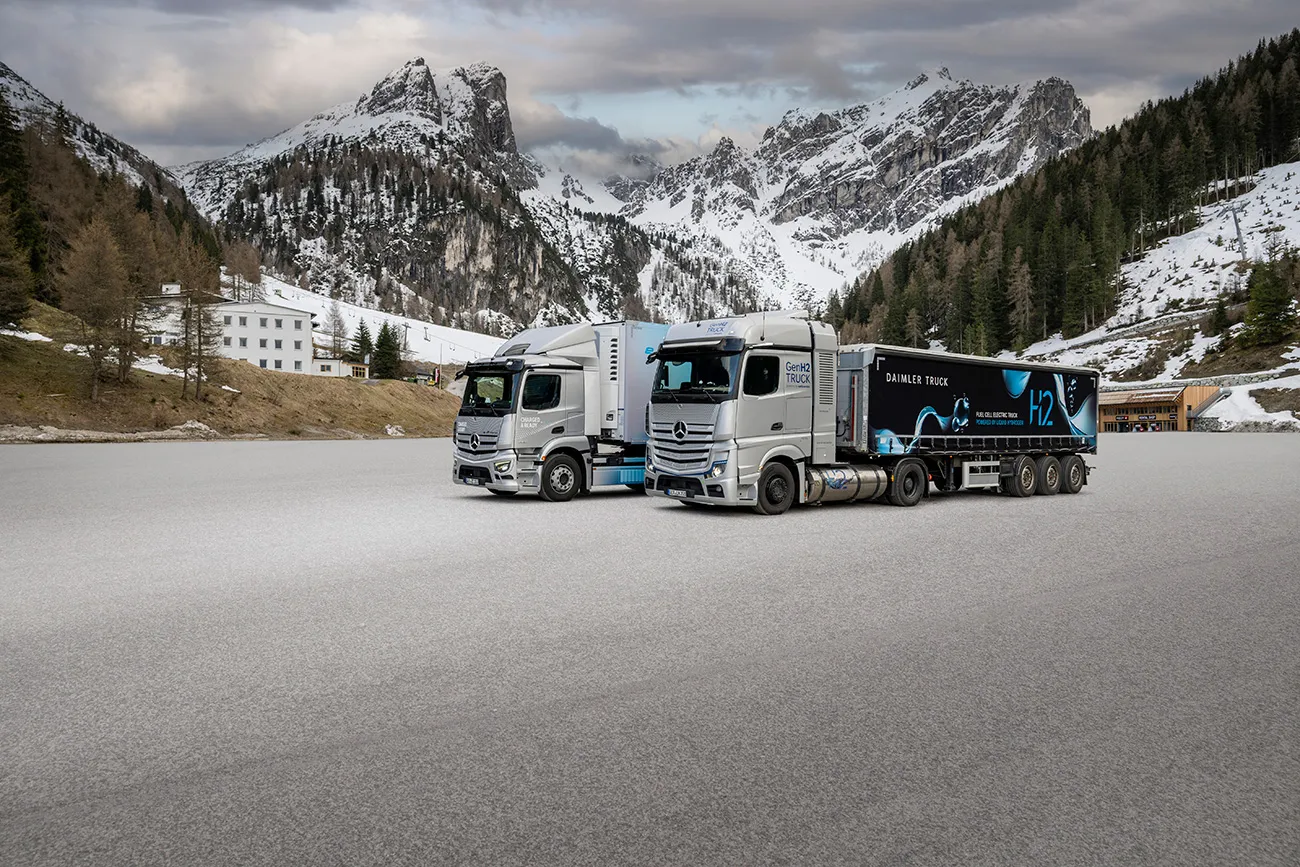
Daimler Truck’s locally CO₂-neutral trucks have successfully completed demonstration drives in the heart of the Tyrolean Alps, reaching an altitude of 1,560 metres. Two prototypes of the hydrogen fuel cell-powered Mercedes-Benz GenH2 Truck took part in the test, as did a near-production-ready, battery-electric Mercedes-Benz eActros 300 Tractor Unit for distribution transport. With these vehicles, Daimler Truck demonstrates that both CO₂-neutral powertrain technologies can meet customers’ varied operating requirements. To achieve this goal, the manufacturer has set its strategic direction and is consistently pursuing a dual approach to electrifying its range, using battery power on the one hand and hydrogen on the other.
Dr. Dalibor Dudic, Head of Vehicle Projects at Mercedes-Benz Trucks, Daimler Truck: “Hydrogen- and battery-based powertrains are essential to ensuring fully emissions-free transport in the future. In the distribution sector, the battery-electric eActros is already in regular use with numerous customers across Europe. The eActros LongHaul is in the final stages before series production and will offer predictable long-distance transport. In the second half of the decade, the series-production version of our GenH2 Fuel Cell Truck will follow, with fuel cells for particularly challenging operating conditions. Here in Tyrol, we have shown that both powertrain technologies can operate with complete reliability and effectiveness.”
Fuel cell trucks: hydrogen can be used in two aggregate states
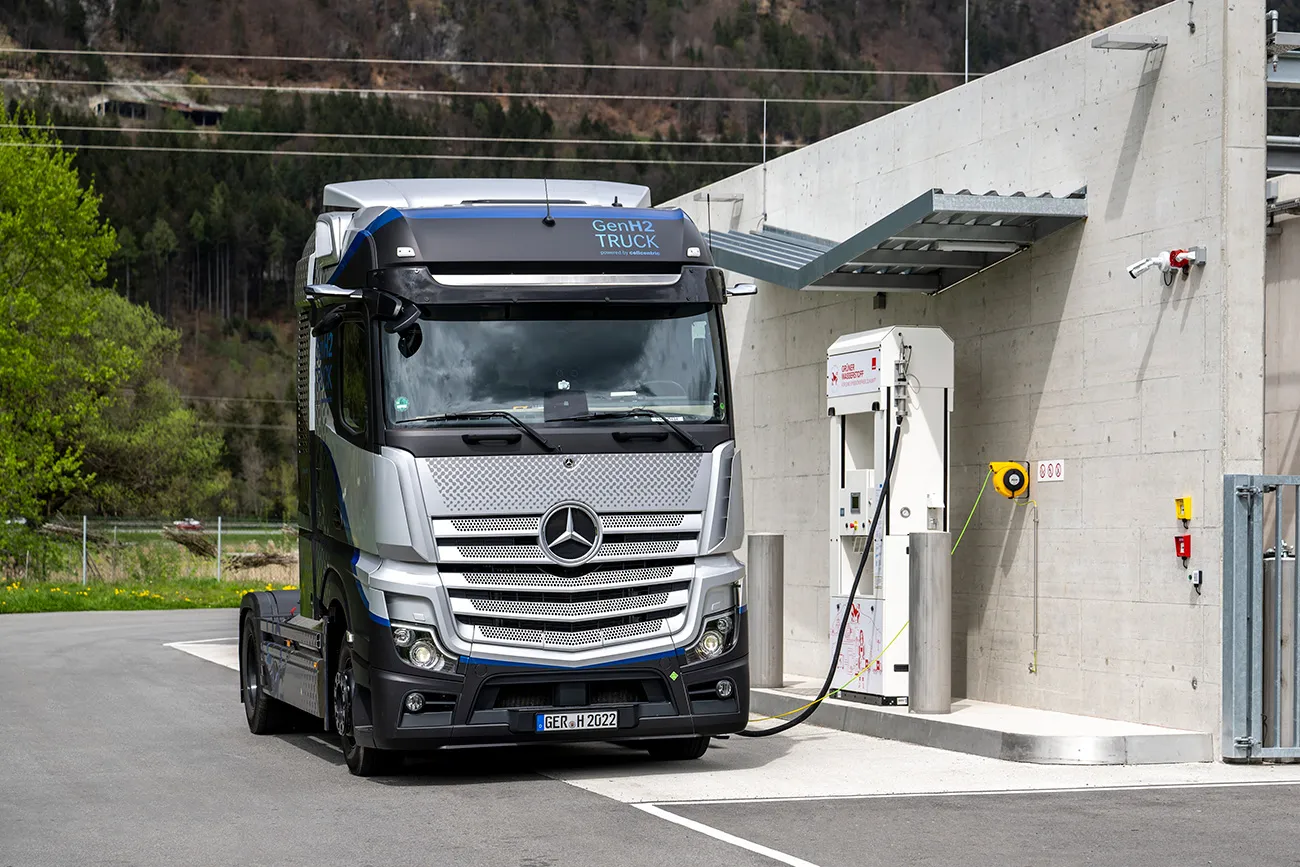
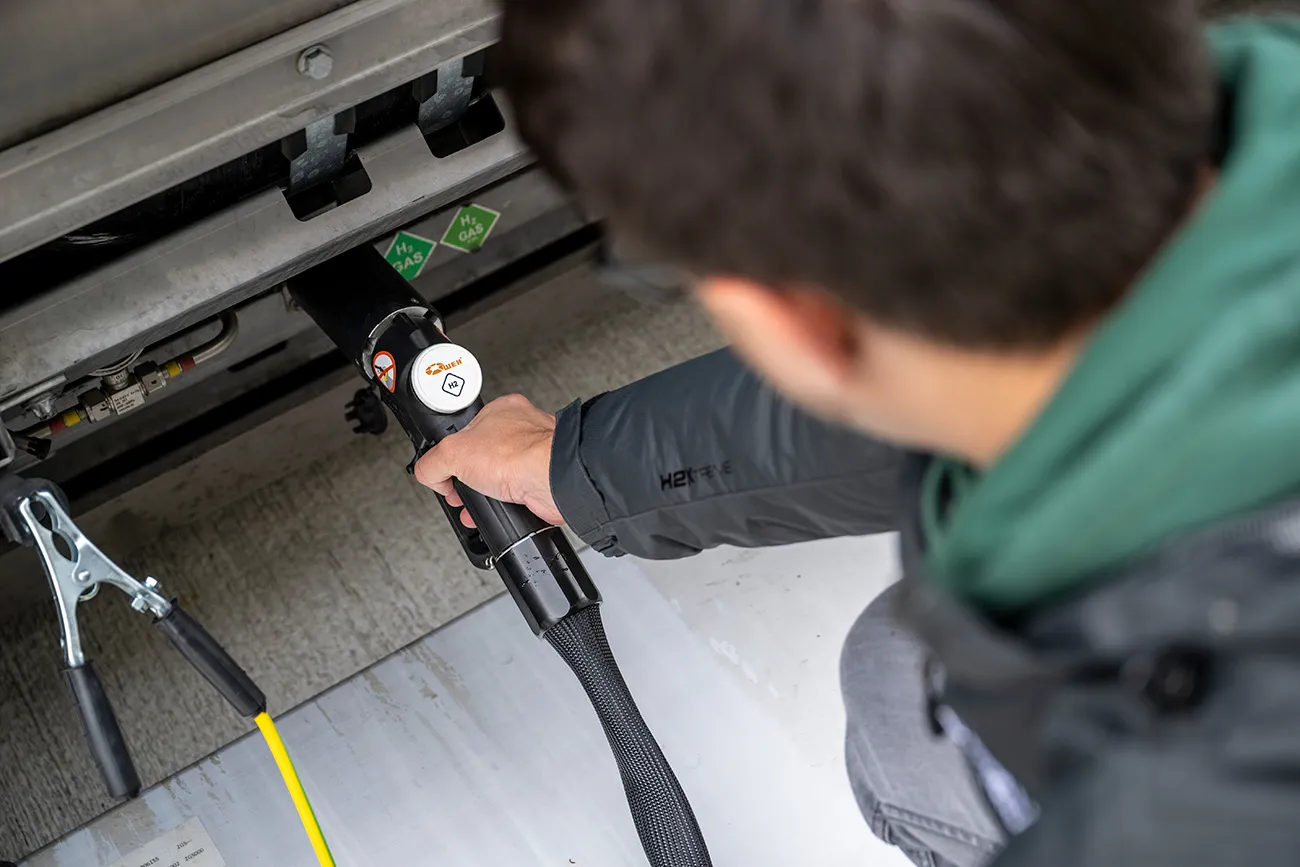
Daimler Truck sent two prototypes of its Mercedes-Benz GenH2 Truck to Tyrol. The liquid hydrogen-powered version covered a 70-kilometre route between Innsbruck and the Brenner Pass over several days. With around 2.5 million crossings a year, the Brenner Pass is one of the main arteries for European freight transport. The tractor-trailer combination had a gross vehicle weight of 40 tonnes for the drives. At the same time, another prototype of the GenH2 Truck, powered by gaseous hydrogen, covered a 40-kilometre route between Innsbruck and the village of Axamer Lizum, at an altitude of 1,560 m above sea level. The test demonstrated the use of fuel cells at different altitudes in challenging terrain. The vehicle was refuelled at a private hydrogen filling station operated by Austrian food producer MPREIS. At its headquarters in Völs, MPREIS produces green hydrogen directly from renewable energy sources at its own electrolysis plant and made it available to Daimler Truck for its test and demonstration drives.
In developing hydrogen powertrains, Daimler Truck favours liquid hydrogen. In this aggregate state, the energy carrier has a significantly higher energy density than gaseous hydrogen. This means more hydrogen can be refuelled, considerably increasing the vehicle’s range and matching the performance of conventional diesel trucks. The development target for the production-ready GenH2 Truck is a range of 1,000 kilometres or more. This makes the truck ideally suited to highly flexible and demanding applications, particularly heavy-duty long-distance transport. Series production of hydrogen trucks is expected to start in the second half of this decade.
Battery power for distribution transport: eActros 300 Tractor Unit to enter series production in autumn
The eActros 300 Tractor Unit has completed regular, practical testing in and around Innsbruck. The vehicle is compatible with all standard European trailers, subject to the maximum permitted overall length of the tractor-trailer combination. The electric tractor unit and trailer use the same technology as the eActros 300/400. Three battery packs, each with an installed capacity of 112 kWhi, provide a range of up to 220 kilometresii per charge. The eActros 300 Tractor Unit can be charged at outputs of up to 160 kW. The three battery packs then take just over an hour to charge from 20 to 80 per cent at a standard DC fast-charging station with a charging current of 400Ampèreiii. Last year, as part of a series of tests, the electric truck also successfully tackled the Arlberg Pass in Austria.
Some parts of the tests were carried out at an altitude of more than 1,800 metres above sea level. Series production of the tractor unit is due to start this autumn.
Battery power for long-distance transport: eActros LongHaul range to enter production in 2024
The eActros LongHaul has a range of around 500 kilometres per charge and is expected to be ready for production in 2024. The eActros LongHaul’s battery cells use lithium iron phosphate (LFP) technology. Their main distinguishing feature is their long service life. At charging stations with an output of around one megawatt, the batteries in the production version of the eActros LongHaul can be charged from 20 to 80 per cent in well under 30 minutes.
Daimler Truck consistently pursues a dual strategy based on hydrogen and batteries
“As one of the world’s largest commercial vehicle manufacturers, Daimler Truck is committed to the Paris Agreement. We have set ourselves the goal of offering only carbon-neutral new vehicles in our core markets (EU30, US, Japan) by 2039. Battery-electric trucks are the ideal choice for distribution transport, as well as for regular long-distance transport on predictable routes with suitable distances and charging options. Hydrogen powertrains, however, could be a better solution for highly flexible and particularly demanding heavy-duty and long-distance transport applications. In addition, the availability of suitable charging infrastructure and sufficient green electricity is crucial to a successful transition to emissions-free technologies. Daimler Truck is convinced that both technologies are needed to meet this energy demand quickly and cost-effectively.
Een zakelijke vraag aan Mercedes-Benz Trucks Belgium? Get in touch
Companies in this story
Keep following this
Get an email when a new story is published. No account needed.
- ThemeConstruction transport on road and site
- SubjectGeneral
- CompanyMercedes-Benz Trucks Belgium







