Wacker Neuson introduces HVO as an alternative fuel
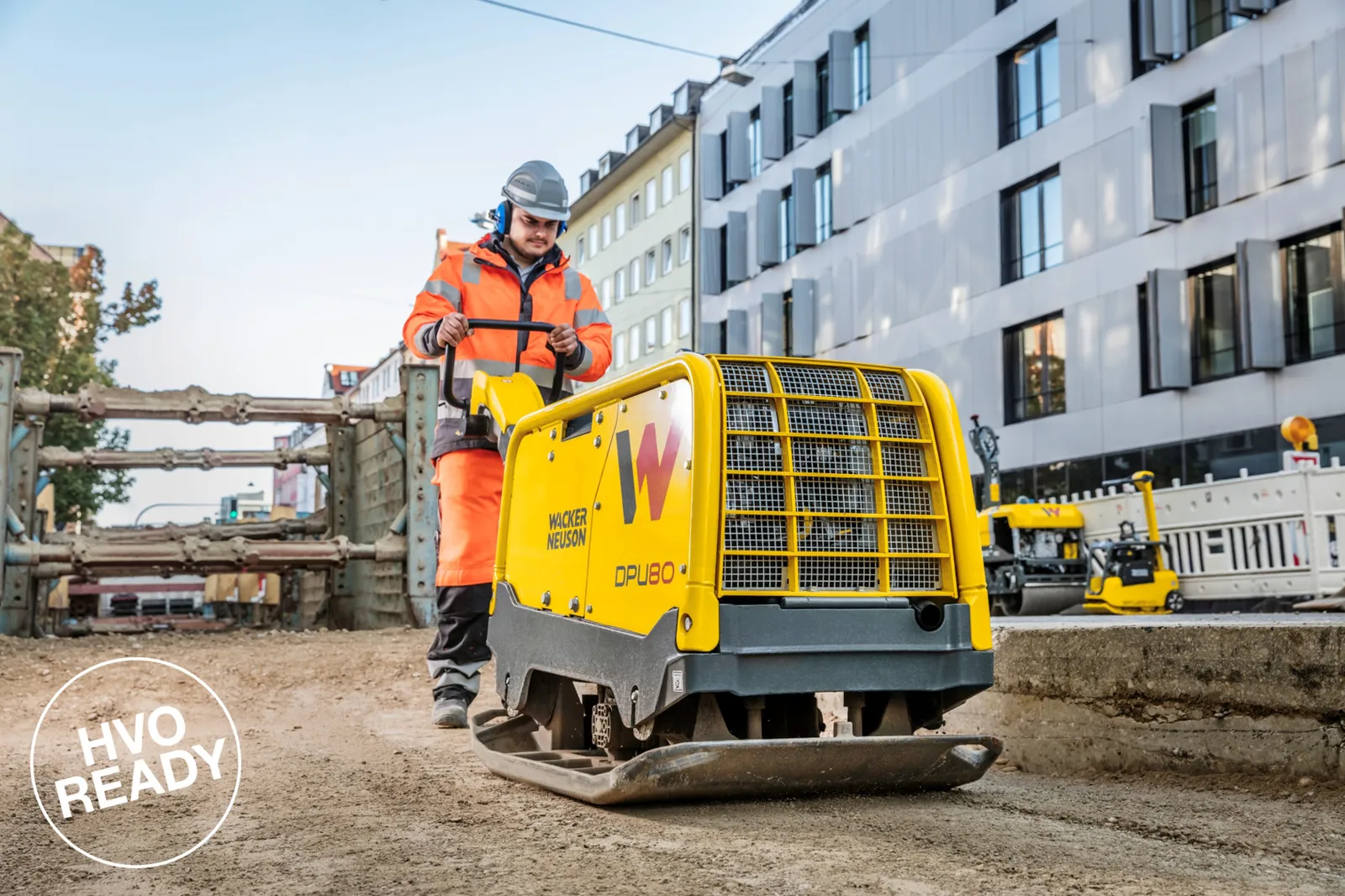
Since this year, Wacker Neuson has been offering customers the option of fuelling all its diesel machines with the alternative fuel HVO. Fuels made from hydrotreated vegetable oils, also known as Hydrotreated Vegetable Oils (HVO), can make it possible to operate combustion engines with near-zero climate impact. The fuel is made from renewable raw materials and burns more cleanly. As a result, HVO has a significantly better CO2 footprint than fossil fuels. HVO can reduce CO2 emissions by up to 90 per cent compared with fossil diesel.
- HVO fuels broaden the scope for environmentally conscious operations
- Almost all Wacker Neuson compact machines are factory-filled with HVO.
- HVO improves the CO2 footprint of conventional construction equipment and machinery
All Wacker Neuson light and compact construction equipment fitted with a Stage V diesel engine and manufactured from September this year onwards is approved for use with HVO fuels in accordance with EN15940. This includes excavators, dumpers, wheel loaders and telehandlers, as well as vibratory plates, rammers and rollers.
“We take our responsibility to offer an environmentally friendly and safe product range seriously,” says Alexander Greschner, member of the Board of Management of Wacker Neuson Group. “By using HVO instead of fossil fuels, our customers can significantly improve their CO2 footprint with little effort and take a more future-oriented approach. This gives our customers greater flexibility and enables us, as a manufacturer, to make a major contribution to more sustainable construction sites.”
From September this year, almost all Wacker Neuson compact machines* will be factory-filled with HVO. This marks a decisive step by Wacker Neuson towards a more sustainable future, while also encouraging its customers to follow suit.
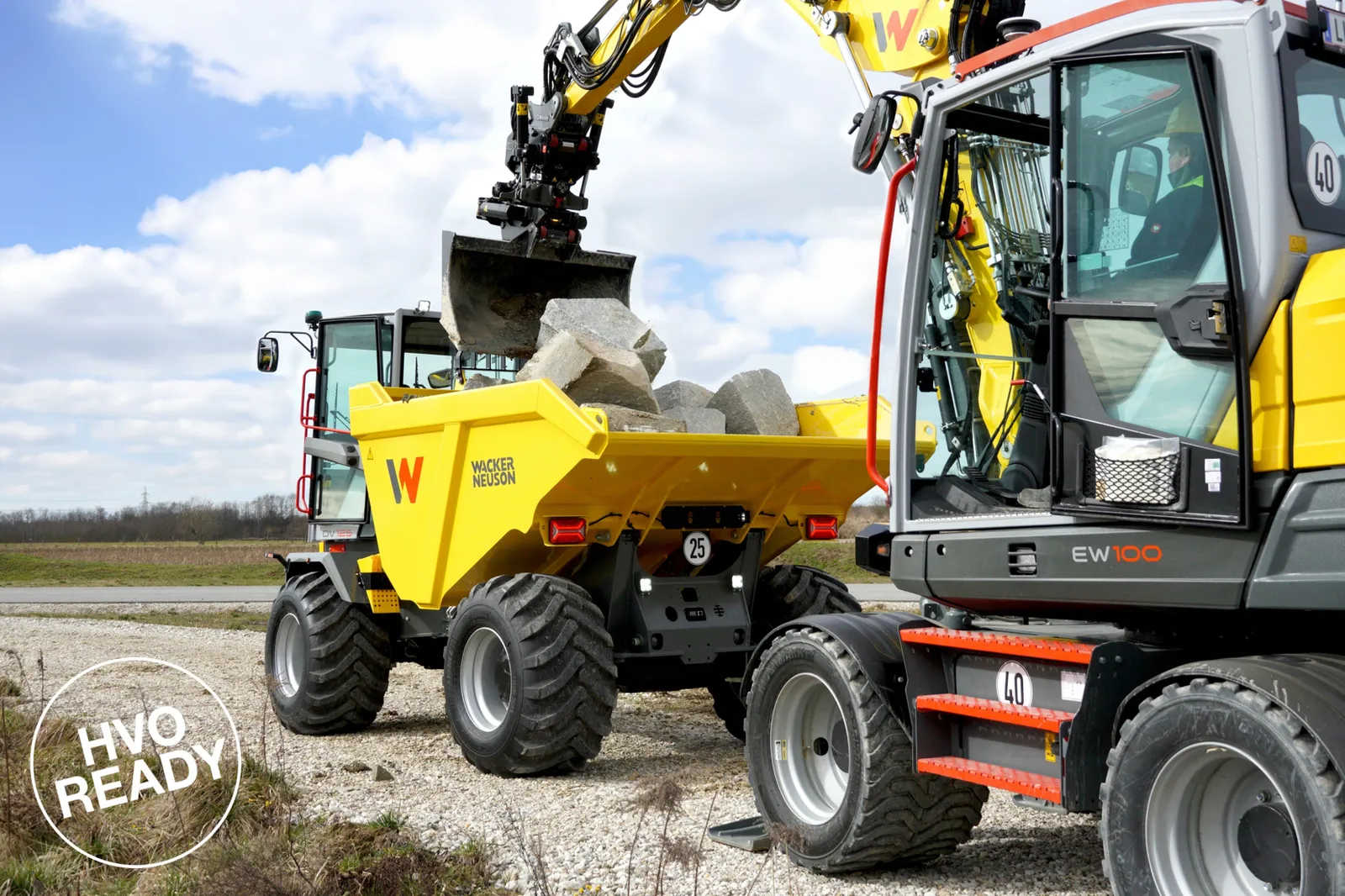
The same powertrain, environmentally friendly HVO fuel
As there are no major differences in the chemical properties of HVO and diesel fuels, no engine modifications are required. There are also no additional requirements for storage or use compared with fossil diesel. While fossil diesel can be stored for only around one year, HVO fuels have a longer shelf life of several years.
It has also been shown that HVO fuels have no adverse effect on engine service life, maintenance intervals or emissions performance. Customers do not have to commit to a single fuel, but can use the same engine with pure HVO, an HVO-diesel blend or conventional diesel.
Emission-free operation: zero emission
With its innovative products and forward-looking solutions, Wacker Neuson is a pioneer in the field. Wacker Neuson has been working on battery-powered compact machines and construction equipment for more than ten years. For these emission-free products, the focus is always on finding the best solution for the customer. The products in the zero emission range, which include excavators, dumpers, wheel loaders and telehandlers, vibratory plates, rammers and a poker vibrator system for concrete compaction, already make it possible to operate an entire construction site without direct exhaust emissions. By 2025, Wacker Neuson will double its range of emission-free machines in the power class up to 40 kW or 5 tonnes, and by 2030 all hand-operated construction equipment will be available as a battery-powered alternative. Wacker Neuson is going one step further, however, and considering the entire ecosystem: from charging infrastructure, services, financial products and various usage models through to a lifecycle analysis of the battery
Een zakelijke vraag aan Wacker Neuson? Get in touch
Companies in this story
Keep following this
Get an email when a new story is published. No account needed.
- ThemeTowards low-emission equipment and transport
- SubjectEarthmoving
- CompanyWacker Neuson