New wood chipper ensures an excellent cost per tonne
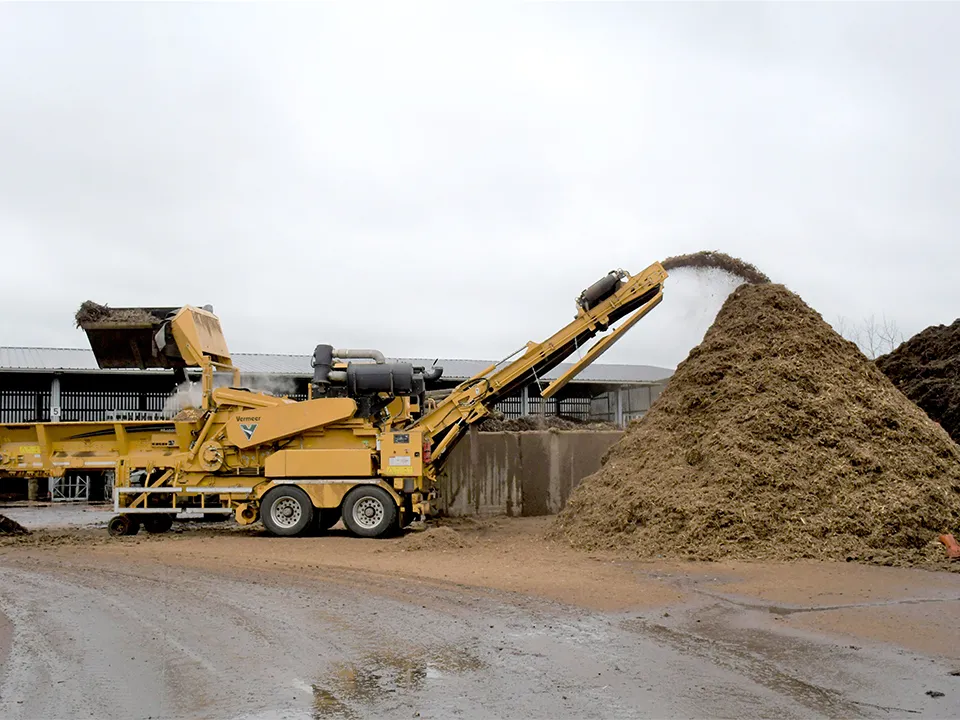
A passion for trees and forests. In 2000, Kristof Mouton decided to turn it into his profession. In 20 years, Groep Mouton has grown into a leading name in forest management and operations.
With the Lansink’s Ladder in mind, the right ecological and economic destination is sought for every piece of wood, from the largest trunk to the smallest chip. With its recent purchase of Vermeer’s HG4000 wood chipper, Mouton is showing the way forward for the coming years: a greater focus on biomass and wood recycling.
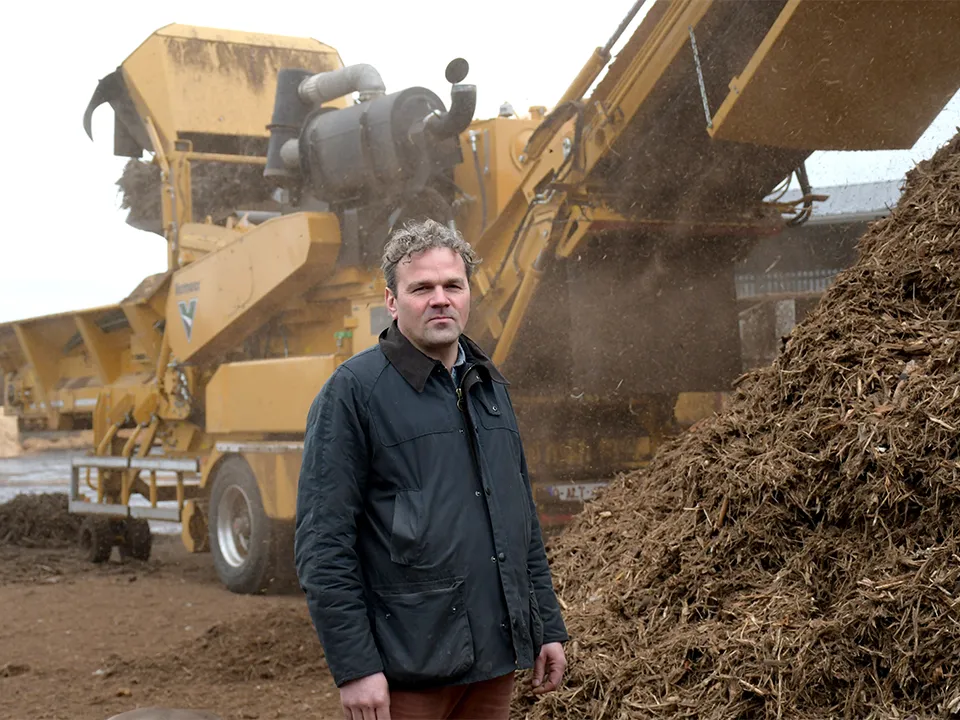
His training in garden design already hinted at his green fingers, but when Kristof Mouton began building his professional career, he opted for forestry. “Trees and wood are materials that inspire me. I inherited my entrepreneurial spirit from home.” When he started out in 2000, his days were initially filled with simple jobs such as pruning. Today, with around 25 employees, Groep Mouton specialises in all-round forest management, operating across Flanders, Brussels and Hainaut, and even across the border into France and the Netherlands. The company is involved, among other things, in the second phase of the Oosterweelverbinding, and also helps remove shoots that have taken root in Ghent’s Gravensteen. “Our aim is always to treat the surroundings as carefully as possible. Simply picking up a chainsaw is a crude approach. If we want to build a valuable future, we must keep recycling and recovering materials,” Mouton says.
Specialist people and machinery
“Our strength lies, on the one hand, in our years of experience. When I started out, you could count our competitors on one hand. This gave us the opportunity to build up our fleet of machinery step by step, so we can now handle every stage in-house. That includes mapping forests, trees and timber, managing permits, carrying out all the work and recovering materials.” The guiding principle is to seek the best solution for the materials each time, in line with the Lansink’s Ladder. Groep Mouton also has its own sales channels. “On the other hand, our strength also comes from the wide range of work we can take on. We have the capacity and specialist expertise, in both our people and our machinery, to complete large projects in a short time. We also have the right machines for specialist jobs. Two people in our workshop are permanently responsible for maintenance and repairs, as well as adapting standard equipment to better meet our needs.”
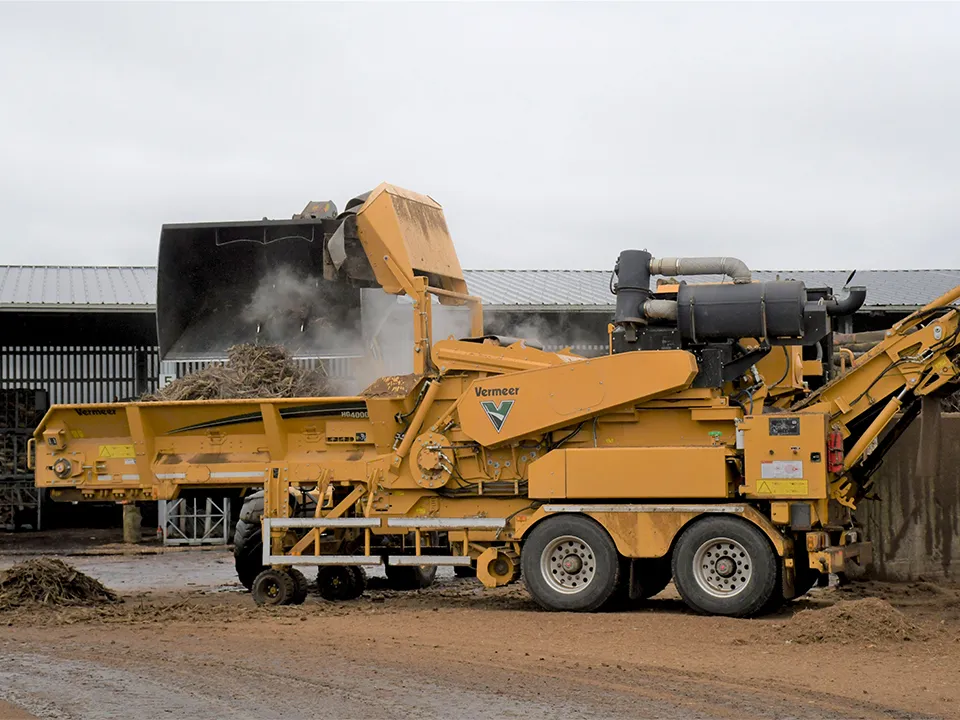
HG4000: mobility and flexibility are key
The latest addition to the fleet is Vermeer’s HG4000. It is an investment in the future, as Mouton plans to keep growing and sees opportunities to expand its activities in biomass processing and the recycling of grade A and grade B wood. “Vermeer was actually one of our first suppliers. In recent years, there was a trend towards tailoring every small batch of wood to specific requirements. That meant we had to look across the border for machines designed for a particular material stream. They were often expensive investments. Today, the trend has shifted again, and we can consider Vermeer’s machines, which are affordable, offer an excellent cost per tonne and come with a high level of confidence in the service.” Mouton spent a long time weighing up the HG4000 against the HG6000. “The heavier, larger machine ultimately wasn’t quite suited to our work. The HG4000’s mobility and flexibility are major advantages. It doesn’t even need an abnormal-load permit to travel on the road.”
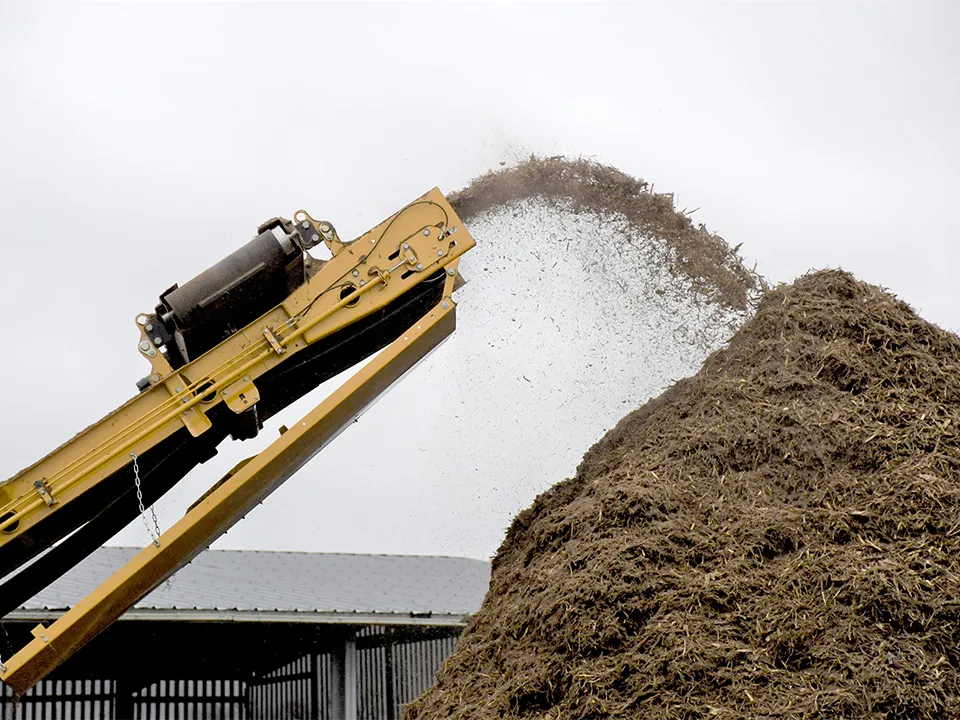
Reliable operation assured
Those are not its only advantages. “The machine’s immediate availability played an important role in our decision, as we urgently needed extra capacity. Technically, the infeed capacity and the accessibility of the screening surface were the deciding factors. We were already familiar with Vermeer’s technology, and they clearly haven’t stood still over the past few years. A number of specifications have been improved. The hammers have been reinforced, for example, and the rotor is better protected. These are important factors in ensuring continuous, reliable operation. That is also why we opted for the Damage Defense system. The machine has only been running for a week, but it has already stopped certain metal objects from reaching the rotor. It removes many potential contaminants before they can cause damage.” The machine will operate mainly at the site in Lochristi. “But it will also work at our second plant in Bernissart, which we are now setting up. We want to work locally with local people. The new location also opens up opportunities to expand our operations in northern France.”
Question about this story? Ask your question
Keep following this
Get an email when a new story is published. No account needed.
- SubjectEarthmoving