Jan De Nul steps up electrification and tests Volvo EC230 Electric
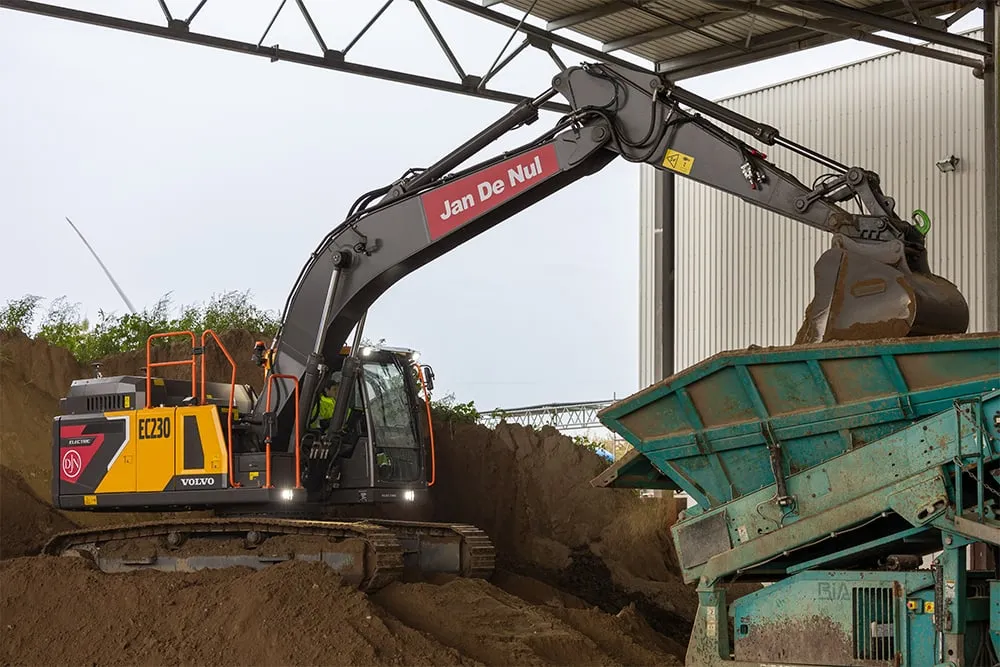
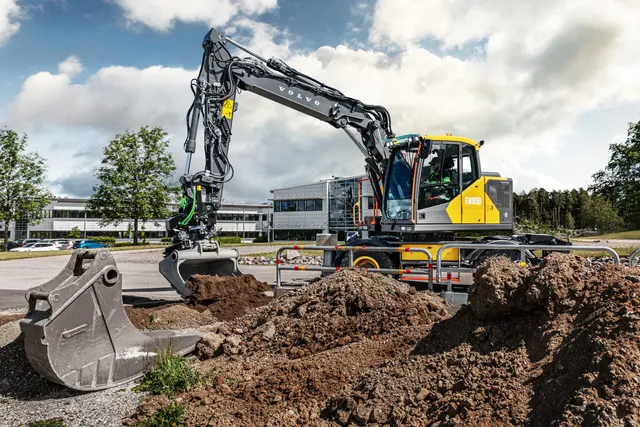
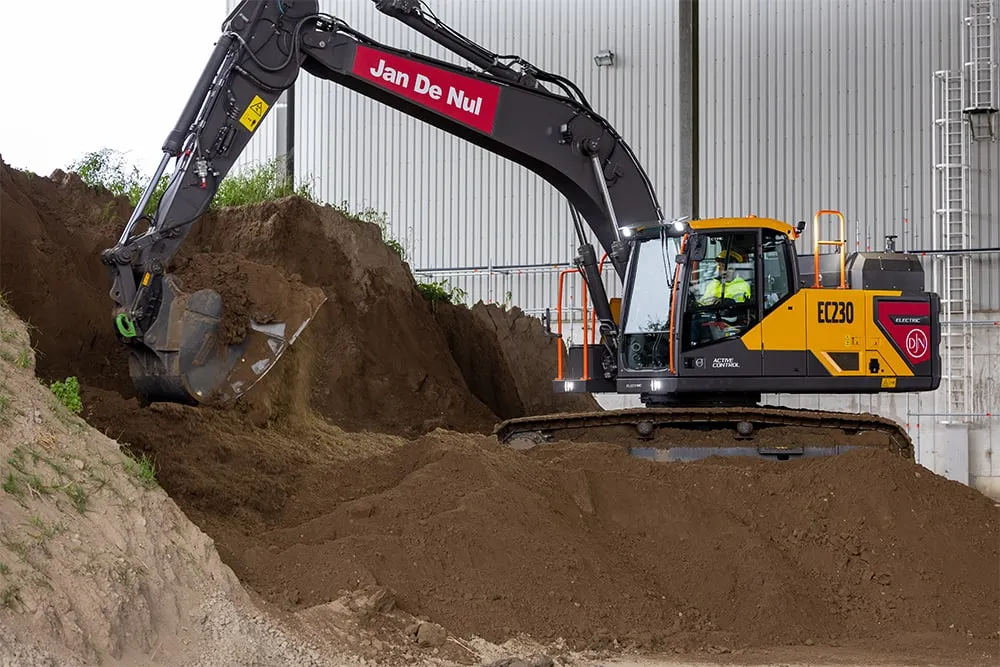
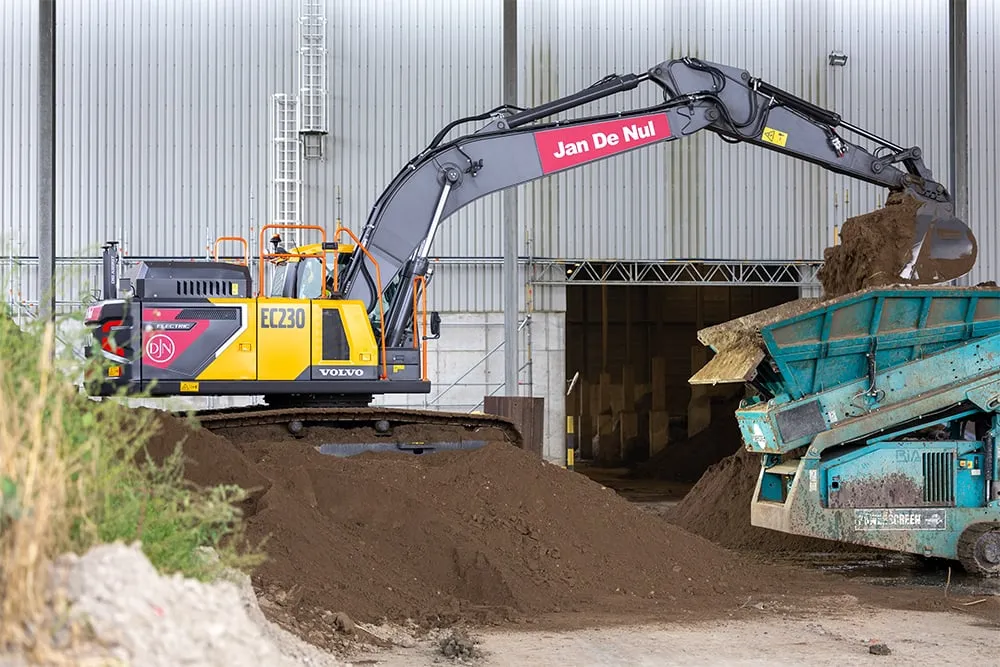
Jan De Nul Group is deploying the Volvo JEC230 Electric excavator at its valorisation centre in Hulsdonk. This is the first time an electric excavator of this type has been used on Belgian construction sites. The contractor is taking another step towards electrifying its operations and is aiming to play a pioneering role in the transition to renewable energy.
Jan De Nul is testing the excavator for a month with partner SMT Belgium, the official Volvo Construction Equipment dealer in Belgium and Luxembourg, which is preparing to roll out the machine more widely on the Belgian market. This makes Jan De Nul the first to test the machine on Belgian construction sites. Where possible, the excavator will be charged using solar panels at Jan De Nul’s site, supplemented by green, locally sourced electricity from the grid.
At the Prinses Elisabeth Eiland site in Vlissingen, the contractor is already using an electric cable crane made by Sennebogen.
“A cable crane is static and uses little energy compared with a moving vehicle. The challenge is greater for this type of machine, which has to move around a lot and shift earth. But at Jan De Nul, we believe in the energy transition and are also willing to invest in it. That is why we are keen to be part of this new story,” says Xander Vanderfaeillie, Technical Coordinator for Site Equipment at Jan De Nul.
ELECTRIC AERIAL WORK PLATFORMS, BULLDOZERS AND DREDGERS
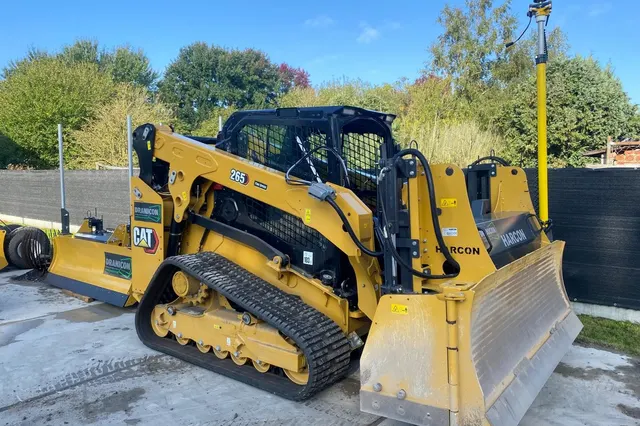
In 2022, Jan De Nul achieved a similar first with the first hybrid bulldozer on Belgian construction sites, at the hydroelectric power station site in Coo. The contractor now has five of these bulldozers in operation, and electric aerial work platforms have also been added to the fleet. Earlier this year, Jan De Nul also ordered its first hybrid dredger and launched a pilot project with a new type of battery that is more sustainable than conventional lithium batteries.
REDUCING EMISSIONS BY 40% BY 2035
Today, more than 70% of Jan De Nul’s vehicle fleet is electric, and the company has 600 charging points at various locations. Initial tests with electric lorries are under way, but limited range and the impact on payload capacity mean that this is not yet straightforward.
“We have mapped our entire machinery and vehicle fleet in terms of NOX and CO² emissions, which means we can now start greening the biggest polluters first. Jan De Nul aims to reduce its emissions by 40% by 2035. That is a huge challenge, but we are working towards it step by step,” concludes Vanderfaeillie.
Question about this story? Ask your question
Companies in this story
Keep following this
Get an email when a new story is published. No account needed.
- ThemeTowards low-emission equipment and transport
- SubjectEarthmoving
- CompanySMT Belgium