Bobcat develops a complete range of attachments
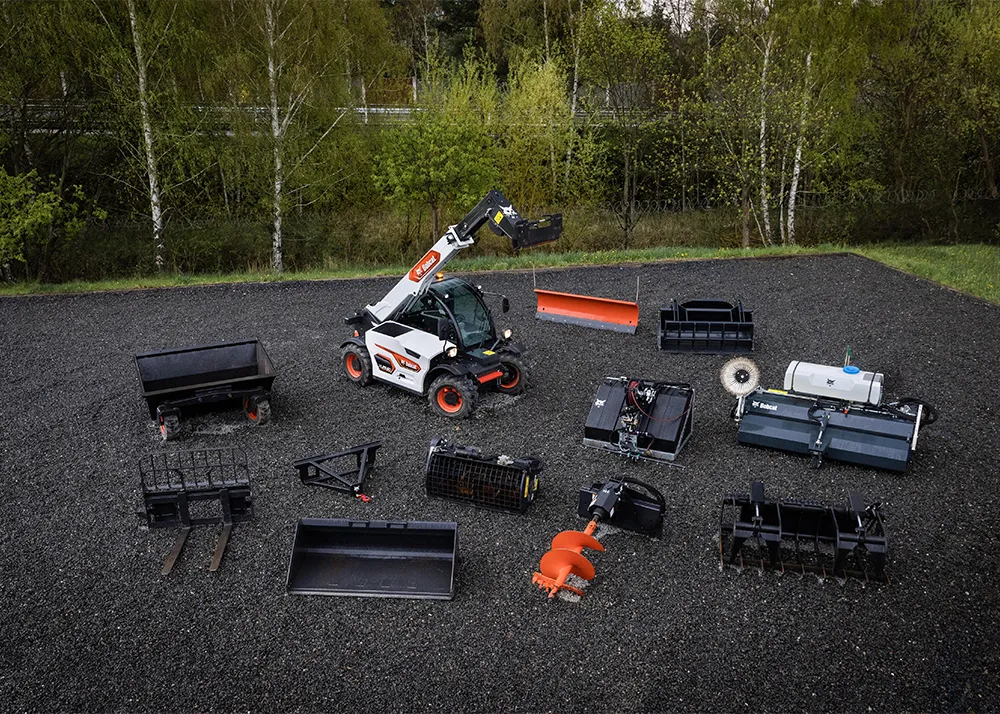
With 120 attachments to choose from, businesses can in principle carry out all their work with a single machine
Bobcat’s main aim is to enable customers to get their work done quickly and efficiently. That is why the company offers not only an ever-growing range of compact machines, but also a range of around 120 attachments. Bobcat machines are designed as universal tool carriers. Their power, coupling systems, hydraulics and Attachment Control Device (ACD) are all designed to operate attachments precisely and make them quick to change. Bobcat aims to develop a complete range of attachments so that users can carry out as many different tasks as possible with one and the same machine. Attachments are also attractive from a financial point of view, particularly for businesses that carry out a wide variety of work.
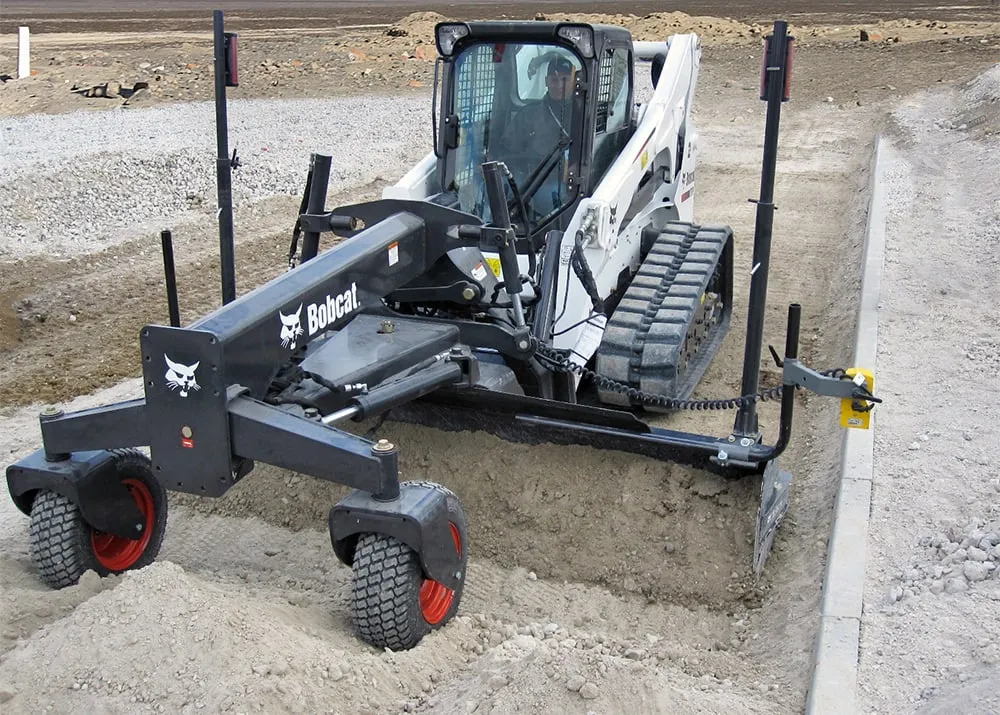
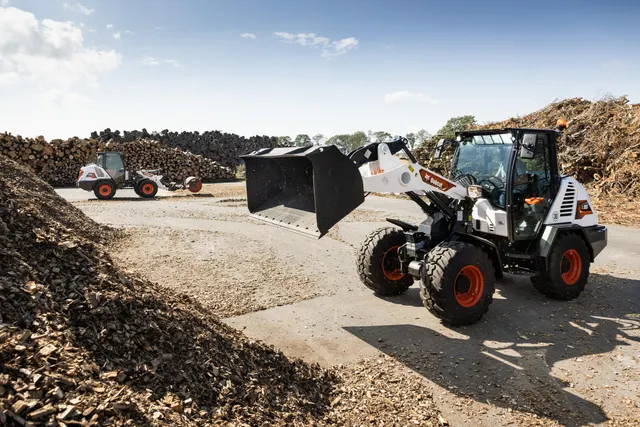
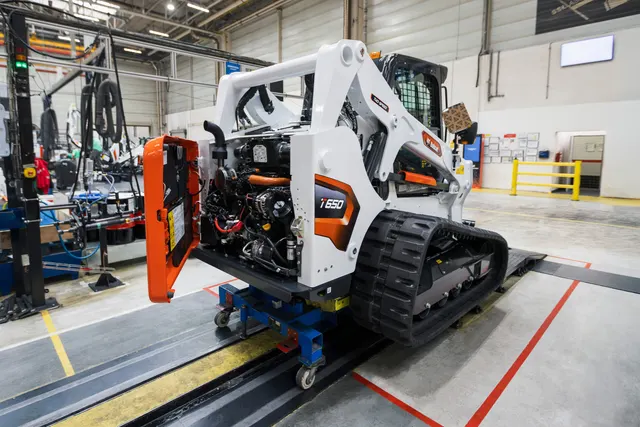
“Bobcat has one of the most extensive ranges of attachments. Our machines are designed as tool carriers, so you can use those attachments to carry out all the common types of work in construction, landscaping, agriculture, demolition, recycling and material processing,” explains Katinka Kincses, Product Manager Attachments at Bobcat EMEA. “However, you do need to think carefully about which machine to buy. A skid-steer loader, for example, is powerful and manoeuvrable. But if your work must not disturb the ground, a compact track loader is a better choice. Power is also important. If you want to use a forestry cutter, trencher or snow blower, you need a powerful machine. If you need to travel quickly, a skid-steer loader is less suitable than a compact wheel loader. If lift height and reach are important, a compact wheel loader or telehandler is the better choice. Another advantage of a compact wheel loader is that the operator sits higher up and has a better view of the work area.”
Kincses advises customers to buy a specialist machine only if they will use it all day for the same specific task. “A ride-on mower is a good investment for maintaining a golf course. For varied work, a machine with multiple capabilities is a wiser purchase, because you can take on more jobs and projects, work all year round and make better use of the machine. We often see new customers initially buy a machine with three or four attachments, then add a few more later so they can do more work with the same machine.”
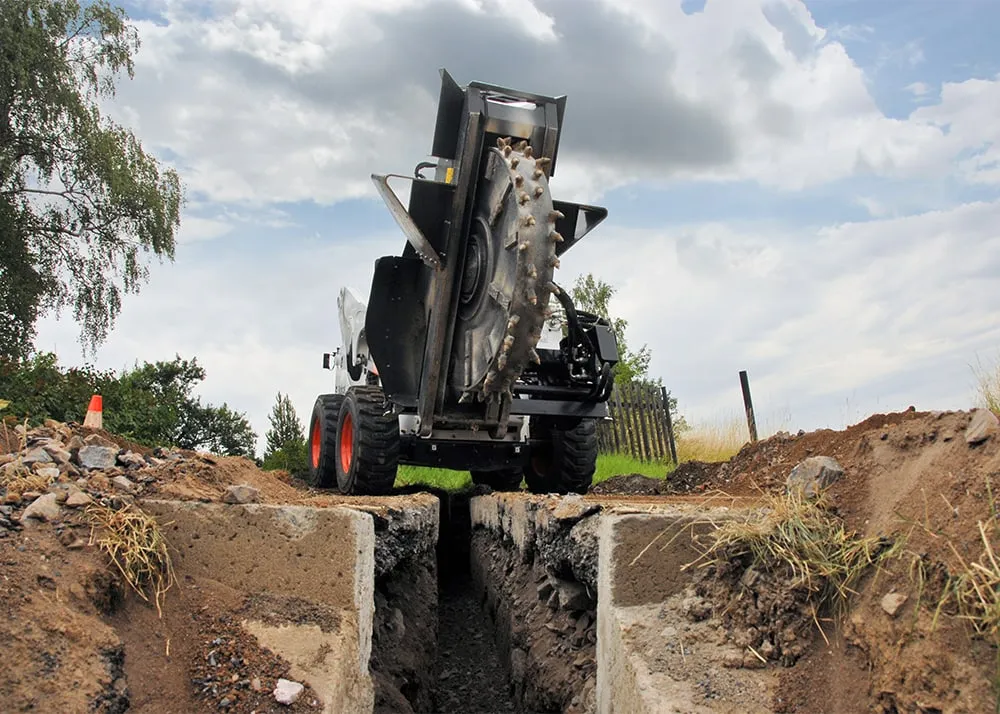
Range of 120 attachments
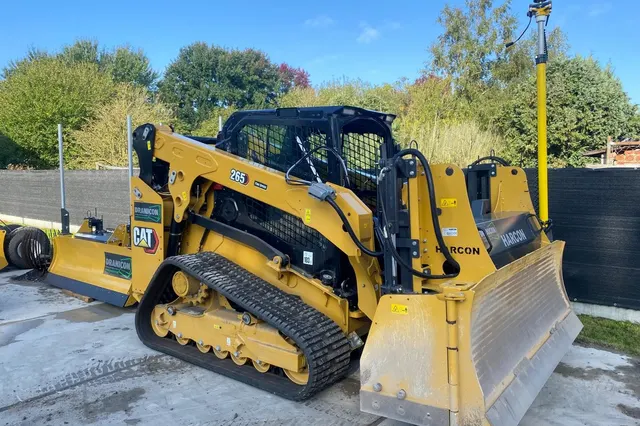
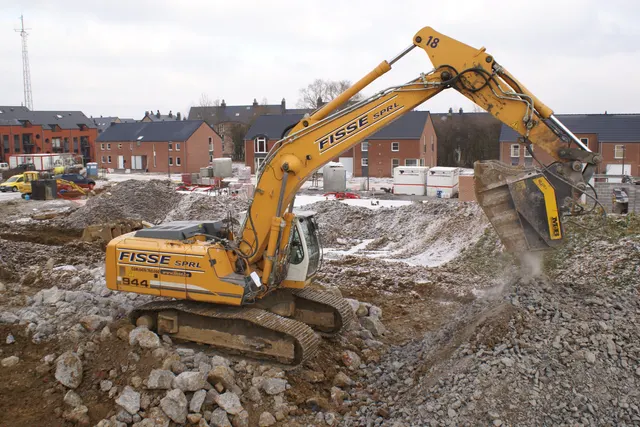
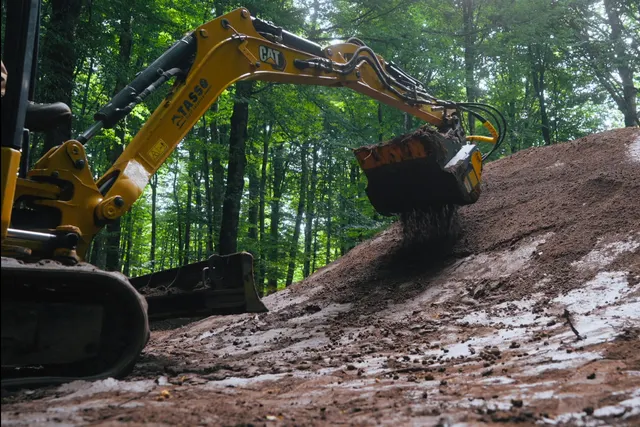
Once customers have chosen a machine, they can select from a range of more than 120 Bobcat attachments. For convenience, Bobcat has classified the attachments by application: demolition, construction, roadworks, landscaping, forestry, agriculture and material processing. The range for roadworks and landscaping is particularly extensive. Most attachments, including buckets, grabs, clamps, pallet forks, sweepers, dozer blades, graders, rakes, flail mowers, trenchers, augers and breakers, are suitable for common types of work. Specialist attachments are also available, including vibratory rollers, concrete mixers, concrete mixing buckets, asphalt milling machines, pressure washers, work platforms, wood chippers and even a tree spade.
Attachment Control Device
Bobcat machines and attachments feature a range of integrated functions, helping them work better together and making them easier to operate. “Our own Bob-Tach attachment mounting system is the industry standard,” says Kincses. “The hydraulic Power Bob-Tach system is also available, allowing the operator to connect and disconnect non-hydraulic attachments without leaving the cab. Another useful feature that boosts productivity is speed management, which allows travel speed to be controlled independently of the attachment.”
The Attachment Control Device is built into the attachments. This CANbus system enables communication between the machine and the attachment. Thanks to the ACD, the machine recognises the attachment and automatically adjusts settings, including those for the joystick and hydraulics.
The operator can change settings and view information on the machine’s display, such as operating hours, performance and attachment status. When the operator controls the machine by remote control, all the attachment control functions are also available automatically.
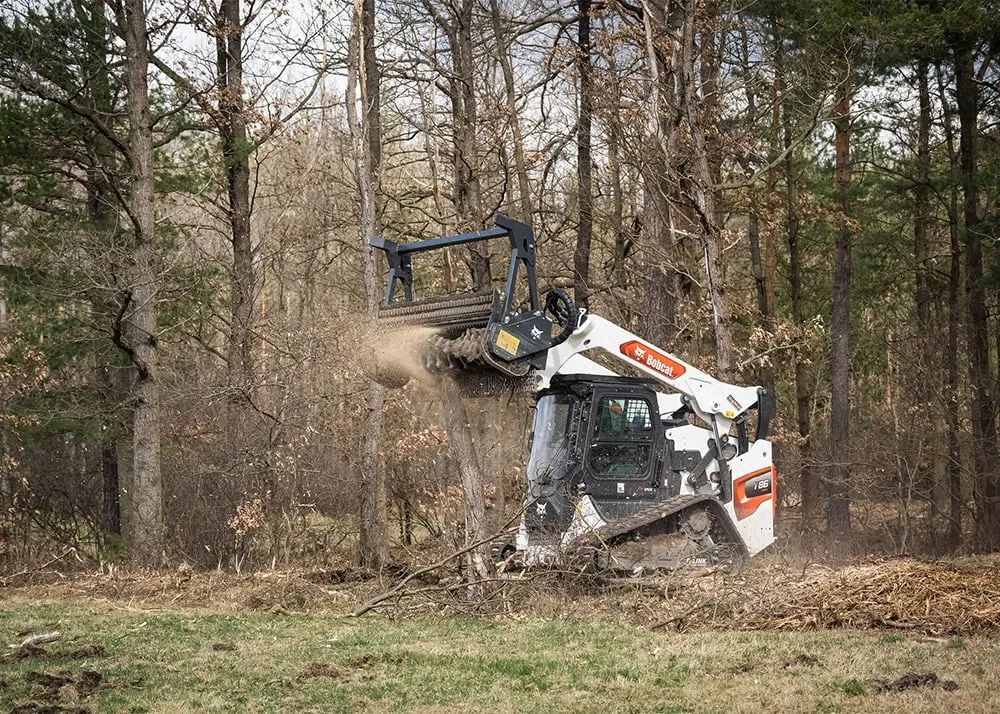
Bobcat with Bobcat
Katinka Kincses advises customers to use Bobcat attachments on their Bobcat machines: “Our machines and attachments are optimally matched and tested together. For example, you can rely on the attachment software always being up to date, and its functions can be controlled using the controls in the cab. You can also be sure that the hydraulic system is suited to the attachment and that you can use all its functions. Bobcat resolves any technical issues within the warranty period. That means you are not caught between the machine supplier and the attachment supplier, each pointing the finger at the other.”
“A good example of how a machine and attachment are matched is the combination of the new FRC 200XT forestry cutter and the modern S86 and T86 loaders. To operate such powerful implements, these machines can optionally be equipped with High Flow and Super Flow. These increase the standard auxiliary hydraulic flow rate from 87 l/min to 138 l/min or even 159 l/min. To operate the forestry cutter, a special, ready-to-use forestry kit must also be installed on the loader to protect the engine, machine, couplings and operator.”
Product development
As Product Manager Attachments, Katinka Kincses is responsible for attachment development, marketing, support services and training. “I see my department as the voice of the customer. We identify their needs and carry out research to develop new attachments and functions. We are currently seeing two major trends. Firstly, worksites are getting smaller, increasing demand for compact machines and attachments. There is also a growing focus on ease of use. Many businesses are struggling with staff shortages, so they are looking for alternatives to manual labour. To maintain productivity, young and inexperienced workers must also be able to operate machines and attachments without extensive training. Automation is another solution. Take the modern asphalt milling machine, for example. It has so much technology built into it that it could practically do the work autonomously. These trends largely determine the direction of our product development.”
Question about this story? Ask your question
Keep following this
Get an email when a new story is published. No account needed.
- SubjectEarthmoving